Eggs Benedict Recipe with Hollandaise Sauce
Make this classic brunch staple at home — tender poached eggs, savory Canadian bacon, and silky homemade hollandaise on toasted English muffins. Save this recipe and make it this weekend.
Eggs Benedict Recipe with Hollandaise Sauce is a layered brunch dish featuring poached eggs and Canadian bacon on toasted English muffins, finished with a rich lemon-butter sauce. This recipe serves 2, delivers golden, runny-yolked eggs draped in velvety homemade hollandaise, and is perfect for a weekend brunch or a slow holiday morning.
Here’s everything you need to make it perfectly.
I’ll be real with you — the first time I made hollandaise, I scrambled the eggs. Twice. The trick nobody mentions? You have to add the butter one tiny spoonful at a time, not pour it in. Once I figured that out, this Eggs Benedict Recipe with Hollandaise Sauce became my most-requested brunch dish. Now I make it almost every Sunday.
Table of Contents
Why You’ll Love This Eggs Benedict Recipe
The combination of a crispy-edged English muffin, salty Canadian bacon, and a soft poached egg with a jammy center is genuinely hard to beat.
The hollandaise comes together in under 10 minutes on the stovetop — no double boiler, no blender. It’s the kind of comfort food brunch that feels fancy but isn’t actually fussy once you know the method.
And it’s completely adaptable. You can poach the eggs softer or firmer depending on what you like, and the sauce can be thinned with a splash of cream if it gets too thick. Real talk — it’s more forgiving than its reputation suggests.

Classic Eggs Benedict Recipe with Hollandaise Sauce
Equipment
- Small saucepan
- Mixing bowl
- Medium pot
- Large skillet
- Slotted spoon
- Whisk
Ingredients
Main Ingredients
- 2 English muffins split and toasted
- 4 large eggs fresh, for poaching
- 4 slices Canadian bacon pan-seared 1 minute each side
- 1 splash vinegar helps egg whites set
Hollandaise Sauce
- 4 tablespoons butter melted, added slowly
- 4 egg yolks base of the sauce
- 2 teaspoons lemon juice or lime juice
- 1 tablespoon heavy whipping cream adds silkiness
- salt and pepper to taste
Instructions
- Melt the butter in a small saucepan over low heat. Remove from heat and set aside.
- In a small bowl, beat the egg yolks until smooth. Mix in the lemon juice, heavy whipping cream, and salt and pepper.
- Add the melted butter one small spoonful at a time into the egg mixture, stirring constantly until fully incorporated.
- Pour the mixture back into the saucepan and cook over very low heat, stirring constantly, for 20–30 seconds until slightly thickened. Remove from heat.
- Fill a medium pot with about 3 inches of water and bring to a simmer. Add a splash of vinegar.
- Crack one egg into a small cup and gently slide it into the simmering water. Cook for 3–5 minutes until the whites are set and the yolk remains soft. Repeat with remaining eggs.
- Cook the Canadian bacon in a skillet over medium-high heat for about 1 minute per side until lightly browned and heated through.
- Toast the English muffins until golden brown.
- Assemble by topping each toasted muffin half with Canadian bacon, a poached egg, and a generous spoonful of hollandaise sauce. Serve immediately.
Notes
What Ingredients Do You Need for Eggs Benedict with Hollandaise Sauce?
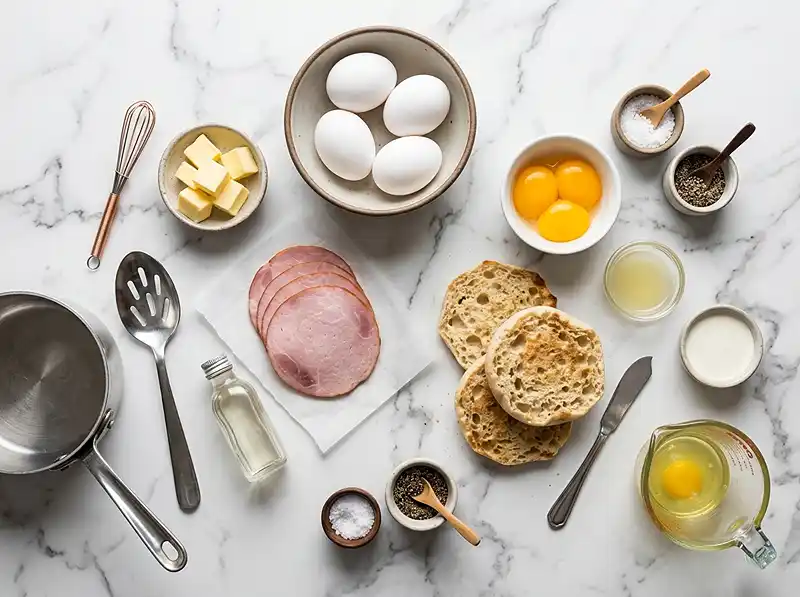
| Ingredient Group | Ingredient | Amount | Notes |
|---|---|---|---|
| Main Ingredients | English muffins | 2 | Split and toasted |
| Main Ingredients | Large eggs | 4 | Fresh, for poaching |
| Main Ingredients | Canadian bacon | 4 slices | Pan-seared 1 min each side |
| Main Ingredients | Vinegar | A splash | Helps egg whites set |
| Hollandaise Sauce | Butter | 4 tablespoons | Melted, added slowly |
| Hollandaise Sauce | Egg yolks | 4 | Base of the sauce |
| Hollandaise Sauce | Lemon juice (or lime juice) | 2 teaspoons | Brightens the sauce |
| Hollandaise Sauce | Heavy whipping cream | 1 tablespoon | Adds silkiness |
| Hollandaise Sauce | Salt and pepper | To taste | Season at end |
Fresh eggs really matter here — the whites hold together so much better when poaching. If you’re making this for a crowd, check out this classic Sunday dinner recipe for more crowd-pleasing brunch ideas.
The lemon juice is what keeps the hollandaise from tasting flat and heavy. It cuts through the butter and gives the sauce that bright, tangy finish that makes the whole dish come alive. Don’t skip it.
How to Make Eggs Benedict with Hollandaise Sauce Step by Step

Make the Hollandaise Sauce
- Melt the butter in a small saucepan over low heat. Remove from heat and set aside.
- In a separate small bowl, beat the 4 egg yolks until smooth.
- Mix in the lemon juice, heavy whipping cream, and salt and pepper into the yolk mixture.
- Add one small spoonful of the hot melted butter into the egg mixture and stir well. Repeat, one spoonful at a time, until all the butter is incorporated. Pro Tip: Adding butter one spoonful at a time tempers the eggs — this is what prevents curdling and gives you a smooth, creamy hollandaise every time.
- Pour the tempered mixture back into the saucepan. Cook on low heat, stirring constantly, for just 20–30 seconds.
- Remove from heat and set aside. The sauce will thicken as it cools. If it gets too thick, stir in a small splash of cream to thin it out.
Poach the Eggs
- Fill a medium pot with about 3 inches of water and bring to a boil.
- Reduce heat until the water reaches a simmer — you want small bubbles rising, not a rolling boil.
- Add a small splash of vinegar to the simmering water. This is optional but helps the egg whites stay together.
- Crack one egg into a small cup or measuring cup. Lower it into the simmering water, gently easing it out of the cup. Pro Tip: For best results, poach one egg at a time and keep your water at a true simmer, not a boil — a vigorous boil breaks the whites apart before they can set.
- Cook the egg for 3–5 minutes depending on how soft you want the yolk. Remove with a slotted spoon. Repeat with remaining eggs.
Note: A white foam may form on the water surface while poaching. That’s completely normal — just skim it off with a spoon.
Cook the Canadian Bacon
- While the eggs are cooking, place the Canadian bacon slices in a large pan over medium-high heat.
- Cook for about 1 minute on each side until lightly seared and warmed through.
Assemble
- Toast the English muffins until golden.
- Top each toasted half with one or two slices of Canadian bacon.
- Place a poached egg on top of the bacon. Spoon the hollandaise sauce generously over each egg and serve immediately.
Expert Tips for Perfect Eggs Benedict Recipe with Hollandaise Sauce

Pro Tips for Success
The key to smooth hollandaise is low, patient heat. If your pan gets too hot at any point, the yolks will scramble instead of emulsify. Keep everything on the gentlest low heat and you’ll be fine. I learned this the hard way — twice — before it clicked.
For best results, use eggs straight from the refrigerator for poaching. Cold eggs hold their shape better in hot water than room-temperature ones. The whites firm up faster around the yolk and you get that clean, round poached egg shape.
The most common mistake is over-cooking the hollandaise on the stove — instead, pull it off heat after just 20–30 seconds of stirring. It continues thickening as it sits. If you cook it too long, it becomes grainy. Better to under-cook and let residual heat finish the job.
Classic Eggs Benedict works best when everything is timed to come together at once. Have your bacon cooked and your muffins toasted before the eggs hit the water. The whole assembly takes about 60 seconds once you have all the components ready.
Want something refreshing on the side? This ginger pineapple tea pairs beautifully with a savory brunch like this.
Delicious Variations
Gluten-Free Version: Swap the standard English muffins for gluten-free English muffins — they toast up just as well and hold the stack without getting soggy. The rest of the recipe stays exactly the same.
Dairy-Free Version: Replace the butter with a good quality dairy-free butter and substitute the heavy cream with full-fat coconut cream. The sauce won’t be quite as silky, but it’ll still have that rich, tangy flavor that makes Easy Hollandaise worth making.
Vegetarian Version: Skip the Canadian bacon entirely and replace it with thick slices of sautéed portobello mushroom or roasted tomatoes. The hollandaise and poached egg combination is rich enough to stand on its own without meat.
Troubleshooting Common Problems
Problem: Hollandaise sauce curdled or became grainy.
Solution: This means the heat was too high or the butter was added too fast. Start fresh — it’s honestly the fastest fix. Temper more carefully this time, adding butter one small spoonful at a time over the lowest heat setting your stove allows.
Problem: Poached egg whites spreading all over the pan instead of holding together.
Solution: Your water was likely boiling too hard. Bring it down to a true simmer with small, lazy bubbles. Also make sure you’re lowering the egg gently from a cup rather than cracking directly into the water.
Problem: Hollandaise got too thick before serving.
Solution: Stir in a small splash of heavy cream, a little at a time, until it reaches a pourable consistency again. Don’t add water — it’ll make the sauce taste flat.
How to Store and Reheat Eggs Benedict
| Storage Method | Duration | Best Practice |
|---|---|---|
| Room Temperature | Up to 1 hour | Keep components separate; don’t assemble ahead |
| Refrigerator | Up to 2 days | Store hollandaise and poached eggs separately in airtight containers |
| Freezer | Not recommended | Hollandaise breaks; poached eggs become rubbery when frozen |
To reheat poached eggs, slide them into a bowl of hot (not boiling) water for about 60 seconds. They’ll warm through without overcooking. The yolk should still be soft and the white should feel tender, not rubbery.
For the hollandaise, reheat gently over the lowest heat, stirring constantly, for just 30 seconds. If it looks like it’s splitting, whisk in a teaspoon of cold water and it should come back together.
Leftover Canadian bacon makes a great addition to a scrambled egg wrap the next morning. And any extra hollandaise? Spoon it over steamed asparagus or roasted broccoli. It’s genuinely good on vegetables — don’t throw it away.
FAQs About Eggs Benedict Recipe with Hollandaise Sauce
Can I make the hollandaise sauce ahead of time?
You can make it up to 1 hour ahead and keep it warm in a small bowl set over warm (not hot) water. Stir it occasionally to prevent a skin from forming. Beyond an hour, the sauce can break or become unsafe at temperature, so it’s best made fresh and close to serving time.
What’s the difference between Canadian bacon and regular bacon?
Canadian bacon is cut from the back loin of the pig, making it much leaner and more ham-like in texture and flavor than streaky American bacon. It’s sold pre-cooked and just needs a quick sear in the pan to warm through and get a little color. Regular bacon can technically be substituted, but it changes the flavor profile significantly — it’s fattier and smokier, which can overpower the delicate hollandaise.
How do I know when a poached egg is done?
At 3 minutes, the white will be set but the yolk will be very runny. At 4–5 minutes, the yolk starts to firm up around the edges but stays jammy in the center — this is the sweet spot for most people. To test, gently lift the egg with a slotted spoon and press the yolk lightly with your finger. It should feel like a soft water balloon, not solid or liquid.
Why did my hollandaise sauce separate or break?
Broken hollandaise almost always means the heat was too high or the butter went in too fast. The fat didn’t emulsify properly with the yolks. To rescue it, start with a fresh yolk in a clean bowl, then whisk the broken sauce into it very slowly, one spoonful at a time, treating the broken sauce the same way you’d treat the original melted butter. It works about 80% of the time.
Can I poach multiple eggs at once?
Yes, but only if you’re comfortable with the method. You can poach 2–3 eggs at a time in a wide pot by staggering them 30 seconds apart. Keep the water at a steady simmer throughout. If the pot is too small or the water is too active, the whites will collide and stick together. For beginners, one egg at a time is genuinely the better call.
Ready to Make the Best Brunch of Your Life?
Seriously, once you nail this recipe, you’ll never need to pay brunch prices for it again. The hollandaise takes practice — but after you make it 2 or 3 times, it becomes second nature.
If you make this, I’d love to hear how it went. Leave a comment below and tell me how your hollandaise turned out. And honestly, save this to your Pinterest brunch board — you’ll want it again next weekend.
Looking for more recipes to round out your brunch spread? Try these chicken salad cucumber boats as a light side, or wind things down with a cold glass of homemade horchata.
Classic Eggs Benedict Recipe with Hollandaise Sauce — silky lemon-butter sauce, runny poached eggs, and crispy English muffins. The brunch recipe you’ll make every weekend. Save it now.