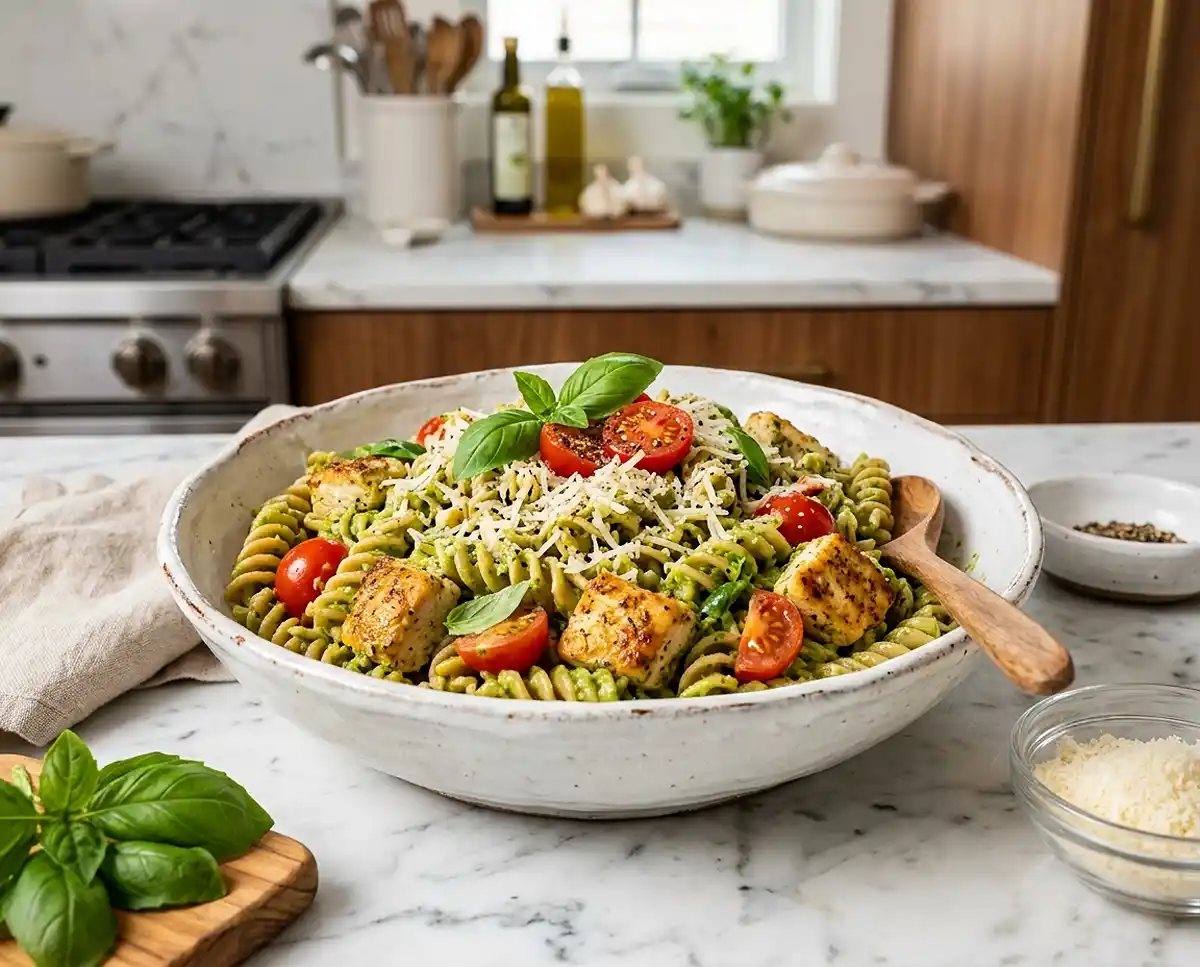
Protein Pesto Chicken Pasta
Make this protein pesto chicken pasta on a weeknight and actually feel full after. Tender chicken, herby basil pesto, and high-protein pasta come together in one skillet — ready in under 30 minutes. Jump to the recipe.
This pesto chicken pasta is the kind of dinner that makes “healthy” feel a lot less boring—creamy, comforting, and way too easy to want again tomorrow. Don’t miss more high-protein pasta dinner ideas.
I’ve made this protein pesto chicken pasta at least a dozen times — and the first three were honestly mediocre. The fix? Reserving that pasta water. It turns the pesto from a clumpy coating into a silky sauce that actually clings to every piece of pasta.
Table of Contents
Why You’ll Love This Protein Pesto Chicken Pasta
This dish hits that rare sweet spot of genuinely delicious and genuinely good for you. The chicken breast and protein pasta deliver serious macros without tasting like diet food.
It’s a one-skillet situation from start to finish, which means less cleanup and more time doing literally anything else. The pesto sauce is rich and savory without being heavy — bright, garlicky, and deeply satisfying.
It also stores like a dream, making it one of the better chicken pesto pasta meal prep options you’ll find. Make a big batch Sunday, eat well all week.
What Ingredients Do You Need for Pesto Chicken Pasta?
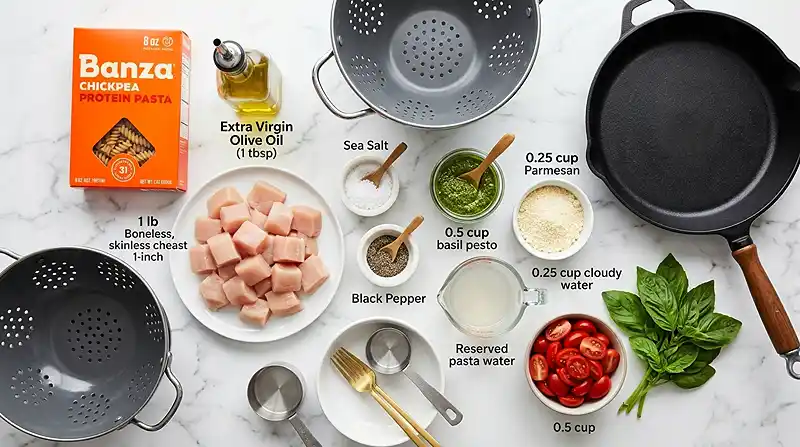
| Ingredient Group | Ingredient | Amount | Notes |
|---|---|---|---|
| Main Ingredients | Protein pasta (penne, rotini, or fusilli) | 8 oz | High-protein variety |
| Main Ingredients | Boneless, skinless chicken breast, cut into 1-inch cubes | 1 lb | Even cuts for even cooking |
| Sauce | Basil pesto (store-bought or homemade) | 1/2 cup | Use good-quality pesto |
| Sauce | Reserved pasta water | 1/4 cup | Saves the sauce |
| Sauce | Grated Parmesan cheese | 1/4 cup | Freshly grated melts best |
| Cooking Fat | Olive oil | 1 tbsp | Extra virgin preferred |
| Seasoning | Salt and black pepper | To taste | Season the chicken well |
| Optional Garnish | Cherry tomatoes, halved | To taste | Adds freshness and color |
| Optional Garnish | Fresh basil leaves, chopped | To taste | Finish just before serving |
The protein pasta is doing real work here — look for legume-based options like chickpea or lentil pasta, which pack 20+ grams of protein per serving. They hold up well with the pesto sauce without getting mushy.
For the pesto, store-bought is totally fine. A quality jarred pesto like Rana or Gotham Greens keeps this a high protein easy pasta with zero fuss. If you want to go homemade, absolutely do it — but this recipe doesn’t require it to taste great.
How to Make Pesto Chicken Pasta Step by Step
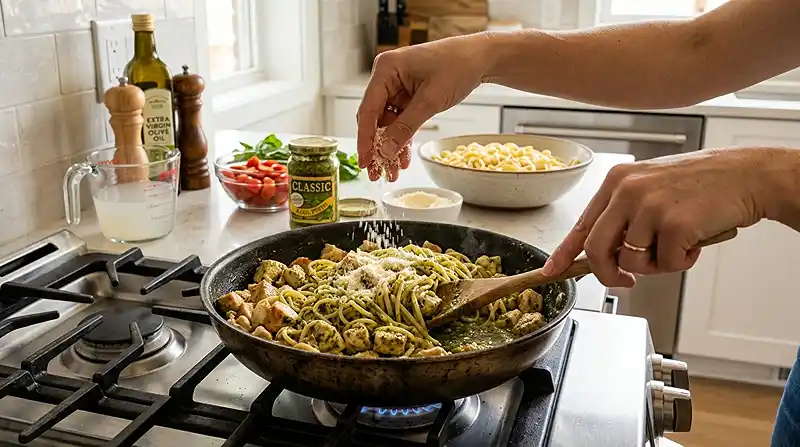
Cook the Pasta
- Cook the protein pasta according to package directions until al dente.
- Before draining, scoop out 1/4 cup of pasta water and set it aside — don’t skip this.
- Drain the pasta and set aside.
Pro Tip: The starchy pasta water is what transforms the pesto from a thick paste into a glossy, creamy sauce that coats every piece of pasta evenly.
Cook the Chicken
- Heat 1 tbsp olive oil in a large skillet over medium-high heat until shimmering.
- Add the cubed chicken breast in a single layer.
- Season with salt and black pepper.
- Cook for 5-7 minutes, stirring occasionally, until the chicken is cooked through and lightly browned.
Pro Tip: For best results, don’t move the chicken for the first 2 minutes — letting it sit undisturbed builds a golden sear that adds flavor and texture to the finished dish.
Build the Sauce and Finish
- Reduce heat to low.
- Add the cooked pasta and basil pesto to the skillet with the chicken.
- Pour in the reserved pasta water and stir well to combine.
- Stir in the grated Parmesan until melted and evenly distributed.
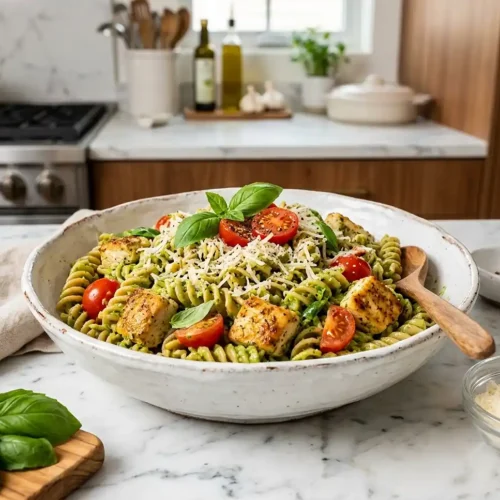
- Serve immediately, garnished with halved cherry tomatoes and fresh basil leaves if desired.
Pro Tip: The key to a silky pesto sauce is adding the pasta water gradually — start with half and add more only if the sauce needs loosening. Too much and it gets watery.
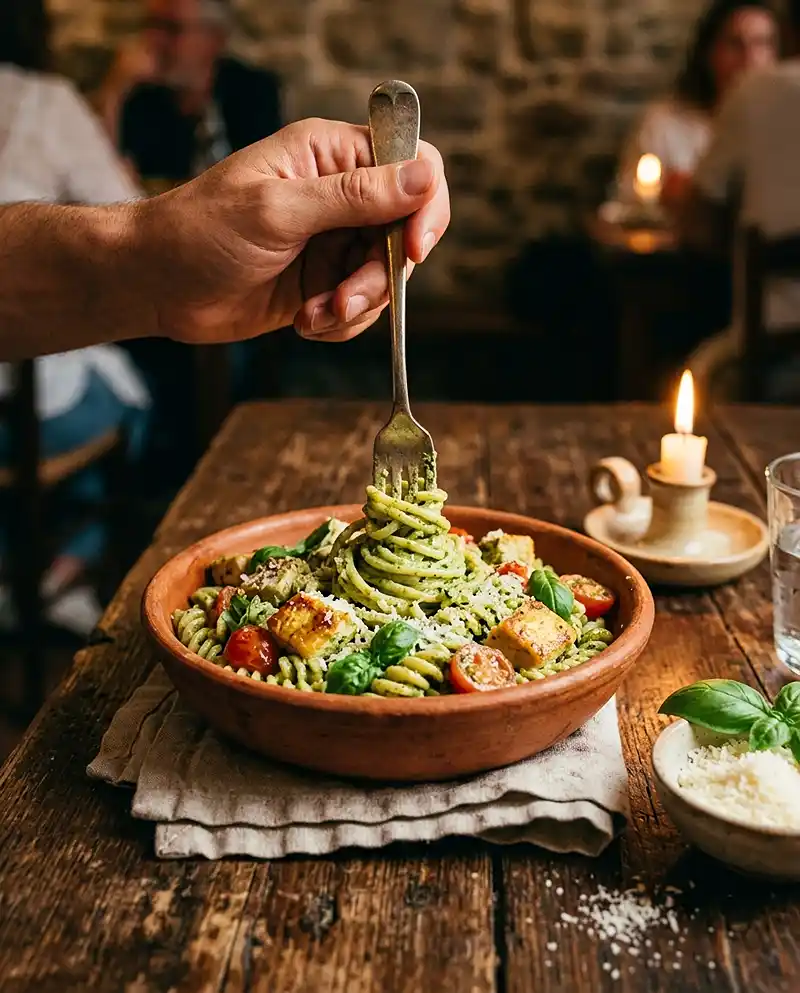
Expert Tips for Perfect Protein Pesto Chicken Pasta
Pro Tips for Success
Cut the chicken into even 1-inch cubes. Uneven pieces mean some are overcooked and dry while others are still pink inside. Take 30 extra seconds to make them consistent — it genuinely matters for texture.
The most common mistake is adding pesto over high heat — instead, drop the heat to low first. Pesto scorches quickly, and burnt basil oil tastes bitter. Low and slow keeps the sauce bright green and fresh-tasting.
For this pesto chicken pasta healthy version, freshly grated Parmesan melts smoother than the pre-shredded kind. The anti-caking agents in pre-shredded cheese can make the sauce grainy. Real talk: it’s a small thing that makes a noticeable difference.
Protein pasta works best when cooked al dente, not soft. It continues to absorb the sauce in the skillet, so pulling it from the boiling water 1 minute early gives you the perfect final texture.
Season the chicken generously. The chicken is the backbone of this dish — under-seasoned chicken means a flat-tasting final result no matter how good your pesto is.
Delicious Variations
Creamy Pesto Version: For a creamy pesto chicken pasta, stir in 2-3 tablespoons of full-fat Greek yogurt or light cream cheese at the end with the Parmesan. It makes the sauce richer and adds extra protein without spiking the calorie count significantly.
Meal Prep Version: Double the recipe and store portions in airtight containers. This scales easily for batch cooking and holds up well in the fridge — making it one of the most practical chicken pesto pasta meal prep recipes out there.
Dairy-Free Version: Skip the Parmesan and use a dairy-free pesto (many store-bought pestos are already dairy-free — check the label). Add a squeeze of lemon juice at the end for brightness. The dish still tastes complete and satisfying.
Troubleshooting Common Problems
Problem: The pesto sauce looks thick and clumpy instead of creamy.
Solution: Add the reserved pasta water a little at a time while stirring. The starch in the water emulsifies the oil in the pesto and creates a smooth, cohesive sauce.
Problem: The chicken is dry and tough.
Solution: It was likely overcooked. Chicken breast cubes only need 5-7 minutes over medium-high heat. Pull them when they’re just cooked through — an internal temperature of 165°F is your target. They’ll stay juicy.
Problem: The pasta water trick didn’t do much.
Solution: Make sure you’re actually using the starchy boiling water from the pasta pot, not plain tap water. The starch is what does the work.
How to Store and Reheat Protein Pesto Chicken Pasta
| Storage Method | Duration | Best Practice |
|---|---|---|
| Room Temperature | Up to 2 hours | Don’t leave out longer — chicken is perishable |
| Refrigerator | Up to 4 days | Store in an airtight container; keeps well for meal prep |
| Freezer | Up to 2 months | Freeze in individual portions; pesto may darken slightly but still tastes great |
To reheat, add a splash of water or chicken broth to the container before microwaving — about 1-2 tablespoons does it. Heat in 60-second intervals, stirring between each, until it’s hot and the sauce looks glossy again. Stovetop works even better: low heat, splash of liquid, and stir until warmed through.
Leftovers are honestly great cold straight from the fridge. But if you want to repurpose them, chop everything finely and fold it into a chicken pasta salad bowl with some greens and a squeeze of lemon. Total different vibe, zero cooking required.
FAQs About Protein Pesto Chicken Pasta
Can I use regular pasta instead of protein pasta?
Yes, regular pasta works fine. The dish will taste identical — you’ll just get fewer grams of protein per serving. Standard pasta delivers around 7-8g protein per 2oz serving, while high-protein legume pasta can reach 20-25g for the same amount. If hitting protein goals is the point, protein pasta is worth it.
Can I make this recipe ahead of time?
You can make it up to 4 days ahead and store it in the fridge. For best texture, slightly undercook the pasta before storing so it doesn’t turn mushy when reheated. Add the garnishes fresh when serving, not before storing.
What’s the best pesto to use — store-bought or homemade?
Both work well here. Store-bought makes this a genuinely fast weeknight meal. If you go homemade, a classic basil pesto with pine nuts, garlic, olive oil, and Parmesan is the most compatible with the other flavors in this dish. Avoid sun-dried tomato pesto — it changes the flavor profile significantly.
How do I know when the chicken is fully cooked?
The safest method is a meat thermometer — look for 165°F internal temperature. Visually, the chicken should be opaque all the way through with no pink, and lightly browned on the outside. Chicken cubes cut to 1-inch size generally hit that mark in 5-7 minutes over medium-high heat.
Can I add vegetables to this recipe?
Absolutely — and it’s a smart move nutritionally. Spinach wilts into the sauce beautifully in the last 30 seconds of cooking. Zucchini or bell peppers can be sautéed with the chicken. Just make sure any added vegetables are cooked to your liking before you reduce the heat and add the pesto.
Make It Tonight — You Won’t Regret It
Seriously, this one’s earned its spot in my regular rotation. It’s fast, it’s filling, and it actually tastes like something you’d order at a restaurant — not like a sad “healthy” version of a good dish.
Save this to your Pinterest so it’s easy to find on those nights when you need a solid meal fast. And if you try it, I’d honestly love to know how it went — drop a comment below and tell me if you did the creamy version or kept it classic.
Looking for more high-protein pasta nights? My cottage cheese Alfredo chicken pasta and this chicken bacon ranch pasta bake are both worth bookmarking.
Easy Protein Pesto Chicken Pasta — tender seared chicken, herby basil pesto, and high-protein pasta in a silky Parmesan sauce. Ready in 25 minutes. Save this for your next meal prep day!
Protein Pesto Chicken Pasta
Equipment
- Large skillet or pan
- Large pot
- Colander
- Measuring Cups
- Cutting board
- Chef’s knife
Ingredients
Main Ingredients
- 8 oz Protein pasta (penne, rotini, or fusilli) High-protein variety
- 1 lb Boneless, skinless chicken breast, cut into 1-inch cubes Even cuts for even cooking
Sauce
- ½ cup Basil pesto Store-bought or homemade
- ¼ cup Reserved pasta water Saves before draining
- ¼ cup Grated Parmesan cheese Freshly grated melts best
Cooking Fat
- 1 tbsp Olive oil Extra virgin preferred
Seasoning
- Salt and black pepper To taste
Optional Garnish
- Cherry tomatoes, halved Optional, for garnish
- Fresh basil leaves, chopped Optional, for garnish
Instructions
- Cook the protein pasta according to package directions until al dente.
- Before draining, scoop out 1/4 cup of pasta water and set it aside.
- Drain the pasta and set aside.
- Heat 1 tablespoon of olive oil in a large skillet over medium-high heat until shimmering.
- Add the cubed chicken breast to the skillet in a single layer.
- Season the chicken with salt and black pepper.
- Cook for 5–7 minutes, stirring occasionally, until the chicken is cooked through and lightly browned.
- Reduce the heat to low.
- Add the cooked pasta and basil pesto to the skillet with the chicken.
- Pour in the reserved pasta water and stir well to combine until a creamy sauce forms.
- Stir in the grated Parmesan cheese until melted and evenly distributed.
- Serve immediately, garnished with halved cherry tomatoes and fresh basil leaves if desired.