How to Make Strawberry Syrup for Matcha
How to make strawberry syrup for matcha is one of those things that sounds fancier than it actually is. Once you try it homemade, the store-bought stuff genuinely doesn’t compare.
This recipe covers three methods — cooked, no-cook, and a slow-fermented cheong — so you can pick what fits your schedule and flavor preference.
Table of Contents
Why You’ll Love This Strawberry Syrup for Matcha
Real talk: homemade strawberry syrup makes your matcha latte taste like it came from a specialty cafe. The flavor is brighter, fresher, and you control the sweetness entirely.
All three methods use simple ingredients you probably already have. No special equipment, no complicated techniques.
Whether you need it ready in two hours or want a deeply complex fermented version, there’s a method here for you. And every single one pairs beautifully with matcha.

How to Make Strawberry Syrup for Matcha (3 Easy Ways)
Equipment
- Small saucepan
- Mixing bowl or zip-top bag
- Fine mesh sieve
- Clean glass jar or bottle
- Spoon
- Knife
- Cutting board
- Ice cube tray, optional
Ingredients
Cooked Strawberry Syrup
- 8 large Fresh strawberries About 1 cup, chopped; ripe berries give the best flavor
- 1 cup Granulated sugar Standard white sugar works best
- ½ cup Water Filtered preferred
No-Cook Macerated Strawberry Syrup
- 2 cups Chopped strawberries Use fresh strawberries, not frozen
- ½ cup Granulated sugar Makes a fruit-forward syrup
Traditional Strawberry Cheong
- 250 g Fresh strawberries Use equal parts strawberries and sugar by weight; wash and dry completely
- 250 g Granulated sugar Must match the strawberry weight exactly for cheong
Optional Flavor Boosters
- 1/2–1 teaspoon Lemon juice Optional, for brightness and color preservation
- 1 teaspoon Vanilla extract Optional, for depth; best added to cooked syrup after removing from heat
- 1 pinch Beet powder Optional, for deeper pink color
- 1 pinch Fine salt Optional, to amplify strawberry flavor
Instructions
- For the cooked strawberry syrup, combine the chopped strawberries and sugar in a small saucepan. Stir to coat and let sit for 10 minutes.
- Add the water to the saucepan and bring the mixture to a simmer over medium-low heat.
- Stir occasionally for about 10 minutes, until the sugar fully dissolves and the mixture thickens slightly.
- Remove from the heat and let the syrup cool completely at room temperature.
- Strain the cooled syrup through a fine mesh sieve, pressing gently to extract as much liquid as possible.
- Transfer the strained syrup to a clean jar or bottle and store in the refrigerator.
- For the no-cook macerated strawberry syrup, toss the chopped strawberries with sugar in a bowl or zip-top bag until fully coated.
- Refrigerate for at least 2 hours, or overnight for maximum juice release.
- Strain through a sieve if desired, pressing the berries to extract the liquid, then store the syrup in the refrigerator.
- For traditional strawberry cheong, wash the strawberries thoroughly and dry them completely to prevent spoilage.
- Layer the strawberries and an equal weight of granulated sugar alternately in a clean glass jar, ending with a thick layer of sugar on top.
- Seal the jar tightly and store it in a cool, dark place for about 3 months to develop a rich, fermented syrup.
- After the first week, check the cheong. If the sugar has not fully dissolved, gently shake the jar to encourage the process.
- To use any syrup in matcha, start with 1 to 2 tablespoons per serving and adjust to taste after preparing the matcha.
Notes
What Ingredients Do You Need for Strawberry Syrup for Matcha?

Cooked Strawberry Syrup
| Ingredient Group | Ingredient | Amount | Notes |
|---|---|---|---|
| Main | Fresh strawberries, chopped | 8 large (about 1 cup) | Ripe berries give best flavor |
| Sweetener | Granulated sugar | 1 cup | Standard white sugar works best |
| Liquid | Water | 1/2 cup | Filtered preferred |
No-Cook Macerated Strawberry Syrup
| Ingredient Group | Ingredient | Amount | Notes |
|---|---|---|---|
| Main | Chopped strawberries | 2 cups | Fresh, not frozen |
| Sweetener | Granulated sugar | 1/2 cup | Less sugar, more fruit-forward |
Traditional Strawberry Cheong
| Ingredient Group | Ingredient | Amount | Notes |
|---|---|---|---|
| Main | Fresh strawberries | Equal parts by weight (e.g., 250g) | Washed and fully dried |
| Sweetener | Granulated sugar | Equal parts by weight (e.g., 250g) | Must match strawberry weight exactly |
Fresh, ripe strawberries are the whole game here. The more flavorful your berries, the better your best strawberry syrup for matcha will turn out.
You can also add optional flavor boosters: 1/2 to 1 teaspoon of lemon juice for brightness, 1 teaspoon of vanilla extract for depth, or a pinch of beet powder for a deeper pink color.
How to Make Strawberry Syrup for Matcha Step by Step

Method 1: Cooked Strawberry Syrup
This is the classic approach. It takes about 20 minutes and gives you a smooth, shelf-stable syrup that mixes seamlessly into both hot and iced matcha drinks.
- Combine chopped strawberries and sugar in a small saucepan. Stir to coat and let sit for 10 minutes.
- Add water to the saucepan and bring to a simmer over medium-low heat.
- Stir occasionally for about 10 minutes until the sugar fully dissolves and the mixture thickens slightly.
- Remove from heat and allow to cool completely at room temperature.
- Strain through a fine mesh sieve to remove all solids. Press gently to extract maximum liquid.
- Transfer strained syrup to a jar or bottle and store in the refrigerator.
Pro Tip: The key to a smooth strawberry syrup is letting it cool fully before straining — hot syrup is thinner and harder to work with.
Method 2: No-Cook Macerated Strawberry Syrup
No heat, no stove. This method keeps all the fresh, raw strawberry flavor intact. It’s my go-to when I want something that tastes like summer in a glass.
- Toss chopped strawberries with sugar in a bowl or zip-top bag until fully coated.
- Refrigerate for at least 2 hours, or overnight for maximum juice release.
- Strain through a sieve if desired, pressing berries to extract liquid. Store in the refrigerator.
Pro Tip: For best results, use the macerated strawberry syrup within 5 to 7 days. The fresh flavor fades faster than cooked versions.
Method 3: Traditional Strawberry Cheong
Cheong is a Korean fermentation method that produces an intensely complex, floral syrup unlike anything you’ll find at a store. It takes 3 months — but that’s the point.
- Wash strawberries thoroughly and dry them completely. Even a little moisture can cause spoilage.
- Layer strawberries and sugar alternately in a clean glass jar, ending with a thick layer of sugar on top.
- Seal the jar tightly and store in a cool, dark place for 3 months to develop a rich, fermented syrup.
Pro Tip: Strawberry cheong works best when the jar is completely airtight and stored away from direct sunlight. Check it after the first week — if you see the sugar hasn’t fully dissolved yet, gently shake the jar to encourage the process.
Expert Tips for Perfect Strawberry Syrup for Matcha
Pro Tips for Success
“The key to a vibrant color is using the ripest strawberries you can find.” Underripe berries produce a pale, weak syrup. Smell them before you buy — if they smell like strawberries, they’ll taste like strawberries.
The most common mistake is rushing the cooked method by cranking up the heat. High heat scorches the sugar and makes your syrup bitter. Medium-low and patient wins every time.
For best results with the macerated method, use a zip-top bag instead of a bowl. The bag keeps the berries pressed against the sugar, speeding up juice release significantly. I figured this out after making it six times the bowl way first.
Strawberry syrup for matcha works best when it’s completely cooled before adding it to your drink. Hot syrup will partially cook your matcha and muddy the flavor.
Add lemon juice to any of the three methods. Even a small amount makes the strawberry flavor pop in a way that’s hard to explain until you taste it side by side.
Delicious Variations
Quick Version: The no-cook macerated method is already fast, but you can speed it up even more by mashing the berries slightly before adding sugar. You’ll get usable syrup in about 45 minutes instead of two hours.
Low-Sugar Version: Cut the sugar in the cooked method by 25% and add a squeeze of lemon to compensate for the reduced sweetness. The flavor stays balanced without being cloying.
Vanilla Strawberry Version: Add 1 teaspoon of vanilla extract to the cooked syrup right after removing it from heat. It adds a subtle warmth that pairs especially well with oat milk matcha lattes.
Troubleshooting Common Problems
Problem: Syrup is too thin after straining.
Solution: Return the cooked syrup to the saucepan and simmer on low for another 3 to 5 minutes. Let it cool again — it thickens as it cools.
Problem: Syrup tastes flat or bland.
Solution: Stir in lemon juice, one teaspoon at a time, until brightness comes through. A pinch of fine salt can also help amplify the strawberry flavor.
Problem: Cheong isn’t developing after 2 weeks.
Solution: Your storage spot may be too cold. Move it somewhere slightly warmer (not direct sunlight) and give the jar a gentle shake daily to redistribute the sugar.
How to Store and Reheat Strawberry Syrup for Matcha
| Storage Method | Duration | Best Practice |
|---|---|---|
| Room Temperature | Up to 2 hours | Only during active use; refrigerate otherwise |
| Refrigerator (Cooked) | Up to 1 month | Airtight glass jar; label with date |
| Refrigerator (Macerated) | 5 to 7 days | Use quickly; flavor fades fast |
| Freezer (Cooked only) | Up to 3 months | Freeze in ice cube trays, then transfer to a bag |
The cooked syrup doesn’t really need reheating — it pours fine cold. If it thickens too much in the fridge, just let it sit at room temperature for 10 minutes or run the jar under warm water for 30 seconds.
Don’t let leftover macerated strawberry pulp go to waste. It’s incredible stirred into yogurt, spooned over oatmeal, or blended into a smoothie. The berries still have tons of flavor even after the juice is extracted.
Frequently Asked Questions
Can I use frozen strawberries to make strawberry syrup for matcha?
Yes, frozen strawberries work for the cooked method. Thaw them first and drain any excess liquid before combining with sugar. Fresh berries give a brighter flavor, but frozen ones produce a perfectly usable syrup, especially off-season.
How much strawberry syrup should I add to matcha?
Start with 1 to 2 tablespoons per serving and adjust to taste. The cooked syrup is more concentrated than the macerated version, so you may need slightly less. Add it after preparing your matcha to keep the flavor clean.
Can I make strawberry syrup without sugar?
You can substitute sugar with honey or maple syrup in the cooked method using a 1:1 ratio. Both work well but will change the flavor profile. Honey adds floral notes, while maple syrup adds a subtle earthiness. Neither works for cheong, which relies on granulated sugar for proper fermentation.
Why is my strawberry syrup not pink enough?
The color depends entirely on your strawberries. Very ripe, deeply colored berries produce a vibrant pink syrup. If your syrup is pale, add a pinch of beet powder to deepen the color without affecting the flavor. Lemon juice also helps preserve the pink color in the cooked version.
What is the difference between macerated syrup and cheong?
Macerated syrup uses sugar to draw juice from strawberries quickly, over 2 hours to overnight. Cheong is a traditional Korean preservation method where strawberries and sugar ferment slowly over 3 months, producing a richer, more complex flavor. Both pair well with matcha but offer very different taste profiles.
Now Go Make Your Best Matcha Yet
Honestly, once you make your own strawberry syrup, you won’t go back. It takes less than 20 minutes for the cooked version and almost zero effort for the macerated one.
Save this recipe to Pinterest so you can find it next time you’re craving a strawberry matcha latte. And if you try any of the three methods, I’d love to hear which one became your favorite — drop it in the comments below.
If you’re building out a solid meal prep routine, check out these Mediterranean chickpea lunch boxes and these buffalo chicken wrap boxes — great pairings for a full week of intentional eating.
Seriously. Go make it today.
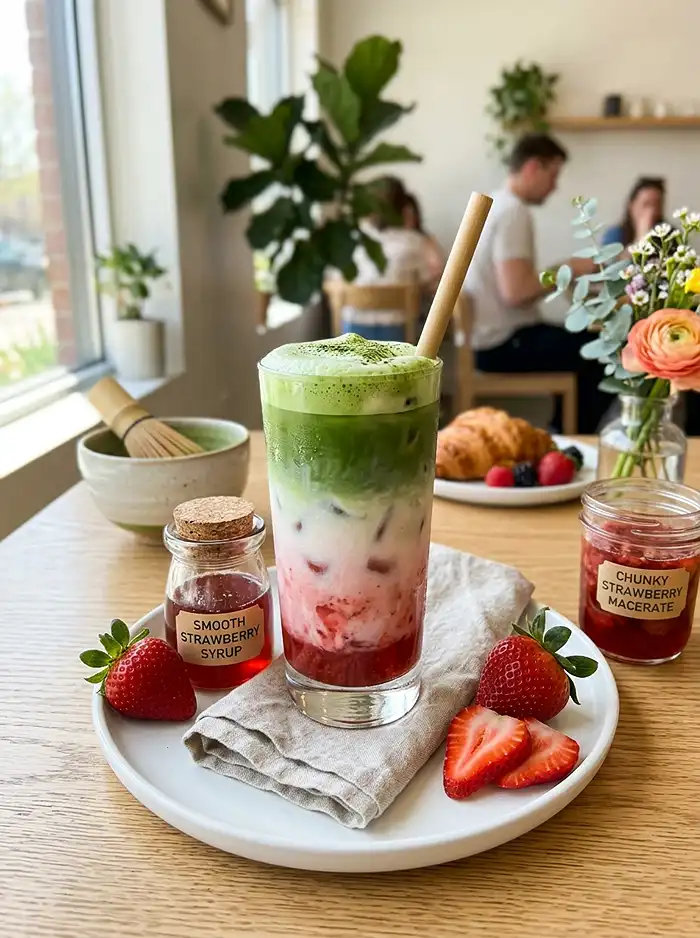
How to make strawberry syrup for matcha — 3 simple methods including cooked, no-cook macerated, and traditional cheong. Bright, fresh strawberry flavor that transforms any matcha latte. Save this for your next cafe-style drink day.