Japanese Milk Bread (Shokupan)
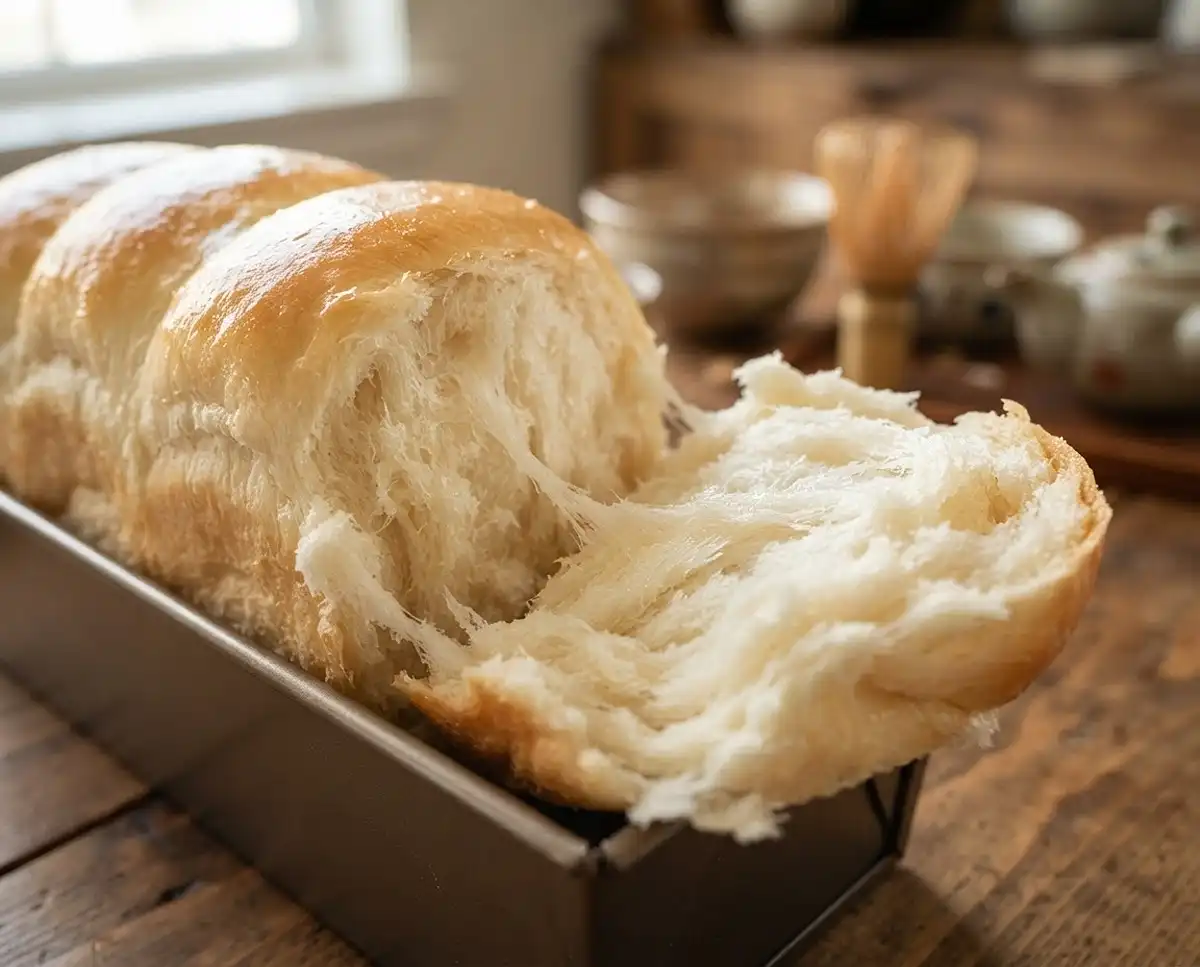
Japanese Milk Bread is a pillowy, cloud-soft white loaf made with a cooked flour-and-milk starter called tangzhong that gives it an impossibly tender crumb. It’s the kind of bread that stays soft for days and slices cleanly without crumbling.
This shokupan recipe uses a stand mixer and straightforward shaping, so it’s very manageable for a home baker. The tangzhong step adds about 10 minutes but makes all the difference in texture — it’s what sets this loaf apart from everyday white bread.
Table of Contents
Why You’ll Love This Japanese Milk Bread
- The tangzhong starter creates an ultra-tender crumb that stays soft longer than standard sandwich bread.
- Mildly sweet with a milky richness — delicious plain or with butter, jam, or eggs.
- Two-dough shaping gives the finished loaf a beautifully domed, pull-apart top.
- Made with pantry staples — no specialty flour or hard-to-find ingredients required.
- Bakes in a standard 9-by-5-inch loaf pan you likely already own.
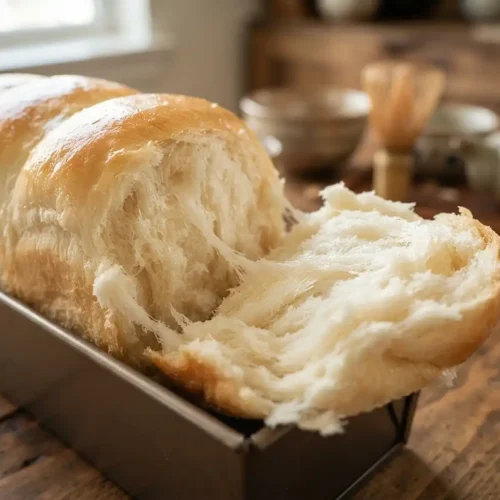
Japanese Milk Bread (Shokupan)
Equipment
- Small heavy pot
- Whisk
- Measuring cup
- Plastic wrap
- Stand Mixer
- Dough hook attachment
- Large bowl
- Kitchen towel
- Bench scraper
- 9-by-5-inch loaf pan
- Pastry brush
- Wire rack
Ingredients
Tangzhong Starter
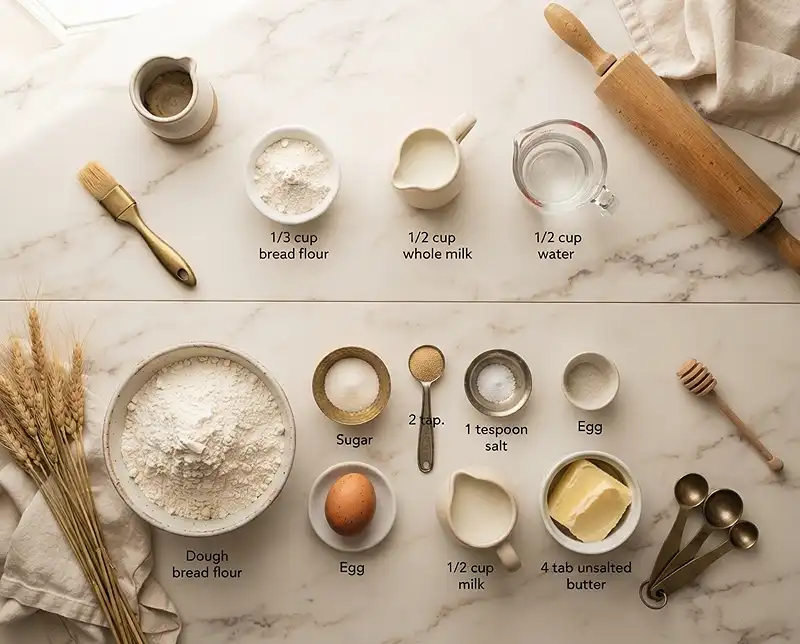
- ⅓ cup bread flour 45 g; forms the cooked paste base
- ½ cup whole milk 120 ml; adds richness to the starter
- ½ cup water 120 ml; hydrates the starter
Dough
- 2 ½ cups bread flour 325 g; higher protein for structure and chew
- ¼ cup sugar 60 g; sweetens and feeds the yeast
- 2 teaspoons active dry yeast 7 g or 1 packet; leavens the dough
- 1 teaspoon salt 4 g; balances flavor and controls yeast
- 1 large egg adds richness and structure
- ½ cup warm whole milk 120 ml, plus extra for brushing; hydrates dough and creates a golden crust
- 4 tablespoons unsalted butter 60 g, softened, plus extra for greasing the bowl and pan
Instructions
- In a small heavy pot, whisk together the bread flour, whole milk, and water for the tangzhong starter until smooth with no lumps.
- Place the pot over medium-low heat and cook, stirring often, until the mixture thickens but is still pourable, about 10 minutes.
- Scrape the tangzhong into a measuring cup, lightly press plastic wrap directly onto the surface, and let it cool to room temperature.
- In the bowl of a stand mixer fitted with a dough hook, combine the bread flour, sugar, active dry yeast, and salt. Mix for a few seconds until evenly combined.
- Add the egg, warm whole milk, and 1/2 cup of the cooled tangzhong starter. Turn the mixer to low speed and knead for 5 minutes.
- Add the softened butter and knead on low to medium speed for another 10 to 12 minutes, until the dough is smooth, springy, and just slightly tacky.
- Lightly butter the inside of a large bowl. Shape the dough into a smooth ball, place it in the bowl, and cover with a kitchen towel.
- Let the dough rise in a warm spot until doubled in size, 40 to 60 minutes.
- Punch the dough down and turn it out onto a work surface.
- Using a bench scraper, cut the dough evenly in half. Shape each half into a ball, cover loosely, and let rest for 15 minutes.
- Heat the oven to 350 degrees F. Generously butter a 9-by-5-inch loaf pan.
- Roll one dough ball into a thick oval, about 12 inches long and 6 inches across.
- Fold the top third down and the bottom third up to form a rough square, then roll it into a fat log.
- Place the log seam-side down at one end of the prepared loaf pan. Repeat with the second dough ball and place it at the other end of the pan.
- Cover and let the dough rest for 30 to 40 minutes, until it has risen above the rim of the pan.
- Brush the tops of the dough with milk.
- Bake on the bottom oven shelf until golden brown and puffed, 35 to 40 minutes.
- Let the bread cool in the pan for 10 minutes, then transfer it to a wire rack.
- Cool for at least 1 hour before slicing.
Notes
What Ingredients Do You Need for Japanese Milk Bread?
| Ingredient Group | Ingredient | Exact Amount | Purpose or Note |
|---|---|---|---|
| Tangzhong Starter | Bread flour | 1/3 cup (45 g) | Forms the cooked paste base |
| Tangzhong Starter | Whole milk | 1/2 cup (120 ml) | Adds richness to the starter |
| Tangzhong Starter | Water | 1/2 cup (120 ml) | Hydrates the starter |
| Dough | Bread flour | 2 1/2 cups (325 g) | Higher protein for structure and chew |
| Dough | Sugar | 1/4 cup (60 g) | Sweetens and feeds the yeast |
| Dough | Active dry yeast | 2 tsp (7 g / 1 packet) | Leavens the dough |
| Dough | Salt | 1 tsp (4 g) | Balances flavor and controls yeast |
| Dough | Egg, large | 1 | Adds richness and structure |
| Dough | Warm whole milk | 1/2 cup (120 ml), plus extra for brushing | Hydrates dough; milk wash for golden crust |
| Dough | Unsalted butter, softened | 4 tbsp (60 g), plus extra for greasing | Enriches dough; greases bowl and pan |
Bread flour is worth using here over all-purpose — its higher protein content gives shokupan that slightly chewy, structured crumb while still staying tender.
Only use half a cup of the cooled tangzhong starter in the dough. The recipe makes a little more than you’ll need, which is normal.
How to Make Japanese Milk Bread Step by Step
Make the Tangzhong Starter
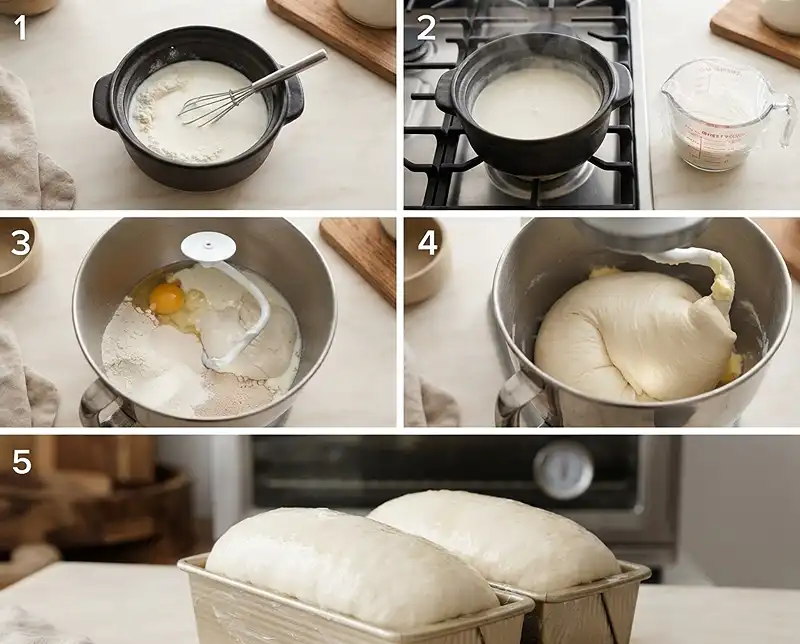
- In a small heavy pot, whisk together the bread flour, whole milk, and water until smooth with no lumps.
- Place over medium-low heat and cook, stirring often, until the mixture thickens but is still pourable, about 10 minutes. Scrape into a measuring cup, lightly press plastic wrap directly onto the surface, and let cool to room temperature.
Mix and Knead the Dough
- In the bowl of a stand mixer fitted with a dough hook, combine the bread flour, sugar, yeast, and salt. Mix for a few seconds until evenly combined.
- Add the egg, warm milk, and 1/2 cup of the cooled tangzhong starter. Turn the mixer to low speed and knead for 5 minutes.
- Add the softened butter and knead on low to medium speed for another 10 to 12 minutes, until the dough is smooth, springy, and just slightly tacky. Pro Tip: Add the butter only after the initial 5-minute knead — adding it too early prevents gluten from developing properly and you’ll end up with a dense loaf.
First Rise and Shape
- Lightly butter the inside of a large bowl. Shape the dough into a smooth ball, place it in the bowl, and cover with a kitchen towel. Let rise in a warm spot until doubled in size, 40 to 60 minutes.
- Punch the dough down and turn it out onto a work surface. Using a bench scraper, cut the dough evenly in half. Shape each half into a ball, cover loosely, and let rest 15 minutes.
- Heat the oven to 350 degrees F. Generously butter a 9-by-5-inch loaf pan.
Shape, Second Rise, and Bake
- Roll one dough ball into a thick oval, about 12 inches long and 6 inches across. Fold the top third down and the bottom third up to form a rough square, then roll it into a fat log. Place seam-side down at one end of the prepared pan. Repeat with the second dough ball and place at the other end.
- Cover and let rest 30 to 40 minutes, until the dough has risen above the rim of the pan. Brush the tops with milk. Pro Tip: Don’t skip the milk brush — it’s what gives shokupan its signature glossy, golden-brown crust.
- Bake on the bottom oven shelf until golden brown and puffed, 35 to 40 minutes.
- Let cool in the pan for 10 minutes, then transfer to a wire rack. Cool for at least 1 hour before slicing.
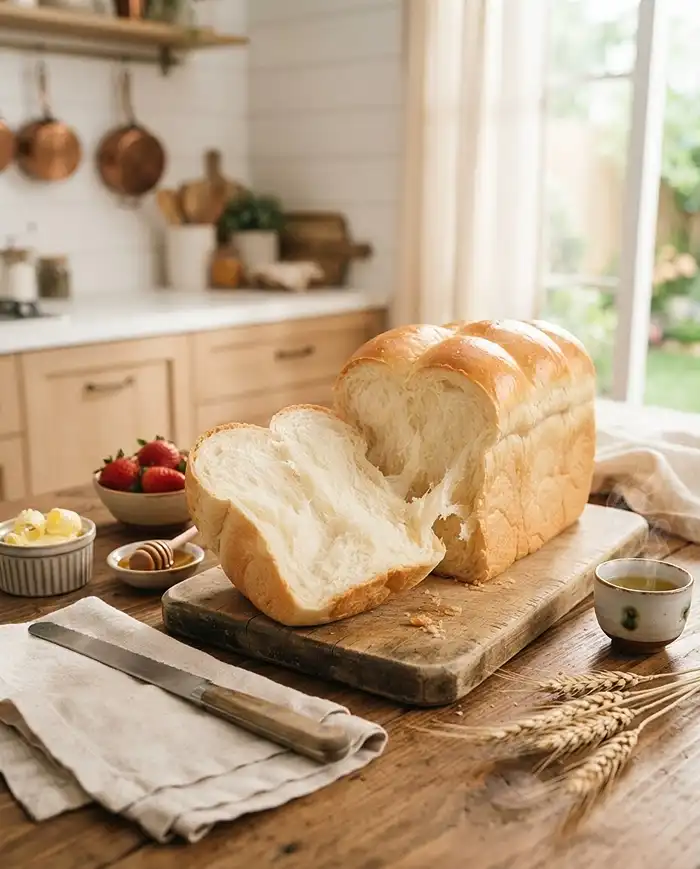
Tips, Troubleshooting, and Variations for Japanese Milk Bread
Pro Tips for Success
- Cool the tangzhong completely before using it. Adding a warm starter to the dough can prematurely activate or kill the yeast, leading to poor rise. Let it reach room temperature — press a piece of plastic wrap directly onto the surface to prevent a skin from forming.
- The dough should feel tacky, not sticky. After the full knead, the dough will cling just slightly to your fingers but should pull away cleanly. If it’s sticking aggressively to the bowl sides after 12 minutes, knead a minute or two longer.
- Bake on the bottom shelf. This placement helps the bottom crust set before the top over-browns. It’s a small detail that makes a real difference in the final look and texture.
- Don’t slice too soon. Cutting into the loaf before it has cooled at least 1 hour will result in a gummy crumb. The bread continues setting as it cools on the rack.
Troubleshooting Common Problems
Problem: The dough didn’t rise during the first proof.
Solution: Your yeast may have been old or the milk was too hot and killed it. Check the yeast’s expiration date and make sure the warm milk is between 100 and 110 degrees F — warm to the touch but not hot.
Problem: The bread looks pale and didn’t develop a golden crust.
Solution: Make sure you brushed the tops with milk right before baking and that the oven was fully preheated to 350 degrees F. Check that the loaf pan was placed on the bottom shelf.
Problem: The dough is very sticky and hard to handle after kneading.
Solution: This is normal for enriched doughs. Avoid adding extra flour — it will tighten the crumb. Lightly butter your hands and work surface instead of flouring them.
Problem: The loaf collapsed after baking.
Solution: The dough likely over-proofed during the second rise. In the future, watch for the dough to just crest above the pan’s edge — not balloon dramatically above it — before baking.
How to Store and Reheat Japanese Milk Bread
| Storage Method | Duration | Best Practice |
|---|---|---|
| Room temperature | Up to 3 days | Wrap tightly in plastic wrap or store in an airtight bag; keep away from direct sunlight |
| Refrigerator | Up to 1 week | Wrap well to prevent drying out; note bread may stale faster when refrigerated |
To revive a slice, toast it lightly or wrap it in a damp paper towel and microwave for 15 to 20 seconds — it softens the crumb nicely without making it rubbery.
Leftover shokupan makes excellent French toast, milk bread grilled cheese sandwiches, or thick-cut toast with butter and jam. If you enjoy baking with enriched doughs, you might also like this cinnamon roll poke cake for another soft, buttery bake.
Japanese Milk Bread FAQs
What is tangzhong and why does Japanese Milk Bread use it?
Tangzhong is a cooked paste made from flour, milk, and water. Heating the flour gelatinizes its starches, which allows the dough to hold more moisture. The result is a loaf with a noticeably softer, more pillowy crumb that stays fresh longer than bread made without it.
Can I make Japanese Milk Bread without a stand mixer?
Yes, but it takes effort. Knead by hand for about 15 to 20 minutes total, adding the butter gradually once the dough is cohesive. The dough is enriched and will be soft — use lightly buttered hands rather than extra flour to prevent sticking.
Can I use all-purpose flour instead of bread flour?
All-purpose flour can work in a pinch, but bread flour is strongly recommended. Its higher protein content gives shokupan its characteristic slightly chewy, structured crumb. Using all-purpose flour will produce a softer but less defined texture.
How do I know when the dough has proofed enough?
For the first rise, the dough should double in size, which takes 40 to 60 minutes in a warm spot. For the second rise, watch for the dough to crest just above the rim of the loaf pan, which takes 30 to 40 minutes. Avoid letting it balloon well above the pan.
Why does the recipe only use half the tangzhong?
This recipe makes a slightly larger batch of tangzhong than needed, which gives you a bit of buffer and makes stirring easier in a small pot. Only 1/2 cup of the cooled starter goes into the dough. The small amount left over can be discarded.
Give This Loaf a Try
If you’ve been curious about Japanese Milk Bread, this is a great place to start. The tangzhong method sounds technical but it’s genuinely simple, and the result is a loaf that’s hard to describe without sounding over the top.
Try it, then come back and leave a comment or rating — it really helps. And if you’d like to save this shokupan recipe for later, pin it on Pinterest so it’s easy to find when the bread-baking mood strikes.
While the bread is cooling, browse a few other recipes you might enjoy: these strawberry oat crumble bars make a great pairing, or try these mango coconut chia recovery cups for something light alongside a thick slice.
Japanese Milk Bread — a pillowy, mildly sweet shokupan loaf with an ultra-soft crumb made using the tangzhong method. Bakes golden and stays tender for days. Save this recipe to make your next homemade bread day count.