Fried Panko Crust on Egg Ball Bake
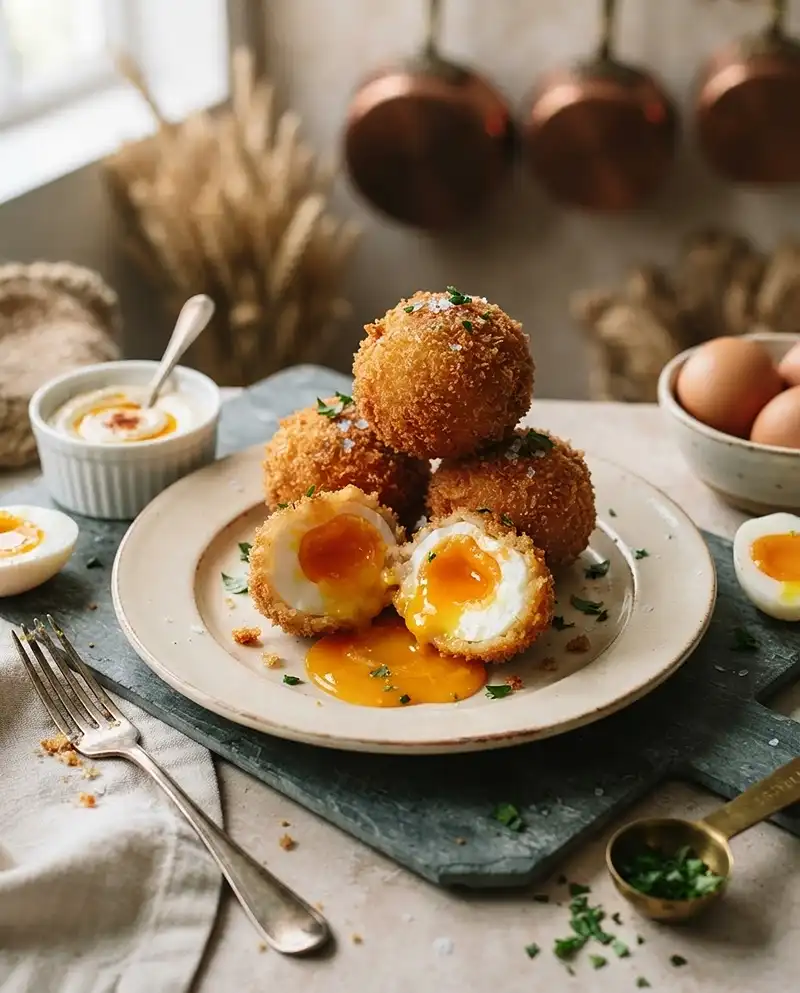
Fried panko crust on egg ball bake gives you a shatteringly crisp golden shell wrapped around a soft-boiled egg with a warm, runny yolk. It’s a showstopper snack or starter that comes together faster than you’d expect.
These panko-crusted fried eggs are the kind of thing that looks impressive but rewards patience more than skill. Nail the boil time, keep your oil hot, and you’re most of the way there. They work just as well baked if you’d rather skip the frying.
Table of Contents
Why You’ll Love These Panko-Crusted Fried Eggs
- The yolk stays jammy and golden inside a genuinely crunchy, well-seasoned crust
- A seasoned flour-buttermilk-panko dredge builds real flavor at every layer
- Optional Parmesan in the crust adds a savory, nutty depth without overwhelming
- A baked version is included for a lighter result with less hands-on frying
- Ready in about 30 minutes from start to finish

Fried Panko Crust on Egg Ball Bake
Equipment
- Saucepan or Pot
- Slotted Spoon or Strainer
- Three Shallow Bowls
- Whisk
- Small Deep Pot for Frying
- Kitchen thermometer
- Kitchen Timer
- Baking sheet
- Parchment paper
- Paper towels
Ingredients
The Eggs
- 4 large eggs soft-boiled for a jammy yolk
Dredging Bowl 1 (Seasoned Flour)
- ½ cup all-purpose flour first dry coat; helps the wet layer stick
- 1 teaspoon paprika or smoked paprika smoked version gives a deeper, smokier bite
- 1 teaspoon onion powder savory base flavor
- 1 teaspoon garlic powder savory base flavor
Dredging Bowl 2 (Wet Dip)
- ½ cup buttermilk or beaten eggs; binds the panko coating to the egg
Dredging Bowl 3 (Crunch Layer)
- 1 cup panko breadcrumbs creates the crispy, craggy outer crust
- 2-4 tablespoons grated Parmesan cheese optional; adds savory, nutty flavor to the crust
Frying and Seasoning
- salt and pepper to taste; season the flour and finish after cooking
- neutral oil canola or vegetable, enough for frying; high smoke point keeps flavors clean
- 2 tablespoons butter optional; added for extra flavor
Instructions
- Bring a pot of water to a boil and gently lower in the eggs. Boil for 5 to 6 minutes, watching the clock closely, since this is what keeps the yolk soft and jammy instead of chalky.
- The second the timer goes off, transfer the eggs straight into an ice bath to stop the cooking instantly. Let them sit in the ice water for 10 to 15 minutes before peeling.
- Peel the eggs gently under cool running water so the shell comes off easier and the egg stays whole. Soft-boiled eggs are delicate, so take your time, then pat each one dry. Pro tip: patting the eggs completely dry before dredging is essential, since any moisture on the surface will make the flour clump and the coating slide off in the oil.
- Set up a dredging station with three shallow bowls lined up assembly-line style. Bowl one gets the flour, paprika, onion powder, garlic powder, salt, and pepper whisked together. Bowl two is the buttermilk or beaten eggs. Bowl three is the panko mixed with Parmesan if using.
- Working with one peeled egg at a time, roll it gently through the seasoned flour and tap off any extra. Dip it into the buttermilk next, letting the excess drip away.
- Roll the egg through the panko mixture, pressing gently so the crumbs stick to every inch. Pro tip: press the panko firmly but without squeezing, so the crumbs are packed against the surface and the egg isn’t compressed.
- Heat the neutral oil to about 350°F in a small, deep pot or pan. Using a strainer or slotted spoon, carefully lower each coated egg into the hot oil and fry for about 30 seconds, just until the panko is deep golden brown. Pull them out fast, because a few extra seconds is the difference between jammy and hard-boiled. Pro tip: fry one egg at a time, since crowding the pan drops the oil temperature and leads to greasy, uneven browning.
- Baking option: Preheat the oven to 400°F (200°C) and set the coated eggs on a parchment-lined baking sheet. Bake for 20 to 25 minutes, until the panko turns crisp and golden. The crust won’t have quite the same crackle as the fried version, but it’s a solid lighter option.
- Season with a little extra salt and pepper right out of the fryer or oven. Serve hot, sliced in half so the molten yolk can show off, alongside a good dipping sauce like remoulade.
Notes
What Ingredients Do You Need for Fried Panko Crust on Egg Ball Bake?

| Ingredient Group | Ingredient | Exact Amount | Purpose or Note |
|---|---|---|---|
| The Eggs | Large eggs | 4 | Soft-boiled for a jammy yolk |
| Dredging Bowl 1 (Seasoned Flour) | All-purpose flour | ½ cup | First dry coat; helps the wet layer stick |
| Paprika or smoked paprika | 1 teaspoon | Smoked version gives a deeper, smokier bite | |
| Onion powder | 1 teaspoon | Savory base flavor | |
| Garlic powder | 1 teaspoon | Savory base flavor | |
| Dredging Bowl 2 (Wet Dip) | Buttermilk or beaten eggs | ½ cup | Binds the panko coating to the egg |
| Dredging Bowl 3 (Crunch Layer) | Panko breadcrumbs | 1 cup | Creates the crispy, craggy outer crust |
| Grated Parmesan cheese | 2–4 tablespoons | Optional; adds savory, nutty flavor to the crust | |
| Frying and Seasoning | Salt and pepper | To taste | Season the flour and finish after cooking |
| Neutral oil (canola or vegetable) | Enough for frying | High smoke point keeps flavors clean | |
| Butter | 2 tablespoons | Optional; added for extra flavor |
Panko breadcrumbs are the heart of this recipe. Their larger, airier flake creates a craggy crust that fries up noticeably crunchier than standard breadcrumbs.
The boil time — 5 to 6 minutes exactly — is what separates a jammy yolk from a chalky one. Buttermilk in the wet dip adds a mild tang that works well with the smoked paprika in the seasoned flour.
How to Make Fried Panko Crust on Egg Ball Bake Step by Step

- Bring a pot of water to a boil and gently lower in the eggs. Boil for 5 to 6 minutes, watching the clock closely, since this is what keeps the yolk soft and jammy instead of chalky.
- The second the timer goes off, transfer the eggs straight into an ice bath to stop the cooking instantly. Let them sit in the ice water for 10 to 15 minutes before peeling.
- Peel the eggs gently under cool running water so the shell comes off easier and the egg stays whole. Soft-boiled eggs are delicate, so take your time, then pat each one dry.
Pro Tip: Patting the eggs completely dry before dredging is essential. Any moisture on the surface will make the flour clump and the coating slide off in the oil.
- Set up a dredging station with three shallow bowls lined up assembly-line style. Bowl one gets the flour, paprika, onion powder, garlic powder, salt, and pepper whisked together. Bowl two is the buttermilk or beaten eggs. Bowl three is the panko mixed with Parmesan if using.
- Working with one peeled egg at a time, roll it gently through the seasoned flour and tap off any extra. Dip it into the buttermilk next, letting the excess drip away.
- Roll the egg through the panko mixture, pressing gently so the crumbs stick to every inch. This is what gives you that gorgeous, craggy crust once it hits the hot oil.
Pro Tip: Press the panko firmly but without squeezing — you want the crumbs packed against the surface, not the egg compressed.
- Heat the neutral oil to about 350°F in a small, deep pot or pan. Using a strainer or slotted spoon, carefully lower each coated egg into the hot oil and fry for about 30 seconds, just until the panko is deep golden brown. Pull them out fast, because a few extra seconds is the difference between jammy and hard-boiled.
Pro Tip: Fry one egg at a time in a small pot. Crowding the pan drops the oil temperature and leads to greasy, uneven browning instead of a crisp crust.
- Baking option: Preheat the oven to 400°F (200°C) and set the coated eggs on a parchment-lined baking sheet. Bake for 20 to 25 minutes, until the panko turns crisp and golden. The crust won’t have quite the same crackle as the fried version, but it’s a solid lighter option.
- Season with a little extra salt and pepper right out of the fryer or oven. Serve hot, sliced in half so the molten yolk can show off, alongside a good dipping sauce like remoulade.
Expert Tips, Variations, and Troubleshooting for Panko-Crusted Fried Eggs
Pro Tips for Success
The most important variable in this recipe is the boil time. Five minutes gives you a very runny yolk; six minutes is jammy and holds its shape when sliced. Either works, but six is more forgiving.
Keep your oil temperature at 350°F throughout frying. If it drops too low, the coating absorbs oil instead of crisping. A kitchen thermometer takes the guesswork out entirely.
For the best crust coverage, use one hand for dry dredging and one hand for the wet dip. Keeping your hands separate stops the breading from clumping into thick, uneven patches.
If you’re making these for a group, coat all the eggs before you start frying. The coating sets up nicely and holds for a few minutes while you work through them one at a time.
The dipping sauce matters here. A sharp remoulade, sriracha mayo, or even a simple soy-ginger dip cuts through the richness of the yolk and the fried crust.
Variations
Smoked Paprika Crust: Swap standard paprika for smoked paprika in the flour mixture. The smokier flavor pairs especially well with remoulade or aioli.
Parmesan-Heavy Crust: Use the full 4 tablespoons of Parmesan in the panko layer. The cheese browns and crisps against the hot oil, adding a nutty, savory edge to the exterior.
Baked Instead of Fried: Follow the baking option in Step 8 at 400°F for 20 to 25 minutes. The texture is less shattering than the fried version, but the crust still gets crisp and golden without any oil in the pan.
Troubleshooting Common Problems
Problem: The coating is falling off during frying.
Solution: The egg surface was likely still damp when dredged. Pat eggs thoroughly dry after peeling, and press the panko layer firmly before they go in the oil.
Problem: The yolk is already set solid after frying.
Solution: The boil time was too long, or the frying took longer than 30 seconds. Keep the boil to 5–6 minutes and fry fast — the crust only needs 30 seconds to brown.
Problem: The crust looks pale and oily instead of golden.
Solution: The oil wasn’t hot enough. Let it come fully to 350°F before adding the egg, and check the temperature between each one.
Problem: Coating clumps unevenly on the egg surface.
Solution: Too much buttermilk wasn’t dripped off before rolling in panko. Let the excess fall away before the crumb coat, and use one clean hand for each bowl.
How to Store and Reheat Fried Panko Crust on Egg Ball Bake
| Storage Method | Duration | Best Practice |
|---|---|---|
| Refrigerator | Up to 2 days | Store in an airtight container; the crust softens over time |
These are best eaten right away. The panko crust softens significantly in the fridge as it absorbs moisture from the egg.
To re-crisp refrigerated eggs, place them in a 375°F oven for 8 to 10 minutes. Avoid the microwave, which will steam the crust and make it chewy. The yolk will firm up further on reheating.
Leftover panko-crusted soft-boiled eggs can be sliced and served over a grain bowl, added to a ramen-style soup, or eaten cold on toast with a smear of mayo — the yolk is still good even if it’s no longer runny.
Frequently Asked Questions
Can I make panko-crusted fried eggs ahead of time?
You can soft-boil and peel the eggs up to 2 days ahead and store them refrigerated in an airtight container. Dredge and fry or bake them right before serving — the crust does not hold well once cooked.
What is the difference between fried and baked panko-crusted eggs?
Frying at 350°F for 30 seconds produces a shatteringly crisp, deeply golden crust while keeping the yolk fully jammy. Baking at 400°F for 20 to 25 minutes gives a crisp, golden result but with less crackle and a slightly firmer yolk.
What dipping sauce works best with these?
Remoulade is a classic pairing. Sriracha mayo, aioli, or a soy-ginger dip also work well. A sharp, tangy sauce cuts through the richness of the yolk and the fried crust.
Why is my coating falling off during frying?
The most common cause is moisture on the egg surface before dredging. Pat each peeled egg completely dry, press the panko firmly onto every surface, and make sure your oil is fully at 350°F before the egg goes in.
Can I use regular breadcrumbs instead of panko?
Panko is strongly recommended because its larger, airier flake creates the craggy, shatteringly crisp crust this recipe is built around. Standard breadcrumbs produce a denser, finer crust that doesn’t have the same texture.
Try These and Tell Us What You Think
Once you slice one open and watch that yolk spill out, you’ll understand why these are hard to stop at one. Give the recipe a try, then leave a rating or comment below — it genuinely helps.
If you’re into recipes with a little technique and a big payoff, the air fryer Japanese cheesecake is another one worth bookmarking.
Save this to Pinterest so you can find it again when the craving hits — and share it with anyone who needs a new egg obsession.
Crispy panko-crusted fried eggs with a jammy, golden yolk inside — save this recipe and try it this week. The baked version works great too. Pin it so you never lose it.