
Fire Cider Recipe
Fire cider recipe made in a blender with apple cider vinegar, fresh pineapple, ginger, garlic, and cayenne — a potent, zesty tonic you can drink as a shot, stir into dressings, or add to mocktails.
Fire cider is a bold, tangy apple cider vinegar tonic blended with fresh ginger, garlic, pineapple, and spices into a bright, fiery shot. This homemade fire cider recipe comes together in under five minutes and keeps in the fridge for up to six weeks.
Unlike traditional recipes that steep for weeks, this blender version gets you a smooth, strained tonic fast — no waiting, no mess. The pineapple softens the sharp vinegar edge, while cayenne and horseradish give it a genuine kick. It’s a recipe for fire cider that actually tastes as bold as it sounds.
Table of Contents
Why You’ll Love This Fire Cider Recipe
- Ready in under 10 minutes — no long steeping or fermenting required
- Bright, tangy, and genuinely spicy with layers of ginger, garlic, and cayenne heat
- Versatile enough to sip as a shot, shake into dressings, or splash into sparkling water
- Stores for up to 4–6 weeks in the fridge, so one batch lasts
- Easily adjustable — dial the heat, sweetness, or earthiness to your taste

Homemade Fire Cider
Equipment
- High-speed blender
- Fine-mesh strainer
- Cheesecloth or Nut Milk Bag (optional)
- Wooden spoon
- Measuring Glass or Bowl
- Cutting board
- Sharp knife
- Vegetable Peeler
- Glass Bottle or Swing-Top Jar
Ingredients
Base
- ⅔ cup raw unfiltered apple cider vinegar the tangy, probiotic-rich backbone of the tonic
Fruit
- ½ cup fresh pineapple chopped into 1/2-inch cubes; softens the vinegar’s sharpness and adds natural sweetness
Aromatics
- 1 (2-inch) piece fresh ginger peeled and cut into smaller chunks; brings warmth and a spicy-floral bite
- 1 (1-inch) piece fresh horseradish root peeled; optional, adds an extra sharp, pungent heat
- 1 large clove garlic peeled; savory depth and pungency
Citrus
- ¼ small lime about 20 g, peel included if organic; bright citrus notes and a hint of bitterness
Sweetener
- 1 ½ Tbsp honey raw, local preferred; substitute maple syrup or agave if vegan
Spices
- 1/2-3/4 tsp ground turmeric earthy warmth and that signature golden-orange color
- 1 pinch ground black pepper helps with turmeric absorption
- ⅛ tsp ground cayenne the fire in fire cider; lingering, building heat
Instructions
- Wash and prep your fresh produce: pineapple, ginger, garlic, and lime. Pro tip: cut the ginger and horseradish into smaller chunks before adding, since it helps even a mid-range blender break them down fully without leaving fibrous bits behind.
- Add all ingredients to a high-speed blender: apple cider vinegar, pineapple, ginger, horseradish (if using), garlic, lime, honey, turmeric, black pepper, and cayenne. Blend on high for 30 to 45 seconds until no large pieces remain. If your blender isn’t very powerful, this may take a bit longer.
- Pour the blended mixture through a fine mesh strainer into a measuring glass or bowl. Use the back of a wooden spoon to press and stir the pulp so all the liquid comes through, then discard the leftover pulp.
- You should now have a smooth, orange-colored tonic with no lumps. Taste and adjust, adding more honey for sweetness, more turmeric for earthiness, or more cayenne for heat. It should be potent. Pro tip: go slowly with the cayenne, since a little goes a long way and the heat builds as the tonic sits.
- Drink as desired. It works well as a shot before meals to stimulate digestion, and you can also stir it into salad dressings, use it in marinades, add it to cocktails, or mix it into sparkling water for a fire cider mocktail.
- Pour into a glass bottle or jar, seal, and refrigerate for up to 4 to 6 weeks. Separation is completely normal, so just shake before serving. Pro tip: a small glass jar or swing-top bottle works best, since it makes shaking easy and the tight seal helps preserve the tonic longer.
Notes
What Ingredients Do You Need for Fire Cider?
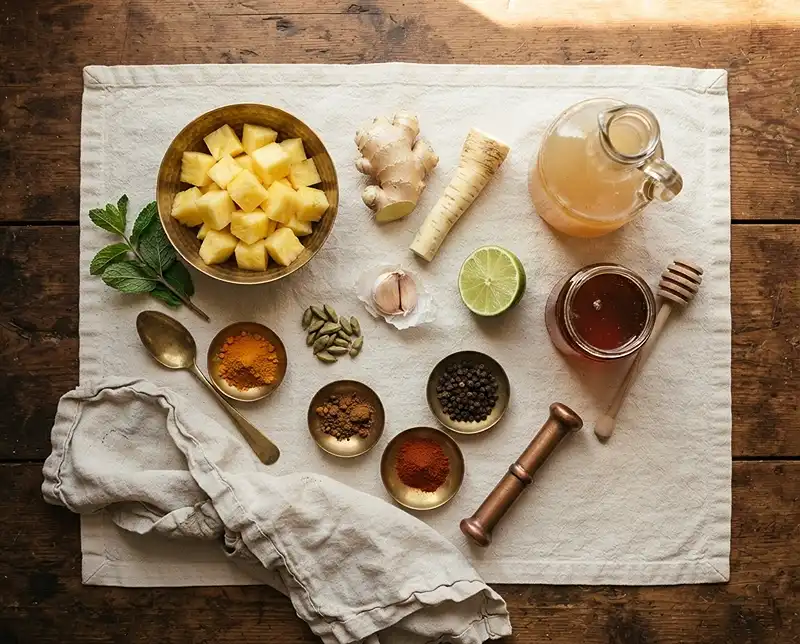
| Ingredient Group | Ingredient | Exact Amount | Purpose or Note |
|---|---|---|---|
| Base | Raw unfiltered apple cider vinegar | 2/3 cup | The tangy, probiotic-rich backbone of the tonic |
| Fruit | Fresh pineapple, cut into 1/2-inch cubes | 1/2 cup chopped | Softens the vinegar’s sharpness; adds natural sweetness |
| Aromatics | Fresh ginger, peeled | 1 (2-inch) piece | Brings warmth and a spicy-floral bite |
| Aromatics | Fresh horseradish root, peeled | 1 (1-inch) piece | Optional; adds an extra sharp, pungent heat |
| Aromatics | Garlic clove, peeled | 1 large clove | Savory depth and pungency |
| Citrus | Lime (peel included if organic) | 1/4 small (~20 g) | Bright citrus notes and a hint of bitterness from the peel |
| Sweetener | Honey (raw, local preferred) | 1 1/2 Tbsp | Balances the acidity; sub maple syrup or agave if vegan |
| Spices | Ground turmeric | 1/2–3/4 tsp | Earthy warmth and that signature golden-orange color |
| Spices | Ground black pepper | 1 pinch | Helps with turmeric absorption |
| Spices | Ground cayenne | 1/8 tsp | The fire in fire cider — lingering, building heat |
The pineapple is the secret weapon here. It mellows the raw vinegar without making the tonic taste like juice — you still get all that punch, just without the hard, mouth-puckering edge.
Raw unfiltered apple cider vinegar is key for this best fire cider recipe. Filtered vinegar works, but the unfiltered kind brings more complexity. And if you skip the horseradish, the tonic is still plenty bold.
How to Make Fire Cider Step by Step

- Wash and prep your fresh produce — pineapple, ginger, garlic, and lime.
- Add all ingredients to a high-speed blender: apple cider vinegar, pineapple, ginger, horseradish (if using), garlic, lime, honey, turmeric, black pepper, and cayenne. Blend on high for 30–45 seconds until no large pieces remain. If your blender isn’t very powerful, this may take a bit longer.
Pro Tip: Cut the ginger and horseradish into smaller chunks before adding — it helps even a mid-range blender break them down fully without leaving fibrous bits behind.
- Pour the blended mixture through a fine mesh strainer into a measuring glass or bowl. Use the back of a wooden spoon to press and stir the pulp so all the liquid comes through. Discard the leftover pulp.
- You should now have a smooth, orange-colored tonic with no lumps. Taste and adjust — more honey for sweetness, more turmeric for earthiness, or more cayenne for heat. It should be potent.
Pro Tip: Go slowly with the cayenne adjustments. A little goes a long way, and the heat builds over time as the tonic sits.
- Drink as desired. It works well as a shot before meals to stimulate digestion. You can also stir it into salad dressings, use it in marinades, add it to cocktails, or mix it into sparkling water for a fire cider mocktail.
- Pour into a glass bottle or jar, seal, and refrigerate for up to 4–6 weeks. Separation is completely normal — just shake before serving.
Pro Tip: A small glass jar or a swing-top bottle works best for storage. It makes shaking before each use easy, and the tight seal helps preserve the tonic longer.
Expert Tips, Variations, and Troubleshooting
Pro Tips for Success
Use a high-speed blender if you have one. The ginger and horseradish are fibrous, and a standard blender may leave chunks behind even after 45 seconds of blending.
Don’t skip the straining step. Pressing the pulp through a fine mesh strainer is what gives this homemade fire cider recipe its smooth, drinkable texture. A cheesecloth-lined strainer works too.
Taste before you seal. Everyone’s heat tolerance is different. After straining, it’s easy to nudge the flavor in any direction — a touch more honey, a pinch more cayenne, or a little extra turmeric.
Peel the lime only if it’s organic. Conventional lime peels can carry pesticide residue. If yours isn’t organic, just use the lime flesh.
The most common mistake is not pressing the pulp firmly enough during straining. Press hard with a spoon — you’ll get noticeably more liquid and less waste.
Troubleshooting Common Problems
Problem: The tonic tastes too sharp or acidic.
Solution: Add a bit more honey (or maple syrup) and blend or stir well. The pineapple already softens the vinegar, but sweetener is the fastest way to bring it into balance.
Problem: The tonic is too thick or pulpy after straining.
Solution: Strain it a second time through a fine mesh strainer, pressing firmly. For an even cleaner result, line the strainer with a nut milk bag or cheesecloth.
Problem: The heat level is too mild.
Solution: Add cayenne in small pinches and stir — the heat from cayenne intensifies as it sits, so start conservatively and taste again after a minute.
How to Store and Reheat Fire Cider
| Storage Method | Duration | Best Practice |
|---|---|---|
| Refrigerator (glass bottle or jar) | 4–6 weeks | Shake well before each use; separation is normal |
This tonic is served cold or at room temperature — no reheating needed. Store it in a sealed glass bottle or airtight jar in the fridge for the best flavor and longest shelf life.
Beyond drinking it as a shot, the leftover tonic is great stirred into salad dressings in place of plain vinegar, used as a bold marinade base, or mixed with sparkling water over ice for a lively mocktail.
Fire Cider Recipe FAQs
Can I make fire cider without a high-speed blender?
Yes, a standard blender will work, though it may take longer — blend in 15-second bursts and check for large pieces. The straining step catches anything the blender misses, so your tonic will still come out smooth.
Is horseradish root required in this fire cider recipe?
No, the recipe marks it as optional. The tonic is still bold and spicy without it. If you enjoy a sharp, pungent heat, fresh horseradish adds an extra layer — but it’s genuinely optional.
Can I use bottled lemon juice instead of fresh lime?
The recipe calls for a quarter of a fresh lime, peel included (if organic). Bottled juice is not listed as a substitute, and the peel contributes bitterness that bottled juice won’t replicate.
How do I know when fire cider has gone bad?
If the tonic smells off, changes color significantly beyond the normal separation, or develops an unusual texture, discard it. Properly refrigerated in a sealed glass container, it keeps for up to 4-6 weeks.
What can I mix fire cider into besides drinking it straight?
You can stir it into salad dressings, use it as a marinade, add it to cocktails, or mix it with sparkling water for a mocktail. The tangy, spiced flavor works well anywhere you’d use a bold vinegar.
Try It and Tell Us What You Think
Once you make this fire cider recipe, you’ll see how quick it is to have a powerful tonic ready in the fridge. Give it a shot — literally — before your next meal and taste the difference.
Tried it? Leave an honest comment or star rating below. And if you loved it, save it to Pinterest so you can find it again anytime.
Looking for more bold, flavorful recipes? Try our creamy pumpkin gnocchi with sage for something hearty and satisfying, or check out our brown butter cream cheese frosting carrot cake for your next baking project.
Fiery, bright, and surprisingly easy — this homemade fire cider recipe takes less than 10 minutes to blend and strain. Save it for later and come back whenever you need a bold, tangy tonic with real kick.