Classic Beef Brisket Recipe
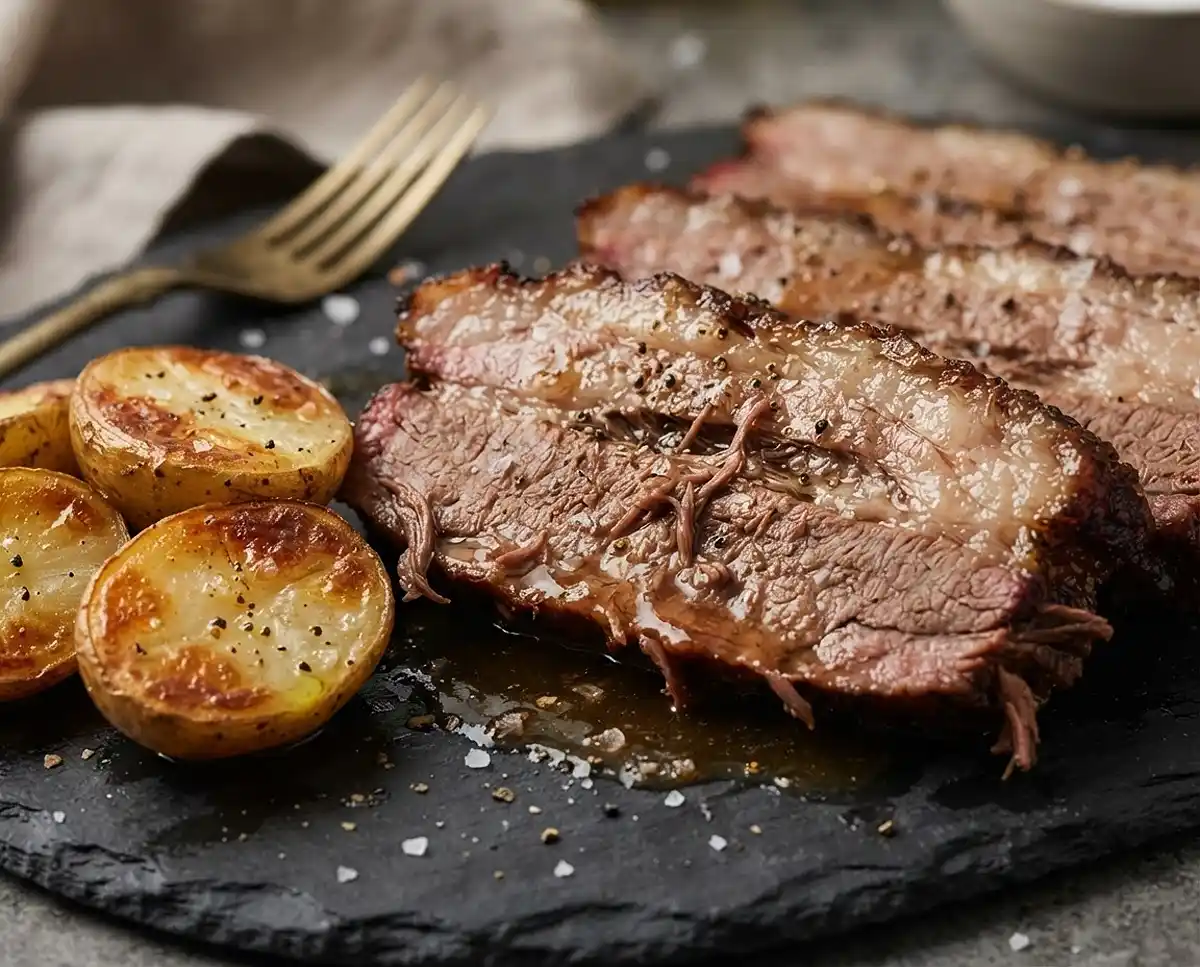
This classic beef brisket recipe gives you deeply savory, fork-tender meat with a golden crust — all in one roasting pan. It works equally well for a relaxed Sunday dinner or a special occasion.
A classic beef brisket recipe uses a two-temperature roasting method: a blast of high heat builds the crust, then a long, slow braise in beef broth makes the meat pull-apart tender.
Baby potatoes cook right alongside the brisket, making this a genuine one-pan dinner. If you want roasted potatoes with crisp edges, there’s an easy step for that too.
Table of Contents
Why You’ll Love This Classic Beef Brisket Recipe
- Rich, deeply savory flavor from a long, slow braise in beef broth
- A golden, caramelized crust that forms before the low-and-slow finish
- Baby potatoes cook in the same pan — fewer dishes, more flavor
- Straightforward seasoning lets the beef shine without a long ingredient list
- Slices beautifully against the grain for reliably tender results every time
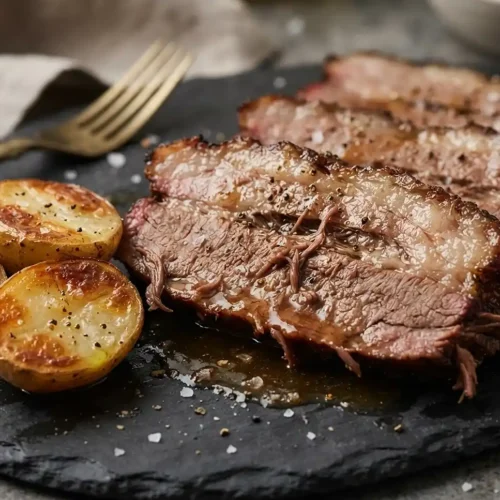
Classic Beef Brisket with Tender Potatoes
Equipment
- Large roasting pan
- Aluminum foil
- Carving knife
- Cutting board
- Meat fork
Ingredients
- 4 lb Beef brisket Placed fat side up so drippings baste the meat
- Kosher salt To taste, generous; applied in two stages for layered flavor
- Freshly ground black pepper To taste, generous; applied in two stages alongside the salt
- 3 lb Baby potatoes, halved Form the base of the pan; become roasted or stewed
- Extra-virgin olive oil For drizzling; coats the potatoes before roasting
- 3 cups Low-sodium beef broth Added at the temperature drop to braise the brisket
Instructions
- Preheat the oven to 425 degrees F. Generously season the brisket with kosher salt and freshly ground black pepper on both sides.
- Place the halved baby potatoes in a large roasting pan and drizzle with olive oil. Season with salt and pepper. Set the brisket on top of the potatoes, fat side up.
- Roast uncovered until a deeply golden brown crust forms on top of the brisket and the potatoes are cooked through, about 1 hour and 15 minutes.
- Reduce the oven temperature to 300 degrees F. At this point, remove the potatoes if you want roasted potatoes, or leave them in the pan for stewed potatoes. Add 3 cups of beef broth to the pan and season the brisket again with salt and pepper. Tightly cover the pan with foil.
- Return to the oven and continue to bake until the brisket is tender and a fork meets almost no resistance when inserted, about 2 hours and 30 minutes.
- Let the brisket rest for 10 minutes before slicing against the grain for tender slices. Serve with the potatoes alongside.
Notes
What Ingredients Do You Need for Classic Beef Brisket?
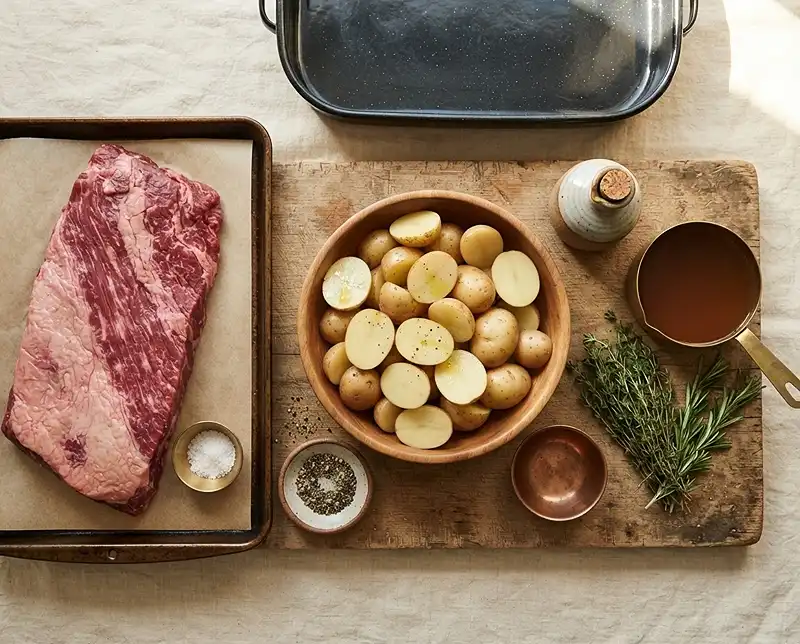
| Ingredient Group | Ingredient | Exact Amount | Purpose or Note |
|---|---|---|---|
| Beef | Beef brisket | 4 lb. | Placed fat side up so drippings baste the meat |
| Seasoning | Kosher salt | To taste (generous) | Applied in two stages for layered flavor |
| Seasoning | Freshly ground black pepper | To taste (generous) | Applied in two stages alongside the salt |
| Potatoes | Baby potatoes, halved | 3 lb. | Form the base of the pan; become roasted or stewed |
| Fat | Extra-virgin olive oil | For drizzling | Coats the potatoes before roasting |
| Liquid | Low-sodium beef broth | 3 cups | Added at the temperature drop to braise the brisket |
The beef brisket goes in fat side up — this is intentional. As the fat renders, it bastes the meat throughout the long roast, keeping it moist and adding flavor.
Low-sodium broth gives you control over the final saltiness, especially since you season the brisket twice. Using a full-flavored broth here makes a noticeable difference in the pan juices.
How to Make Classic Beef Brisket Step by Step
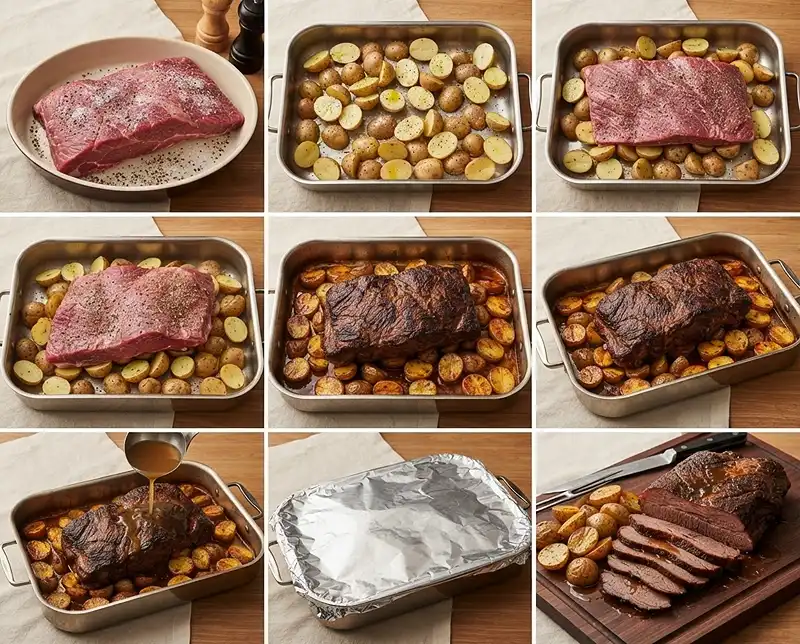
Build the Crust
- Preheat the oven to 425°F. Generously season the brisket with kosher salt and freshly ground black pepper on both sides.
- Place the halved baby potatoes in a large roasting pan and drizzle with olive oil. Season with salt and pepper. Set the brisket on top of the potatoes, fat side up.
- Roast uncovered until a deeply golden brown crust forms on top of the brisket and the potatoes are cooked through, about 1 hour and 15 minutes.
Pro Tip: Don’t skip the high-heat stage — that golden crust is where a lot of the flavor lives, and you can’t build it during the low-and-slow braise.
Braise Low and Slow
- Reduce the oven temperature to 300°F. At this point, remove the potatoes if you want roasted potatoes, or leave them in the pan for stewed potatoes. Add 3 cups of beef broth to the pan and season the brisket again with salt and pepper. Tightly cover the pan with foil.
- Return to the oven and continue to bake until the brisket is tender and a fork meets almost no resistance when inserted, about 2 hours and 30 minutes.
Pro Tip: Seal the foil tightly around the edges of the pan — any steam that escapes is moisture that should be going into the meat.
Rest and Slice
- Let the brisket rest for 10 minutes before slicing against the grain for tender slices. Serve with the potatoes alongside.
Pro Tip: Slicing against the grain shortens the muscle fibers, which is what makes each bite feel tender rather than chewy — look for the lines running along the meat and cut perpendicular to them.
Tips, Variations, and Troubleshooting for This Brisket Recipe
Pro Tips for Success
Season generously both times. The first seasoning builds flavor on the crust. The second round, added before the braise, seasons the braising liquid and the interior of the meat as it cooks.
Keep the foil tight during the braise. The steam is doing the work of tenderizing the brisket — any gaps let that moisture escape and can leave you with a drier result after nearly four hours of cooking.
The resting period matters. Ten minutes off heat lets the juices redistribute through the meat. Cut too soon and those juices run out onto the cutting board instead of staying in the slices.
Use a large enough roasting pan. The potatoes need to spread out in a single layer so they cook evenly rather than steaming in a pile.
Fat side up is not optional. That cap of fat on top bastes the meat as it renders. Placing the brisket fat side down traps the fat underneath instead.
Variations
Roasted potatoes: Remove the potatoes after the high-heat stage (step 4). They’ll have crisp, golden edges. Set them aside and return them briefly to the oven to warm through before serving if needed.
Stewed potatoes: Leave the potatoes in the pan through the full braise. They absorb the beef broth and drippings and become soft, savory, and deeply flavored — more like a braise than a roast.
Troubleshooting Common Problems
Problem: The brisket is tough after the full cooking time.
Solution: Return it to the oven covered and check again in 20-minute intervals. Brisket is done when a fork slides in with almost no resistance, not just when the timer goes off.
Problem: The crust didn’t brown during the high-heat stage.
Solution: Make sure the oven is fully preheated to 425°F before the pan goes in. A cold oven slows browning significantly. Also ensure the fat cap is facing up and exposed.
Problem: The pan juices taste too salty.
Solution: This is why low-sodium broth is recommended. If you used regular broth and the seasoning is heavy, skim the juices and serve them sparingly rather than as a full sauce.
How to Store and Reheat Classic Beef Brisket
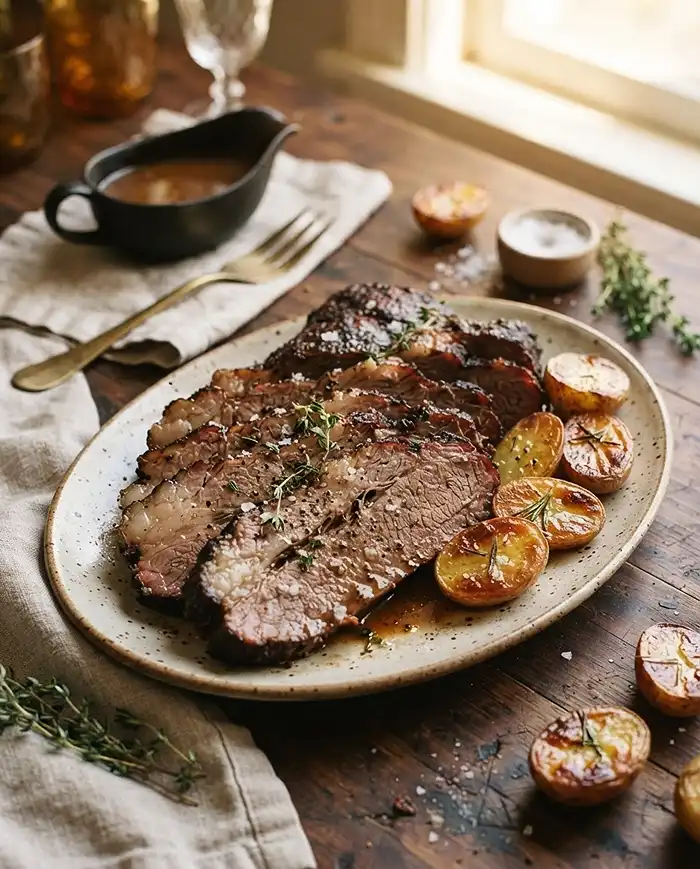
| Storage Method | Duration | Best Practice |
|---|---|---|
| Refrigerator | 3 to 4 days | Store slices in an airtight container with some pan juices to keep them moist |
| Freezer | Up to 3 months | Freeze in portions with pan juices; thaw overnight in the refrigerator before reheating |
To reheat, place brisket slices in a covered baking dish with a splash of beef broth. Warm in a 300°F oven until heated through. This low temperature keeps the meat from drying out.
Leftover brisket works well in a few other directions. Chop it and use it in a hearty French onion beef casserole, fold it into tacos with pickled onions, or serve thin slices over rice with a drizzle of the pan juices.
Frequently Asked Questions
How do I know when the brisket is done?
The brisket is done when a fork inserted into the thickest part meets almost no resistance. The meat should feel very tender, not springy or firm. If it still pushes back, return it to the oven covered and check every 20 minutes.
Do I have to use baby potatoes?
The recipe calls specifically for baby potatoes, halved. Their size means they cook through during the high-heat stage and hold up during the braise without turning to mush.
Can I make classic beef brisket ahead of time?
Yes. Brisket often tastes even better the next day after the flavors have had time to meld. Cook it fully, let it cool, then refrigerate it in the pan juices. Slice and reheat gently at 300°F with a splash of broth.
What is the difference between roasted and stewed potatoes in this recipe?
It comes down to when you remove the potatoes from the pan. Pull them out before adding the broth and they’ll have golden, slightly crisp edges. Leave them in through the braise and they’ll absorb the braising liquid and become soft and savory.
Why do I season the brisket twice?
The first seasoning goes on before the high-heat roast and builds the flavorful crust. The second round, added before the braise, seasons the broth and penetrates deeper into the meat during the long, covered cook.
Ready to Make This Brisket?
This classic beef brisket recipe is worth every minute of the low-and-slow cook time. Clear your afternoon, set your oven, and let the smell do the convincing.
If you try it, leave a comment below and let me know how it turned out. A rating helps other home cooks find it too.
Save this brisket recipe to Pinterest so you can find it again on a weekend when you’re ready for something truly satisfying. And if you love one-pan dinners built around good protein, the Ya Ya chicken recipe is another great one to have on rotation — or try the Japanese curry ground beef skillet for a quick weeknight take on hearty beef.
Classic beef brisket recipe with baby potatoes — golden crust, fork-tender meat, one pan. Save this recipe for your next slow-roast Sunday dinner.