Tamarind Paste (2 Ingredients)
Make this foolproof homemade tamarind paste with just tamarind pulp and hot water — thick, tangy, and ready in under an hour. Save this for weeknight cooking and never buy the jar version again.
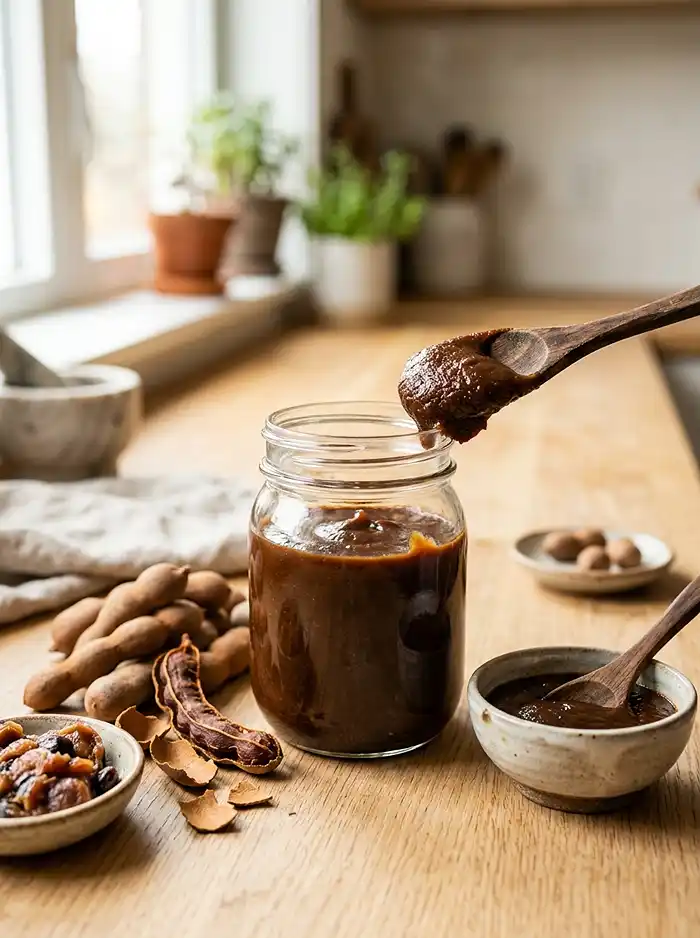
Tamarind paste is a thick, sour concentrate made by soaking and straining tamarind pulp. This recipe serves 4–6 (yields roughly one cup of paste), produces a deeply tangy, dark brown paste with a bold sweet-sour depth, and is perfect for stocking your fridge before a week of Southeast Asian or Indian cooking.
Here’s everything you need to make it perfectly.
I’ve made tamarind paste more times than I can count, and the biggest thing I learned — the hard way — is that the quality of your starting pulp determines everything. Grainy, stringy paste usually means the tamarind wasn’t soaked long enough before straining. Give it the full 45 to 60 minutes and the difference is night and day.
Table of Contents
Why You’ll Love This Tamarind Paste
This 2-ingredient tamarind paste comes together with zero special equipment and about five minutes of active effort. The result is a thick, concentrated paste — properly sour, slightly fruity, with that signature tangy depth you just can’t get from a bottle.
It keeps for a month in the fridge and a full year in the freezer, so you make it once and use it all season. Honestly, once you’ve made your own, the store-bought stuff feels like a downgrade.
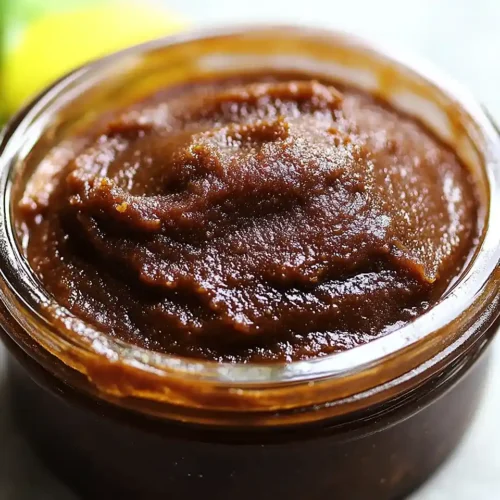
Easy Homemade Tamarind Paste (2 Ingredients)
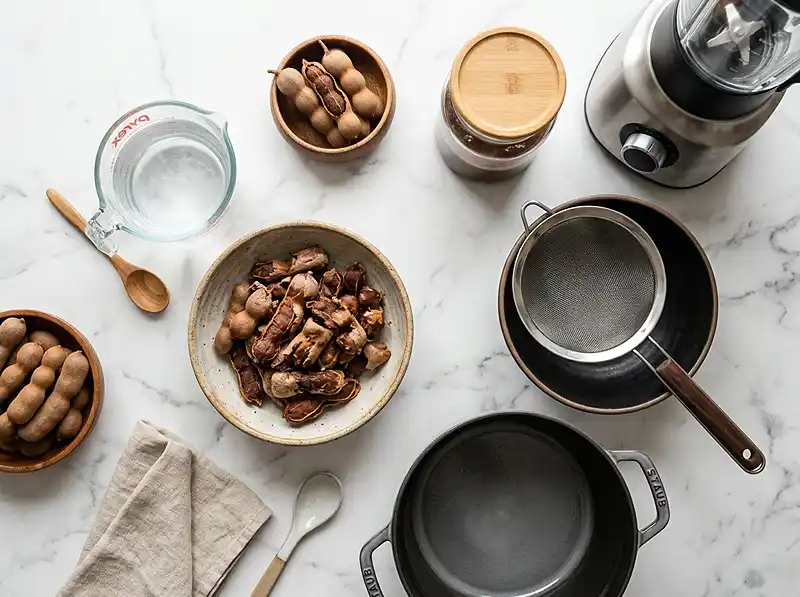
Equipment
- Mixing bowl
- Blender
- Fine strainer
- Saucepot
- Glass Jar
Ingredients
Main Ingredients
- 250 g Tamarind pulp Shells and seeds removed
- 3 cups Hot water Use as needed; only part will be used for soaking and thinning
Instructions
- Spread the tamarind pulp in a wide bowl and cover with 1.5–2 cups of hot water. Let it soak for 45–60 minutes until very soft.
- Mash the soaked tamarind thoroughly with your hands to break down the fibers and loosen the pulp.
- Blend the mixture until smooth, adding reserved water gradually as needed for consistency.
- Alternatively, press the mashed pulp through a fine strainer into a pot, then repeat with remaining solids using a splash of water.
- Transfer the strained liquid to a pot and bring to medium heat. Boil for about 5 minutes until bubbling, stirring carefully to avoid splatters.
- Remove from heat and allow the tamarind paste to cool completely before transferring to a clean glass jar.
Notes
What Ingredients Do You Need for Tamarind Paste?
| Ingredient Group | Ingredient | Amount | Notes |
|---|---|---|---|
| Main Ingredients | Tamarind pulp | 250 grams | Shells and seeds removed |
| Main Ingredients | Hot water | 3 cups | Use as needed; see notes |
The tamarind pulp is doing all the heavy lifting here — look for a block that’s deep brown and pliable, not dry or crumbly. The hot water ratio matters: you’ll likely only use 1½ to 2 cups for soaking, reserving the rest for blending or thinning. Starting with hot (not boiling) water helps the pulp soften faster and makes straining much easier.
How to Make Tamarind Paste Step by Step
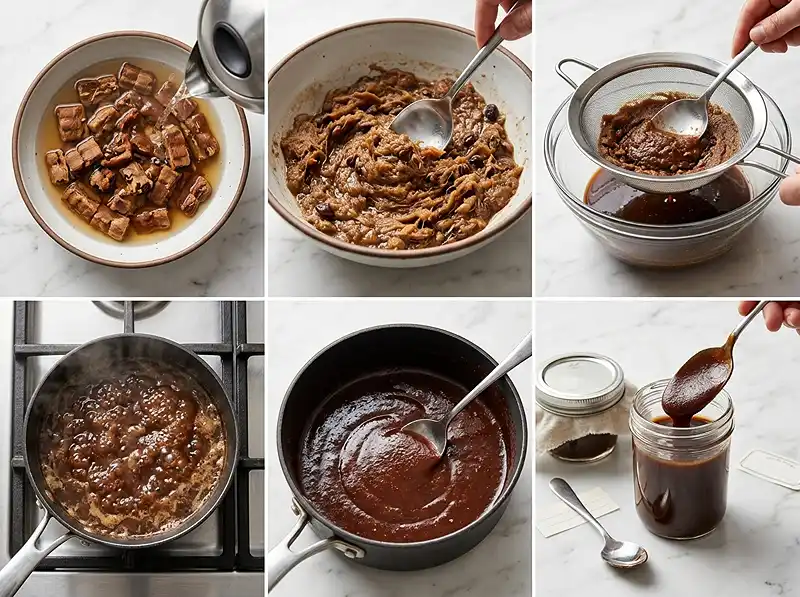
Soak the Tamarind
- Spread 250 grams of tamarind pulp in a wide bowl.
- Cover with hot water — start with about 1½ to 2 cups, reserving the rest.
- Let the pulp soak for 45 to 60 minutes until very soft.
💡 Don’t rush the soak. The longer the pulp sits, the smoother your final paste will be — 45 minutes is the floor, not the target.
Extract the Paste
Option 1 — Blender method (for clean pulp with no debris):
- Transfer the soaked pulp and its liquid to a blender.
- Blend to a smooth paste, adding reserved water as needed.
Option 2 — Strainer method (recommended for pulp with fibers or seeds):
- Mash the soaked pulp with your hands as thoroughly as possible.
- Push the mashed pulp through a fine strainer into a deep pot, pressing firmly.
- Return the leftover solids to the bowl, add a splash of reserved water, and squeeze through the strainer a second time.
💡 The double-straining step is what separates a smooth paste from a gritty one. Don’t skip the second pass.
Pro Tip: The key to a thick, usable paste is resisting the urge to add all the reserved water at once. Add it gradually — you want the consistency of a thick jam, not a sauce.
Cook and Store
- Partially cover the pot and bring the filtered pulp over medium heat.
- Boil for about 5 minutes until the paste is bubbling hot. Stand back — it splatters.
- Remove from heat and cool completely before storing.
- Transfer to an airtight glass jar and refrigerate or freeze.
Pro Tip: For best results, use a glass jar rather than plastic — tamarind is highly acidic and can stain or absorb into plastic containers over time.
Expert Tips for Perfect Tamarind Paste
Pro Tips for Success
Start with pliable, not dry, pulp. The most common mistake is using old or desiccated tamarind — instead, look for a soft, sticky block that yields when you press it. Dry pulp won’t release its flavor fully, no matter how long you soak it.
The key to a smooth, lump-free paste is mashing thoroughly before straining. Work the pulp with your fingers for a few minutes in the soaking water before you even attempt to push it through the strainer. This breaks down the fibers and dramatically speeds up the straining process.
Tamarind paste works best when cooked briefly after straining. That 5-minute boil isn’t just about safety — it concentrates the flavor, kills any bacteria, and improves the shelf life significantly. Don’t skip it.
Watch the pot. Real talk — boiling tamarind paste splatters aggressively. Partial lid coverage is not optional.
For best results, taste your paste before storing. Adjust nothing (this is a neutral base), but knowing your paste’s flavor intensity helps you calibrate how much to use in recipes.
Delicious Variations
Concentrated paste: Simmer the strained liquid for 10 to 15 minutes instead of 5 for a darker, even thicker paste. This is ideal for Mexican tamarind recipes where a bold flavor punch is needed in smaller quantities.
Chunky rustic paste (no strainer needed): If you’re using the paste immediately in a slow-cooked curry or stew, you can skip the straining entirely and use the mashed, unfiltered pulp. The fibers will dissolve during long cooking. Not pretty, but genuinely effective for comfort food weeknight meals.
Sweetened tamarind paste: Add 1 tablespoon of jaggery or brown sugar during the final boil for a sweet-sour concentrate used in Indian chutneys and street food snacks.
Troubleshooting Common Problems
Problem: Paste is too thin and watery. Solution: Simmer it uncovered for an additional 5 to 10 minutes, stirring often, until it thickens to a jam-like consistency.
Problem: Paste is gritty or stringy. Solution: You likely skipped the second straining pass. Push the strained solids through the sieve one more time with a bit of reserved water — most of the grittiness comes from seed fragments and fibers that didn’t make it through the first time.
Problem: Paste tastes flat or mild. Solution: Your tamarind pulp may have been old or stored too long. Fresh pulp from a recently opened block has a noticeably sharper, more vibrant sourness. There’s no fix mid-recipe — just use more paste than the recipe calls for.
How to Store and Reheat Tamarind Paste
| Storage Method | Duration | Best Practice |
|---|---|---|
| Room Temperature | Up to 2 hours | Cover loosely; do not leave unrefrigerated long-term |
| Refrigerator | Up to 1 month | Store in a sealed glass jar; press a piece of plastic wrap against the surface to prevent oxidation |
| Freezer | Up to 1 year | Freeze in ice cube trays, then transfer to a zip-lock bag for easy single-use portions |
No reheating is needed — tamarind paste is almost always added directly to hot dishes, where it melts in instantly. If using cold from the fridge, simply let it sit at room temperature for 5 minutes before measuring. It won’t change the flavor, but it makes spooning out the exact amount much easier.
Leftover paste is genuinely one of the most useful things to have in your fridge. Stir a spoonful into a pot of lentil soup for instant depth. Whisk it into a salad dressing for a tangy Southeast Asian twist. Or blend it with honey for a dipping sauce — something like this honey-based recipe pairs beautifully as an inspiration.
FAQs About Tamarind Paste
What is tamarind paste used for?
Tamarind paste is a sour, tangy base ingredient used in Southeast Asian, Indian, and Mexican cooking. It’s essential in dishes like pad thai, tamarind chutney, rasam, sambar, and numerous marinades. A small amount — typically one to two tablespoons — goes a long way in adding sweet-sour depth to sauces, soups, and stir-fries.
Can I substitute tamarind paste with something else?
The closest substitutes are a mix of lime juice and brown sugar, or pomegranate molasses, which mimic the sweet-sour profile. However, neither replicates the unique fruity depth of actual tamarind paste. For best flavor results, use real tamarind pulp whenever possible, especially in traditional recipes where it’s a primary flavor.
How do I know if my tamarind paste has gone bad?
Fresh tamarind paste has a bright, sharp sour smell. If it smells fermented, musty, or off — rather than just tangy — discard it. Visible mold growth is also a clear sign. Properly stored in a sealed glass jar in the refrigerator, good paste keeps reliably for up to one month.
Can I freeze tamarind paste?
Yes — freezing tamarind paste for up to one year works very well. The best method is to pour the cooled paste into an ice cube tray, freeze until solid, then pop the cubes into a zip-lock bag. Each cube is roughly one to two tablespoons, making it easy to grab exactly what a recipe calls for without thawing the entire batch.
Is tamarind paste the same as tamarind concentrate?
Not exactly. Tamarind paste (homemade) is thick but still has texture and a relatively balanced flavor. Tamarind concentrate is a commercially produced, more intensely reduced version that’s darker and sharper. When substituting one for the other, use about half as much concentrate as you would homemade paste and adjust to taste.
Go Make a Batch Right Now
Seriously — this is one of those recipes where the effort-to-payoff ratio is almost unfair. Twenty minutes of hands-on time, ingredients you can find at any Asian or Indian grocery store, and you’ll have a jar of something that makes a dozen other recipes better. Try it this weekend, and if you’re looking for a way to use it immediately, check out these patriotic berry cheesecake jars — the tartness of the tamarind paste is a surprisingly excellent counterpoint to sweet fruit desserts. Save this recipe to Pinterest so you don’t lose it, and drop a comment below if you’ve found a creative way to use your batch. I genuinely read every one.
Thick, tangy homemade tamarind paste made with just 2 ingredients — tamarind pulp and hot water. Ready in under an hour and freezer-friendly for up to a year. Save this now!