Lemongrass Risotto Recipe
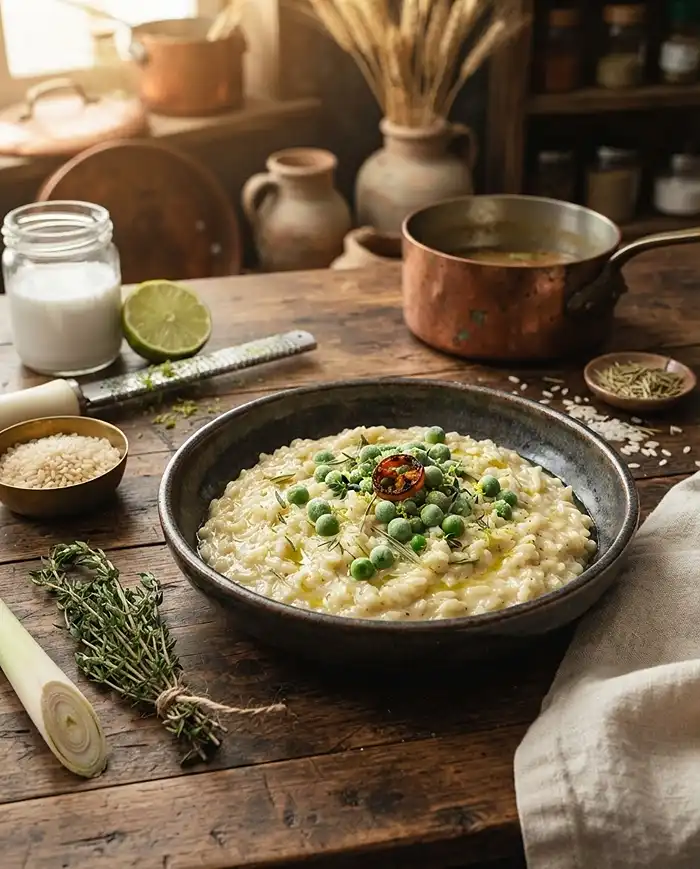
This lemongrass risotto recipe is a fragrant, creamy rice dish made by simmering Arborio rice in a homemade lemongrass-thyme broth, then finishing it with light coconut milk and fresh lime.
It’s a dairy-free twist on classic risotto that comes together in one pot — bright, a little herby, and gently warming from an optional red chili.
The lemongrass stock does a lot of the heavy lifting here. And because you’re building the broth from scratch, every ladle of liquid you add to the rice carries real flavor — no bland bites anywhere.
Table of Contents
Why You’ll Love This Lemongrass Risotto
- Uses a homemade lemongrass-thyme stock that infuses every grain with citrusy, herbal flavor
- Finished with coconut milk and lime for a creamy, bright result without any dairy
- One optional red chili adds a subtle kick you can easily leave out
- Green peas add color and a gentle sweetness that balances the citrus
- A satisfying weeknight dinner that feels a little special

Lemongrass Risotto
Equipment
- Large stock pot
- Large pot
- Strainer
- Ladle
Ingredients
Lemongrass Stock
- 8 stalks Fresh lemongrass stalks (or dried/frozen) Or 1/4 cup dried/frozen; main aromatic base for the stock
- 6 stalks Fresh thyme stalks Leaves reserved for finishing; stalks go into the stock
- 5 cups Water Stock base
- 1 ½ cubes Bouillon cubes Adds savory depth to the broth
Rice Base
- 1 tablespoon Olive oil For sautéing the aromatics
- 1 Small onion Finely chopped; forms the flavor base
- 3 cloves Garlic Minced
- 1 Red chili Optional; adds gentle heat
- 1 cup Arborio rice Classic risotto rice; releases starch for creaminess
- ½ cup Green peas Added with the rice for color and sweetness
- ½ teaspoon Dried rosemary Herbal note that complements the lemongrass
Finish
- ¾ cup Light coconut milk Warmed before adding; creates a creamy, dairy-free finish
- 1 tablespoon Lime zest Added with the coconut milk for citrus fragrance
- 1 tablespoon Lime juice Stirred in at the very end for brightness
Instructions
- Chop 8 stalks of lemongrass into small pieces. Separate the leaves from 6 stalks of thyme and set the leaves aside for later.
- Add 5 cups of water to a large stock pot. Add the chopped lemongrass and the thyme stalks (not the leaves) to the water. If using dried or frozen lemongrass, add 1/4 cup instead. Cover the pot and bring the water to a boil.
- Stir in 1 1/2 bouillon cubes and reduce the heat. Let the stock simmer while you cook the rice, keeping it on the stove the entire time.
- In a separate large pot, heat 1 tablespoon of olive oil over medium heat. Finely chop 1 small onion and 1 red chili (if using), and mince 3 cloves of garlic. Sauté the onions until they turn translucent, then stir in the minced garlic and chopped red chili.
- Add 1 cup Arborio rice, 1/2 cup green peas, and 1/2 teaspoon dried rosemary. Stir on low heat for a few minutes until the rice begins to stick to the bottom of the pot.
- Using a strainer, ladle 2 large ladles of the simmering lemongrass stock into the rice. Stir and allow the rice to absorb the liquid. Add 2 more ladles of strained stock and stir. When most of the liquid is absorbed, add 2 more ladles and repeat, keeping the stock pot simmering throughout. Continue adding stock and stirring until the rice is cooked al dente.
- Warm 3/4 cup light coconut milk and stir it into the rice while continuing to stir. Add 1 tablespoon lime zest and the reserved thyme leaves. Once you see bubbles, turn off the heat.
- Drizzle in 1 tablespoon lime juice and give the risotto one final stir. The risotto should be runny at this stage. Let it rest for 5 minutes to allow the rice to absorb the liquid, then serve.
Notes
What Ingredients Do You Need for Lemongrass Risotto?

| Ingredient Group | Ingredient | Exact Amount | Purpose or Note |
|---|---|---|---|
| Lemongrass Stock | Fresh lemongrass stalks (or dried/frozen) | 8 stalks (or 1/4 cup dried/frozen) | Main aromatic base for the stock |
| Lemongrass Stock | Fresh thyme stalks | 6 stalks | Leaves reserved for finishing; stalks go into the stock |
| Lemongrass Stock | Water | 5 cups | Stock base |
| Lemongrass Stock | Bouillon cubes | 1 1/2 cubes | Adds savory depth to the broth |
| Rice Base | Olive oil | 1 tablespoon | For sautéing the aromatics |
| Rice Base | Small onion | 1 | Finely chopped; forms the flavor base |
| Rice Base | Garlic cloves | 3 | Minced |
| Rice Base | Red chili | 1 | Optional; adds gentle heat |
| Rice Base | Arborio rice | 1 cup | Classic risotto rice; releases starch for creaminess |
| Rice Base | Green peas | 1/2 cup | Added with the rice for color and sweetness |
| Rice Base | Dried rosemary | 1/2 teaspoon | Herbal note that complements the lemongrass |
| Finish | Light coconut milk | 3/4 cup | Warmed before adding; creates a creamy, dairy-free finish |
| Finish | Lime zest | 1 tablespoon | Added with the coconut milk for citrus fragrance |
| Finish | Lime juice | 1 tablespoon | Stirred in at the very end for brightness |
Arborio rice is the non-negotiable here — its high starch content is what gives risotto that signature creamy consistency as it absorbs liquid gradually.
Fresh lemongrass gives the stock its signature citrusy, floral punch. If you’re using dried or frozen, the recipe accounts for that with a 1/4 cup substitution.
Light coconut milk keeps the finish rich without making the risotto lemongrass feel heavy — and it plays beautifully against the lime zest and juice added at the end.
How to Make Lemongrass Risotto Step by Step

Step 1: Make the Lemongrass Stock
- Chop 8 stalks of lemongrass into small pieces. Separate the leaves from 6 stalks of thyme and set the leaves aside for later.
- Add 5 cups of water to a large stock pot. Add the chopped lemongrass and the thyme stalks (not the leaves) to the water. If you’re using dried or frozen lemongrass, add 1/4 cup instead.
- Cover the pot and bring the water to a boil.
- Stir in 1 1/2 bouillon cubes and reduce the heat. Let the stock simmer while you cook the rice — keep it on the stove the entire time.
Step 2: Cook the Rice
- In a separate large pot, heat 1 tablespoon of olive oil over medium heat.
- Finely chop 1 small onion and 1 red chili (if using). Mince 3 cloves of garlic.
- Sauté the onions until they turn translucent. Stir in the minced garlic and chopped red chili.
- Add 1 cup Arborio rice, 1/2 cup green peas, and 1/2 teaspoon dried rosemary. Stir on low heat for a few minutes until the rice begins to stick to the bottom of the pot.
- Using a strainer, ladle 2 large ladles of the simmering lemongrass stock into the rice. Stir and allow the rice to absorb the liquid.
- Add 2 more ladles of strained stock and stir. When most of the liquid is absorbed, add 2 more ladles and repeat. Do not remove the stock pot from the stove — keep it simmering throughout.
- Continue adding stock and stirring until the rice is cooked al dente — the grains should be soft but still have a slight bite.
Pro Tip: Strain the stock directly as you ladle it into the rice — this keeps the lemongrass pieces and thyme stalks out of the finished dish without any extra steps.
Step 3: Finish With Coconut Milk
- Warm 3/4 cup light coconut milk and stir it into the rice while continuing to stir.
- Add 1 tablespoon lime zest and the reserved thyme leaves. Once you see bubbles, turn off the heat.
- Drizzle in 1 tablespoon lime juice and give the risotto one final stir. The risotto should be runny at this stage.
- Let it rest for 5 minutes to allow the rice to absorb the liquid, then serve.
Pro Tip: Warming the coconut milk before adding it helps it incorporate smoothly and prevents the risotto from cooling down too quickly.
Tips, Variations, and Troubleshooting for Lemongrass Risotto
Pro Tips for Success
- Keep the stock hot the whole time. Cold stock added to hot rice slows down cooking and can make the texture uneven. A gentle simmer on the back burner is all you need.
- Stir consistently, not constantly. Risotto needs regular stirring to release starch, but you don’t need to stand over it every second. Add a ladle, stir until mostly absorbed, then add the next.
- Stop at al dente. The rice will keep absorbing liquid even after the heat is off. Pulling it just before it’s fully soft means it’ll hit the right texture after the 5-minute rest.
- The runny finish is intentional. Risotto thickens as it sits. If it looks a little loose when you turn off the heat, that’s exactly right.
- Lime juice goes in last. Adding it after the heat is off preserves the brightness. Cooking lime juice dulls its flavor quickly.
Troubleshooting Common Problems
Problem: The risotto is too thick and gluey.
Solution: Add a small splash of warm water or warmed coconut milk and stir to loosen it. Risotto tightens fast, so check the consistency right before serving.
Problem: The rice is undercooked after the stock runs out.
Solution: Add a little warm water, ladle by ladle, and keep stirring until the rice reaches an al dente texture. The stock amount in the recipe is generous, but rice brands can vary slightly.
Problem: The lemongrass flavor is faint.
Solution: Make sure the stock simmers long enough before you start adding it to the rice — at least 10 to 15 minutes of simmering builds the flavor significantly.
How to Store and Reheat Lemongrass Risotto
| Storage Method | Duration | Best Practice |
|---|---|---|
| Refrigerator | Up to 3 days | Store in an airtight container once fully cooled |
To reheat, add a splash of water or warm coconut milk to the risotto and warm it gently on the stovetop over low heat, stirring until it loosens back to a creamy consistency.
Avoid reheating in a microwave without added liquid — risotto dries out quickly and the texture suffers. A few tablespoons of liquid and a low flame brings it back nicely.
Leftover lemongrass risotto works well as a base for a simple grain bowl topped with roasted vegetables, or as a side dish alongside something like a crispy air fryer fish sandwich for a complete meal.
FAQs About Lemongrass Risotto
Can I use dried or frozen lemongrass instead of fresh?
Yes. The recipe accounts for this directly — use 1/4 cup of dried or frozen lemongrass in place of the 8 fresh stalks. The flavor will be slightly less bright but still very good.
Do I have to use Arborio rice?
Arborio is strongly recommended for this lemongrass risotto recipe. Its high starch content is what creates the creamy texture as it slowly absorbs the stock. Other short-grain risotto rices can work, but long-grain varieties like basmati or jasmine won’t give you the same result.
Can I leave out the red chili?
Yes, the red chili is listed as optional in the recipe. The risotto is flavorful and well-rounded without it. If you enjoy heat, keep it in — if not, simply skip it.
What does al dente mean for risotto?
Al dente means the rice is cooked through but still has a very slight firmness or bite at the center. For risotto, you want grains that are tender on the outside but not mushy. Since the rice continues absorbing liquid during the 5-minute rest, pulling it just before it’s fully soft gives you the right result.
Can I make the lemongrass stock ahead of time?
The stock is designed to simmer while you cook the rice, so making it fresh is part of the method. That said, you could make the stock earlier in the day, refrigerate it, and reheat it to a simmer before starting the rice.
Ready to Try This Lemongrass Risotto?
Give this lemongrass risotto recipe a go the next time you want something a little different for dinner. It’s hands-on in the best way — stirring, adding stock, watching the rice slowly come together.
If you make it, leave a comment below and let us know how it turned out. A rating helps others find it too, and we genuinely love hearing what you think.
Save this recipe to Pinterest so you’ve got it handy whenever the craving hits. And if you’re looking for more satisfying meal ideas, check out this hearty loaded baked potato soup with bacon for your next cozy dinner.
Creamy lemongrass risotto made with a homemade lemongrass-thyme stock, finished with coconut milk and fresh lime. A fragrant, dairy-free dinner worth saving. Pin this recipe for later!