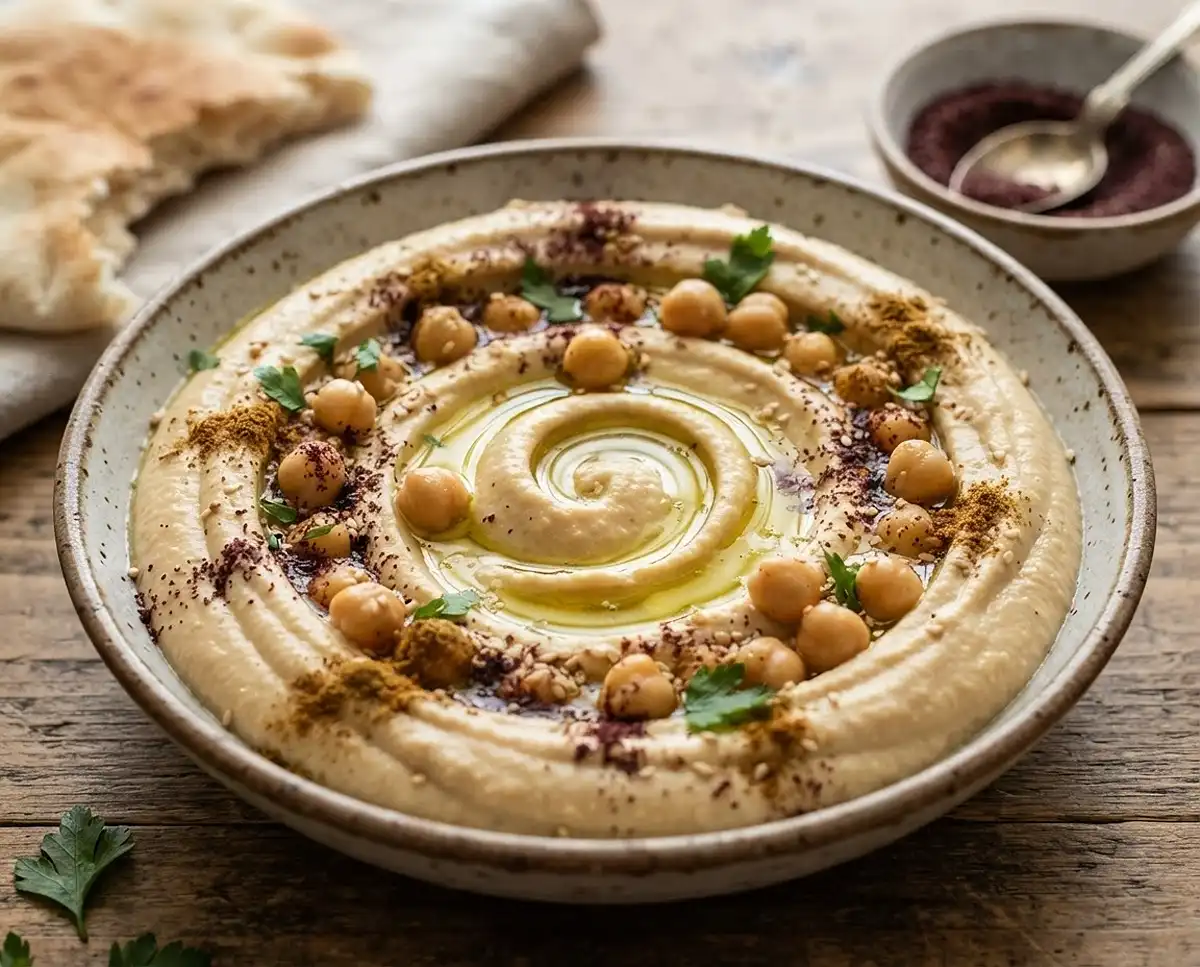
How to Make Hummus with Dried Chickpeas
How to make hummus with dried chickpeas is simpler than it sounds, and the result is smoother, creamier, and richer than anything you’ll get from a can. This hummus recipe starts from scratch for a reason.
Dried chickpeas give you full control over texture and flavor. And that extra step of removing the skins? That’s what makes the difference between good hummus and silky, restaurant-quality hummus.
Table of Contents
Why You’ll Love This Hummus with Dried Chickpeas
- Noticeably smoother and creamier than canned-chickpea versions
- Made with simple pantry staples — nothing fancy required
- The skin-removal step is easy and completely worth it
- Works as a dip, a spread, or a side for almost any meal
- Scales up easily if you want to make a big batch
How to Make Hummus with Dried Chickpeas
Equipment
- Large bowl
- Medium saucepan
- Colander
- Slotted spoon
- Food processor
- Measuring cups and spoons
- Serving bowl
Ingredients
For the Chickpeas
- 1 cup plus 2 tablespoons dried chickpeas 210 g; picked over and rinsed
- 4 cups water for soaking; about 1 litre
- 5 cups water fresh water for cooking; about 1.25 litres
- ½ teaspoon baking soda helps soften chickpeas and loosen skins
- ½ teaspoon salt for cooking water
For the Hummus
- ⅓ cup hulled tahini 85 g; use hulled tahini for a smooth, mild result
- 2 cloves garlic chopped
- ⅓ cup fresh lemon juice 80 ml
- 1 teaspoon salt for blending
- ¼ teaspoon ground cumin optional
- ¼ cup cold water 60 ml, plus more as needed
To Serve
- 2 tablespoons extra-virgin olive oil optional; for drizzling
- ¼ teaspoon ground cumin optional; for sprinkling over the hummus
- ½ teaspoon sumac optional; for a tangy finish
Instructions
- Place the dried chickpeas in a large bowl and cover with 4 cups of water. Leave at room temperature to soak overnight, about 8 to 12 hours.
- Drain the soaked chickpeas. Transfer them to a medium saucepan and add 5 cups fresh water, the baking soda, and 1/2 teaspoon salt. Bring to a boil, then reduce the heat to a steady simmer.
- Cook for 30 to 35 minutes, until the chickpeas are very soft and collapse easily when squeezed between your fingers. Skim off any floating skins with a slotted spoon as they cook. Rub any remaining stubborn skins gently between your palms to remove them.
- Drain the chickpeas, reserving a couple of tablespoons for serving. Add the remaining chickpeas to a food processor and blend for about 1 minute, until they form a smooth, stiff paste.
- Add the tahini, chopped garlic, fresh lemon juice, remaining 1 teaspoon salt, and cumin, if using. Blend on high for several minutes, stopping to scrape down the sides as needed.
- With the processor running, pour in the cold water in a steady stream. Blend until the hummus is pale, smooth, and fluffy. Add more cold water, 1 tablespoon at a time, if needed to loosen the texture.
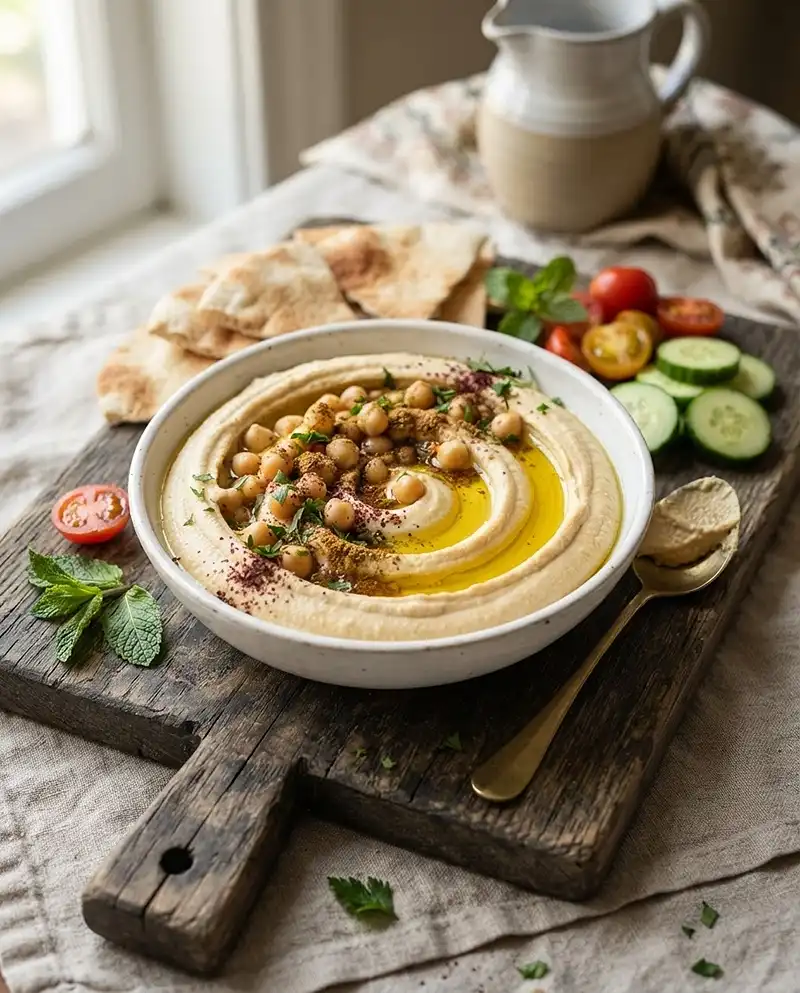
- Transfer the hummus to a serving bowl and create a wide spiral or well with the back of a spoon. Top with the reserved chickpeas, olive oil, ground cumin, and sumac, if using. Serve at room temperature.
Notes
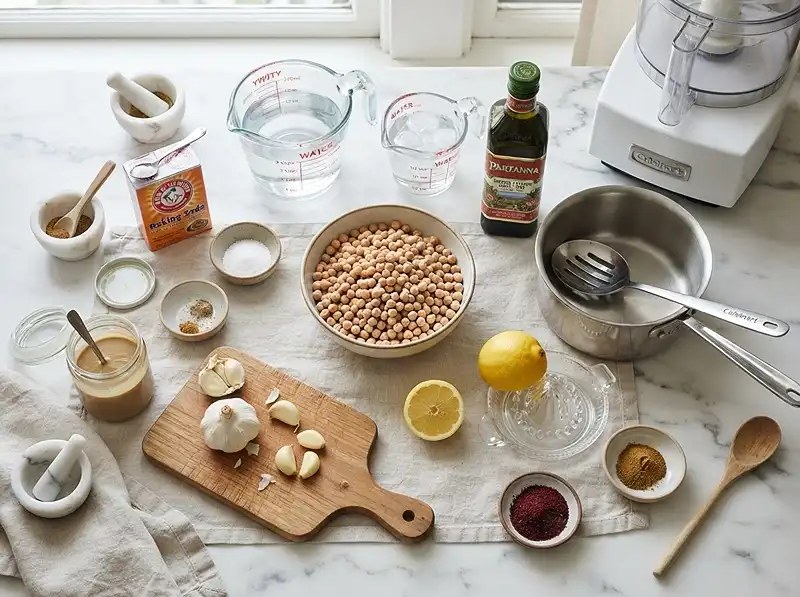
What Ingredients Do You Need for Hummus with Dried Chickpeas?
| Ingredient Group | Ingredient | Exact Amount | Purpose or Note |
|---|---|---|---|
| For the chickpeas | Dried chickpeas | 1 cup + 2 tablespoons / 210g | The base of the hummus |
| For the chickpeas | Water, for soaking | 4 cups / 1 liter | Overnight soak |
| For the chickpeas | Water, for cooking | 5 cups / 1.25 liters | Fresh water for the pot |
| For the chickpeas | Baking soda | 1/2 teaspoon | Helps soften chickpeas and loosen skins |
| For the chickpeas | Salt, divided | 1 1/2 teaspoons total | 1/2 tsp in cooking water; 1 tsp added to blender |
| For the hummus | Hulled tahini | 1/3 cup / 85g | Use hulled for a smoother, less bitter result |
| For the hummus | Garlic, chopped | 2 cloves | Blended in for even flavor |
| For the hummus | Fresh lemon juice | 1/3 cup / 80ml | Balances richness; use fresh, not bottled |
| For the hummus | Ground cumin (optional) | 1/4 teaspoon | Adds warm, earthy depth |
| For the hummus | Cold water | 1/4 cup / 60ml, plus more as needed | Loosens the hummus to a light, fluffy texture |
| To serve (optional) | Extra virgin olive oil | 2 tablespoons | Drizzled on top for richness |
| To serve (optional) | Ground cumin | 1/4 teaspoon | Sprinkled on top |
| To serve (optional) | Sumac | 1/2 teaspoon | Adds a bright, tangy finish |
Hulled tahini is key here — it’s smoother and milder than unhulled varieties, which means your hummus won’t turn bitter. Fresh lemon juice makes a real difference too; the brightness it adds can’t be replicated from a bottle.
The baking soda does double duty: it softens the chickpeas faster and helps the skins float free during cooking. Don’t skip it.
How to Make Hummus with Dried Chickpeas Step by Step
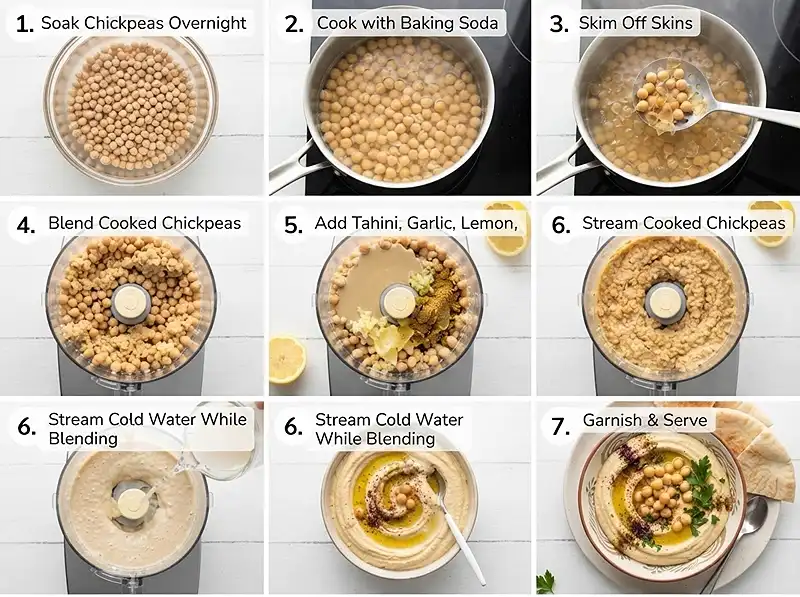
Soak and Cook the Chickpeas
- Soak the chickpeas: In a large bowl, cover the dried chickpeas with 4 cups of water. Leave on your kitchen bench overnight.
- Cook the chickpeas: Drain the soaking water. Add the chickpeas to a medium saucepan with 5 cups of fresh water, 1/2 teaspoon baking soda, and 1/2 teaspoon salt. Bring to a boil, then reduce to a simmer over medium heat and cook for 30–35 minutes, until very soft. To check, lift one out, run it under cold water, and squeeze it between your fingers — it should collapse easily.
- Remove the skins: Most skins will float to the surface as the chickpeas cook. Skim them off with a slotted spoon, top up with a little water, and skim again. Repeat until most are gone. For any stubborn ones, rub the chickpeas gently between your palms and the skins will slide off. Don’t skip this step if you want silky hummus.
Pro Tip: The chickpeas need to be genuinely very soft — not just tender — before you blend them; under-cooked chickpeas are the most common reason hummus turns out grainy instead of smooth.
Blend the Hummus
- Blend the chickpeas: Drain the chickpeas, setting a couple of tablespoons aside for the topping. Add the rest to your food processor and blend for about a minute, until you have a smooth, stiff paste.
- Add the remaining ingredients: Add the tahini (1/3 cup), garlic (2 cloves), lemon juice (1/3 cup), the remaining 1 teaspoon of salt, and cumin (1/4 teaspoon), if using. Blend on high for a few minutes, pausing to scrape down the sides.
- Loosen with cold water: If the hummus looks a little thick, with the processor running, pour in 1/4 cup of cold water in one steady stream until the hummus is light and fluffy. Add more, a tablespoon at a time, if it’s still thick.
Pro Tip: Cold water — not warm — is what creates that light, airy texture; warm water won’t give you the same result.
Serve
- Serve: Transfer to a bowl and spread out with the back of a spoon, creating a spiral or a well. Top with the reserved chickpeas, a generous drizzle of olive oil, and a sprinkle of cumin and sumac.
Pro Tip: Spreading the hummus in a wide spiral rather than just plopping it in the bowl gives every serving more surface area for olive oil and toppings — which means more flavor in every bite.
Expert Tips, Variations, and Troubleshooting for This Hummus Recipe
Pro Tips for Success
Blend the chickpeas first, before adding anything else. This one-minute head start on a plain chickpea paste is what gives the final hummus its ultra-smooth base. Adding tahini too early can slow down the blending.
Use hulled tahini, not unhulled. Unhulled tahini has a more bitter flavor that can overpower the hummus. Look for “hulled” on the label, or choose a light-colored, smooth tahini.
Don’t rush the skin removal. It feels tedious, but the skins are what cause a grainy or lumpy texture. Most float off naturally — you’re just helping the process along.
Taste and adjust before serving. Once the hummus is blended and smooth, give it a taste. You may want a little more lemon juice for brightness or a pinch more salt to bring everything together.
A long blend is better than a short one. Running the food processor for a few minutes — not just 30 seconds — is what gets you that light, almost whipped texture.
Troubleshooting Common Problems
Problem: The hummus is grainy or lumpy.
Solution: The chickpeas likely weren’t cooked long enough, or the skins weren’t fully removed. Make sure chickpeas collapse easily when squeezed, and take time to skim the skins thoroughly before blending.
Problem: The hummus is too thick and dense.
Solution: With the food processor running, add cold water a tablespoon at a time until the texture loosens to your liking. Cold water is key — it lightens the texture in a way warm water doesn’t.
Problem: The hummus tastes bitter.
Solution: This is usually the tahini. Switch to a hulled tahini brand with a lighter color and milder flavor. A little extra lemon juice can also help balance any bitterness.
Problem: The hummus lacks flavor overall.
Solution: Add a bit more salt or lemon juice, then blend again briefly. Both sharpen and lift the flavor without changing the texture.
How to Store and Reheat Hummus with Dried Chickpeas
| Storage Method | Duration | Best Practice |
|---|---|---|
| Refrigerator | Up to 5 days | Store in an airtight container; press plastic wrap directly onto the surface to prevent drying |
| Freezer | Up to 3 months | Freeze in a sealed container; thaw overnight in the refrigerator and stir well before serving |
Hummus is best served at room temperature. If it’s been in the fridge, let it sit on the counter for 20–30 minutes before serving, then give it a stir. It often thickens up when chilled, so you can loosen it with a splash of cold water.
Leftover hummus works great as a sandwich spread, a base for a romaine and avocado salad dressing, or stirred into the broth of a hearty sweet potato black bean chili for extra body.
Frequently Asked Questions
Do I have to soak the dried chickpeas overnight?
Yes, an overnight soak is recommended. It rehydrates the chickpeas so they cook evenly and reach the very soft texture you need for smooth hummus. A quick-soak method (boiling for 2 minutes then resting for an hour) can work in a pinch, but overnight soaking gives the best results.
Can I use canned chickpeas instead of dried?
You can, but the texture won’t be the same. Dried chickpeas cooked from scratch tend to produce a creamier, smoother hummus. If you use canned, drain and rinse them well, and still take the time to remove as many skins as possible.
Why do I need to remove the chickpea skins?
The skins are the main reason hummus turns out grainy or slightly lumpy instead of silky smooth. Most float off naturally during cooking, so it’s mostly a matter of skimming and a gentle rub for any stubborn ones. It’s worth the few extra minutes.
What is sumac and can I leave it out?
Sumac is a dark red spice with a tangy, slightly citrusy flavor. It’s used here as a topping and is listed as optional. If you don’t have it, the hummus is still delicious without it. You can find sumac at Middle Eastern grocery stores or most well-stocked supermarkets.
Can I make this hummus recipe ahead of time?
Yes. Hummus with dried chickpeas keeps well in the fridge for up to 5 days in an airtight container. Add the olive oil, cumin, and sumac toppings just before serving so they stay fresh and vibrant.
Ready to Make It?
Give this hummus with dried chickpeas a try and see what a difference starting from scratch makes. The texture alone is worth it.
If you make it, leave a comment below and let me know how it turned out. A star rating is always appreciated too — it helps other home cooks find the recipe.
And if you want to save it for later, pin it on Pinterest so it’s easy to find next time hummus is on the menu.
Smooth, creamy hummus made from dried chickpeas — drizzled with olive oil, finished with sumac and cumin. Save this recipe to your Pinterest board for your next dip night.