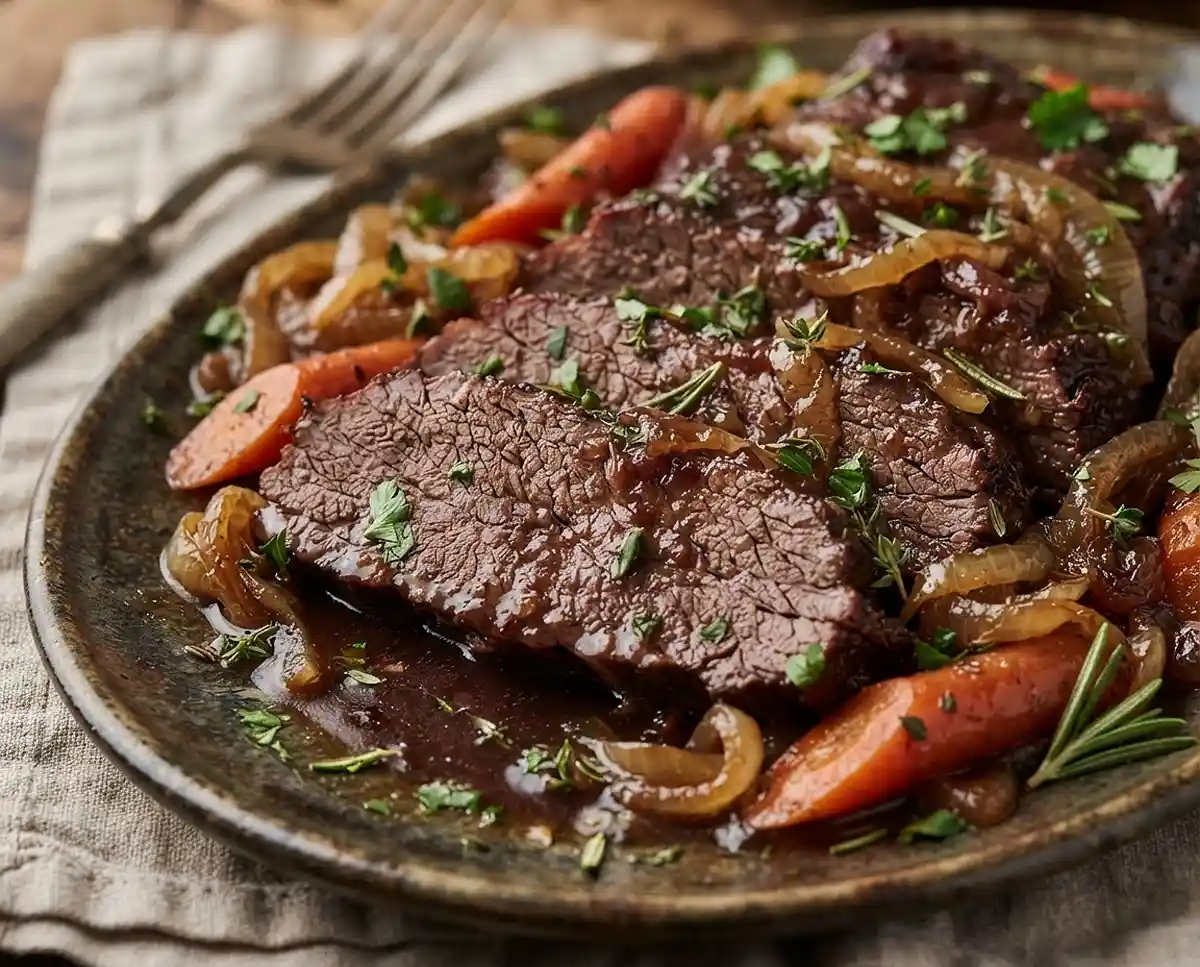
Joan Nathan Brisket Recipe
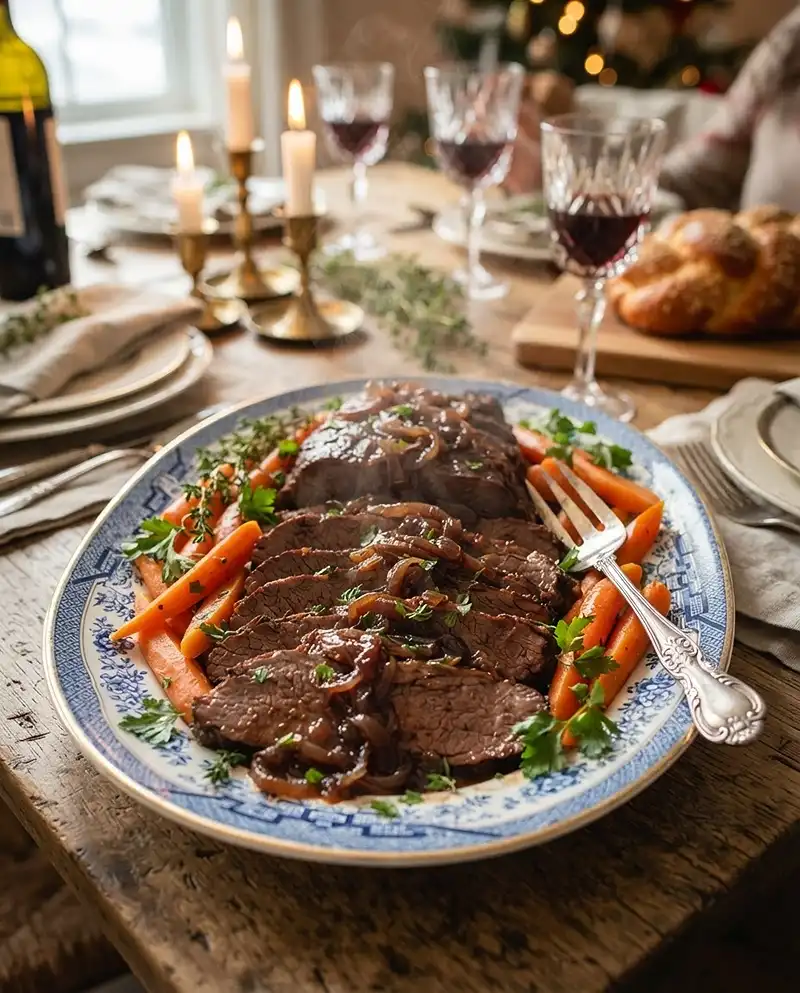
This joan nathan brisket recipe is a slow-braised, oven-roasted beef brisket cooked low and slow in red wine, canned tomatoes, and fresh herbs until it’s deeply savory and fork-tender. It serves a crowd and is ideal for Passover, Rosh Hashanah, or any special family dinner.
If you’ve been searching for a brisket that genuinely rewards patience, this is it. The overnight refrigerating trick isn’t just clever — it makes slicing cleaner, skimming the fat effortless, and the reheated slices taste like they’ve had time to soak up every bit of that rich, herbed gravy.
This is the kind of brisket recipe people remember from the table long after dinner’s over—deeply comforting, full of tradition, and way too good to discover too late. If this one caught your eye, don’t miss more classic brisket recipe ideas.
Table of Contents
Why You’ll Love This Joan Nathan Brisket
- Deep, savory flavor from red wine, fresh herbs, and slow oven-braising at 325 degrees F
- Fork-tender meat that slices cleanly when cut across the grain
- Works with a 5-pound whole brisket, shoulder roast, or chuck pot roast
- Make-ahead friendly — it’s actually better the next day
- A one-pot braise with carrots, celery, and onions built right into the gravy
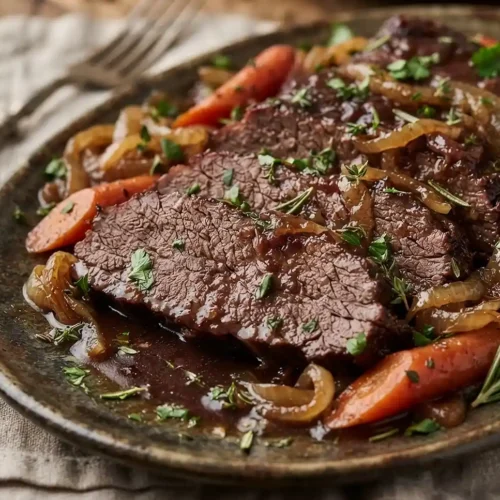
Joan Nathan Brisket
Equipment
- Dutch oven or large casserole dish
- Large skillet
- Paper towels
- Carving knife
- Cutting board
- Roasting pan
Ingredients
- 1 (5-pound) piece Whole brisket, shoulder roast, or chuck pot roast Choose any of the three cuts; all braise well
- 2 teaspoons Salt Seasoned directly onto the meat before searing
- Freshly ground pepper To taste; added with the salt before searing
- 1 clove Garlic, peeled Rubbed directly onto the meat surface
- 2 tablespoons Vegetable oil Used to sear the brisket before braising
- 3 Onions, peeled and diced Form the base layer in the casserole; melt into gravy
- 1 10-ounce can Canned tomatoes, undrained Adds body and acidity to the braising liquid
- 2 cups Red wine Primary braising liquid; adds depth and richness
- 2 stalks Celery with leaves, chopped Adds aromatic flavor; leaves included
- 1 leaf Bay leaf Braised with the meat for savory depth
- 1 sprig Fresh thyme Added to the braising liquid
- 1 sprig Fresh rosemary Added to the braising liquid
- ¼ cup Fresh parsley, chopped Added uncovered in the final 30 minutes
- 6-8 Carrots, peeled and sliced on the diagonal Added uncovered in the final 30 minutes
Instructions
- Preheat the oven to 325 degrees F (160 degrees C).
- Pat the meat dry, then sprinkle it with the salt and pepper and rub it with the garlic. Heat the oil in a Dutch oven or large skillet, add the brisket, and sear on both sides, then remove from the heat. Patting the meat dry first gives a better crust, since surface moisture steams instead of browning.
- Place the onions in a large casserole or Dutch oven. Top with the beef, fatty side up. Add the tomatoes and their juices, the red wine, celery, bay leaf, thyme, and rosemary.
- Cover and bake for about 3 hours, basting often with pan juices. Uncover, add the parsley and carrots, and bake uncovered until the carrots are cooked, about 30 minutes more. To test for doneness, stick a fork in the flat, leaner end; when there is a light pull on the fork as it is removed, the brisket is fork-tender.
- To serve immediately, trim all the visible fat from the brisket. Place it fat side down on a cutting board, find the grain, and cut across it with a sharp knife. Transfer the slices to a platter, skim the fat from the gravy, and pour the gravy over the sliced brisket, leaving the cooked-down onions in or straining if you prefer.
- To serve the next day (recommended), refrigerate the brisket in its pan juices overnight so the fat solidifies. Preheat the oven to 350 degrees F (175 degrees C), trim the fat from the cold meat, and cut across the grain. Place the sliced meat in a roasting pan, skim the solidified fat from the gravy, warm the gravy over medium heat, pour it over the meat, cover, and reheat for 45 minutes.
Notes
What Ingredients Do You Need for Joan Nathan Brisket?
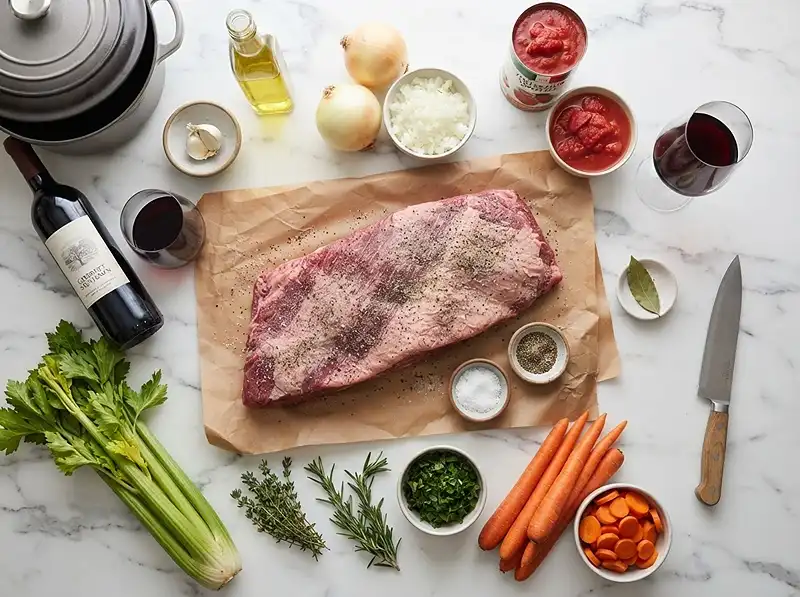
| Ingredient Group | Ingredient | Exact Amount | Purpose or Note |
|---|---|---|---|
| Meat | Whole brisket, shoulder roast, or chuck pot roast | One 5-pound piece | Choose any of the three cuts; all braise well |
| Seasoning | Salt | 2 teaspoons | Seasoned directly onto the meat before searing |
| Seasoning | Freshly ground pepper | To taste | Added with the salt before searing |
| Seasoning | Garlic clove, peeled | 1 clove | Rubbed directly onto the meat surface |
| Fat | Vegetable oil | 2 tablespoons | Used to sear the brisket before braising |
| Aromatics | Onions, peeled and diced | 3 onions | Form the base layer in the casserole; melt into gravy |
| Liquid | Canned tomatoes, undrained | One 10-ounce can | Adds body and acidity to the braising liquid |
| Liquid | Red wine | 2 cups | Primary braising liquid; adds depth and richness |
| Aromatics | Celery stalks with leaves, chopped | 2 stalks | Adds aromatic flavor; leaves included |
| Herbs | Bay leaf | 1 leaf | Braised with the meat for savory depth |
| Herbs | Fresh thyme | 1 sprig | Added to the braising liquid |
| Herbs | Fresh rosemary | 1 sprig | Added to the braising liquid |
| Herbs | Fresh parsley, chopped | 1/4 cup | Added uncovered in the final 30 minutes |
| Vegetables | Carrots, peeled and sliced on the diagonal | 6 to 8 carrots | Added uncovered in the final 30 minutes |
The red wine and undrained canned tomatoes do the heaviest lifting here. Together they create a braising liquid that’s both acidic and rich, which is what slowly breaks down a tough cut like brisket into something silky.
The fresh herb trio — bay leaf, thyme, and rosemary — perfumes the whole braise without overpowering the beef. And those onions? They dissolve into the gravy over three hours and become the most flavorful part of the dish.
How to Make Joan Nathan Brisket Step by Step
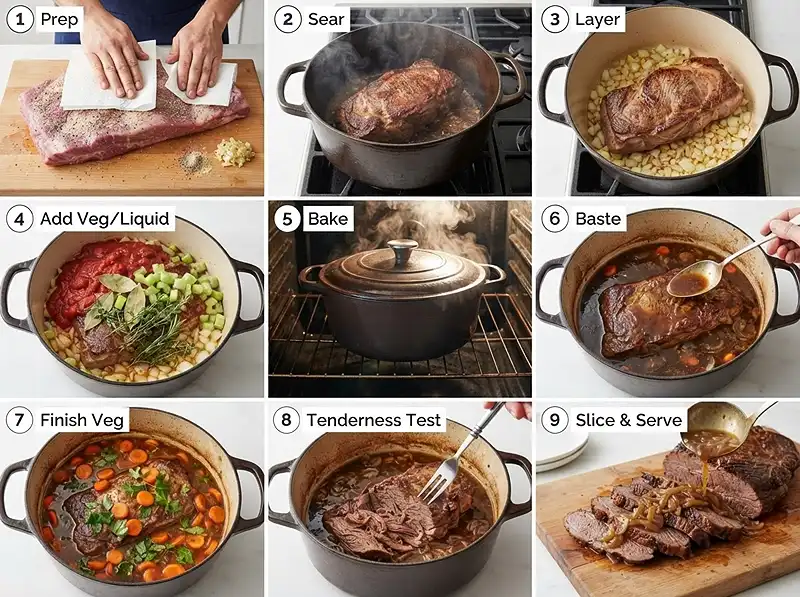
- Preheat the oven to 325 degrees F (160 degrees C).
- Prepare and sear the meat. Pat the meat dry. Sprinkle it with the salt and pepper and rub it with the garlic. Heat the oil in a Dutch oven or large skillet, add the brisket, and sear on both sides. Remove from the heat.
Pro Tip: Patting the meat dry before searing gives you a better crust — moisture on the surface steams instead of browns. - Build the braise. Place the onions in a large casserole or Dutch oven. Top with the beef, fatty side up. Add the tomatoes and their juices, the red wine, celery, bay leaf, thyme, and rosemary to the casserole.
- Cover and bake for about 3 hours, basting often with pan juices. Uncover, add the parsley and carrots, and bake uncovered until the carrots are cooked, about 30 minutes more. To test for doneness, stick a fork in the flat (thinner or leaner end of the brisket). When there is a light pull on the fork as it is removed from the meat, it is fork-tender.
Pro Tip: Baste frequently during those 3 covered hours — it keeps the top of the meat moist and helps the flavors develop evenly. - To serve immediately, trim all the visible fat from the brisket. Place the brisket, on what was the fat side down, on a cutting board. Look for the grain — the muscle lines of the brisket — and with a sharp knife, cut across the grain. Transfer the slices to a platter. Skim the fat from the surface of the gravy and pour the gravy over the sliced brisket. You can strain the gravy if you prefer, but the cooked-down onions are delicious left in.
- To serve the next day (recommended), refrigerate the brisket in its pan juices overnight so the fat solidifies and can be easily skimmed from the surface. Preheat the oven to 350 degrees F (175 degrees C). Trim all visible fat from the cold meat. Place it fat side down on a cutting board and cut across the grain. Place the sliced meat in a roasting pan. Skim the solidified fat from the gravy and warm the gravy over medium heat. Pour the hot gravy over the meat, cover, and reheat in the oven for 45 minutes.
Pro Tip: Cutting cold brisket produces much cleaner, more even slices than cutting it hot right out of the oven.
Expert Tips, Variations, and Troubleshooting for Joan Nathan Brisket
Pro Tips for Success
Place the meat fatty side up in the casserole. This isn’t an accident — as the fat renders during the long braise, it bastes the meat from above, keeping it moist throughout the cook time.
Always cut across the grain, never with it. Brisket has long muscle fibers, and cutting with the grain produces tough, chewy slices. Look for the lines running through the meat and slice perpendicular to them.
Use the fork test at the flat (thinner) end. A light pull as the fork is removed means the brisket is done. If it slides out with zero resistance, the meat may be overcooked.
Don’t skip the basting. Opening the oven every 30 to 40 minutes during the covered portion and spooning pan juices over the meat makes a real difference in the final flavor.
The overnight method isn’t optional if you want the best result. Chilling the brisket in its juices lets the fat solidify for easy removal and allows the slices to fully absorb the gravy when reheated.
Troubleshooting Common Problems
Problem: The brisket is tough after 3 hours.
Solution: Return it to the oven, covered, and check again every 20 to 30 minutes. Brisket can vary significantly based on the cut and its thickness — the fork-pull test is more reliable than the clock.
Problem: The gravy is too thin.
Solution: After removing the brisket, simmer the pan juices uncovered on the stovetop for a few minutes to reduce and concentrate them before pouring over the sliced meat.
Problem: The slices are falling apart or uneven.
Solution: This usually means the meat was cut while hot. Refrigerating the whole brisket overnight and slicing it cold produces far cleaner results.
How to Store and Reheat Joan Nathan Brisket
| Storage Method | Duration | Best Practice |
|---|---|---|
| Refrigerator (unsliced, in juices) | Up to 4 days | Store the whole brisket submerged in its pan juices; skim fat before reheating |
| Refrigerator (sliced, with gravy) | Up to 4 days | Keep slices covered in gravy to prevent drying out |
| Freezer (sliced, with gravy) | Up to 3 months | Store in airtight containers with gravy covering the slices |
To reheat sliced brisket, place it in a roasting pan, pour the warmed gravy over the top, cover tightly, and heat in a 350 degree F oven for 45 minutes. The covered pan traps steam and keeps the slices from drying out.
Leftover brisket is outstanding sliced thin for sandwiches, chopped into a hash with roasted potatoes, or served over egg noodles with extra gravy. For more slow-cooked beef ideas, try this Traeger brisket flat recipe or this crowd-pleasing Lipton onion soup brisket recipe.
Frequently Asked Questions
Can I make Joan Nathan brisket ahead of time?
Yes — and it’s actually recommended. The recipe specifically suggests refrigerating the brisket overnight in its pan juices before serving. This makes fat removal easy, improves the flavor, and produces cleaner slices. Reheat covered at 350 degrees F for 45 minutes.
What cut of meat works best for this brisket recipe?
The recipe calls for a 5-pound whole brisket, shoulder roast, or chuck pot roast — all three work. Each is a tough, collagen-rich cut that becomes tender and flavorful when braised low and slow for several hours.
How do I know when the brisket is done?
Use the fork test: insert a fork into the flat (thinner, leaner end) of the brisket. When there is a light pull as the fork is removed, the meat is fork-tender and done. This typically happens after about 3 hours covered plus 30 minutes uncovered.
Should I strain the gravy before serving?
That’s a personal preference. The recipe notes that some people prefer to strain it, but keeping the cooked-down onions in the gravy is recommended because they add a lot of flavor. Either way, make sure to skim the fat from the surface first.
Can I use a different type of wine in this brisket?
The recipe calls for 2 cups of red wine. It does not specify a particular variety, so a dry red wine you’d enjoy drinking — such as a Cabernet Sauvignon or Merlot — is a good choice for braising beef.
Ready to Try This Brisket?
If you make this joan nathan brisket recipe, come back and leave a rating or comment — it genuinely helps other home cooks find the recipe and know what to expect.
Save it to your Pinterest boards so you can find it when the holidays roll around. And if you’re on a slow-cooker kick, check out this slow cooker salsa verde chicken stuffed peppers recipe for another low-effort, big-payoff dinner.
Joan Nathan brisket recipe — classic wine-braised beef that’s fork-tender and rich with herbed gravy. Perfect for Passover, holidays, or any special dinner. Save this recipe to make it your own tradition.