Brown Butter Cream Cheese Frosting Carrot Cake
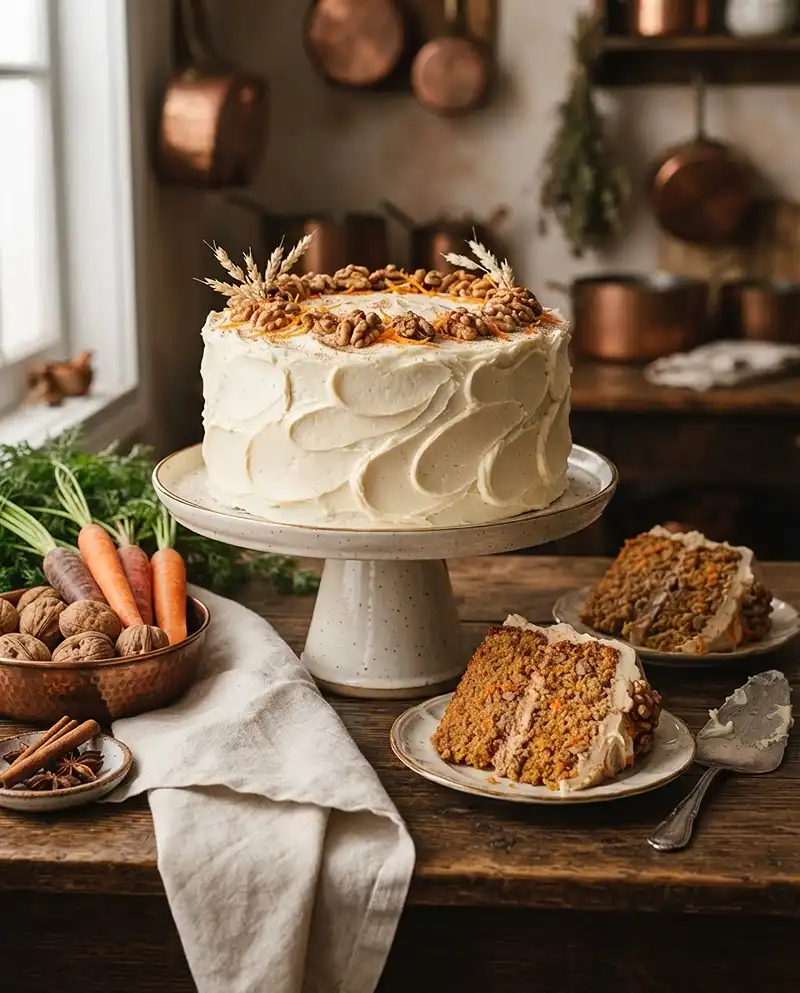
Brown butter cream cheese frosting carrot cake is a three-layer spiced cake topped with a nutty, rich frosting made from browned and re-solidified butter blended with cream cheese. It’s warming, deeply flavored, and a serious upgrade from standard carrot cake.
This recipe uses buttermilk in the batter for a tender crumb, and a careful browning and chilling process for the frosting that gives it a silky consistency and a subtle toasted-nutty depth. If you’ve never browned butter for frosting before, this is a great recipe to start with.
Table of Contents
Why You’ll Love This Carrot Cake
- The brown butter frosting adds a toasted, nutty richness you won’t get from standard cream cheese frosting
- Buttermilk in the batter keeps the layers moist and tender
- Four warming spices — cinnamon, ginger, nutmeg, and cloves — build real depth without being overwhelming
- A crumb coat and chill step makes the final frosting clean and easy to apply
- The recipe bakes in three 8-inch pans, so assembly is straightforward

Brown Butter Cream Cheese Frosting Carrot Cake
Equipment
- Three 8-inch Round Cake Pans
- Parchment paper
- Mixing bowls
- Whisk
- Box grater or food processor
- Large saucepan
- Stand mixer or hand mixer
- Kitchen scale
- Wire cooling rack
- Offset Spatula
- Cake Stand or Serving Plate
Ingredients
Cake – Wet
- 1 ½ cups neutral oil 355 ml; melted coconut or canola, keeps the cake moist
- 4 large eggs room temperature, for structure and richness
- 2 cups granulated sugar 400 g, sweetness and moisture
- 2 teaspoons vanilla flavor base
- ⅓ cup buttermilk 80 g, room temperature, for a tender crumb
Cake – Dry
- 3 ¼ cups all-purpose flour 455 g, structure
- 2 teaspoons baking powder lift
- 1 ½ teaspoons baking soda lift and browning
- 1 teaspoon salt balance
- 2 teaspoons cinnamon warm spice
- ½ teaspoon ginger warmth
- ½ teaspoon nutmeg warmth
- ⅛ teaspoon cloves depth
Cake – Mix-in
- 1 lb carrots 454 g, peeled and grated or finely shredded
Frosting
- 16 oz cream cheese 454 g, room temperature, tangy creamy base
- 1 cup butter 227 g, browned then fully solidified, for nutty richness
- 1 teaspoon vanilla flavor
- 4 cups powdered sugar 480 g, sweetness and structure
- ⅛ teaspoon salt balance
Instructions
- Preheat the oven to 325°F. Line the bottom of three 8-inch round cake pans with parchment paper and spray with cooking spray. Set aside.
- In a large bowl, whisk together the oil, eggs, sugar, buttermilk, and vanilla until combined.
- In a separate bowl, whisk together the flour, baking powder, baking soda, salt, cinnamon, ginger, nutmeg, and cloves. Slowly add the dry ingredients to the wet ingredients and stir until just combined. Pro tip: stop stirring as soon as you no longer see dry streaks, since overmixing develops gluten and can make the layers dense.
- Fold in the grated carrots until evenly distributed.
- Pour the batter evenly into the three prepared pans, approximately 600 g per pan if you’re weighing.
- Bake for 25 to 30 minutes, or until a toothpick inserted in the center comes out clean. Transfer the pans to a wire rack and let the cakes cool completely to room temperature before frosting.
- Brown the butter over low heat in a large saucepan, stirring occasionally, until the milk solids turn golden and it smells nutty. Pour into a measuring cup or bowl and refrigerate until fully solidified, about 1 hour. Pro tip: don’t rush the chilling, since soft or melted brown butter will make the frosting too loose to spread cleanly.
- Once chilled, cream the solidified brown butter and softened cream cheese together until smooth. Add the vanilla, powdered sugar, and salt and mix until creamy and smooth.
- Place one cake layer on a cake plate or serving stand and spread a thin layer of frosting over the top.
- Add the second cake layer and spread another thin layer of frosting over it.
- Place the final cake layer top side down. Frost the entire cake, top and sides, with a thin crumb coat of frosting, then refrigerate or freeze for 10 to 15 minutes to set. Pro tip: the crumb coat traps loose crumbs so your final layer stays clean and smooth.
- Pull the chilled cake out and apply the remaining frosting over the entire cake.
Notes
What Ingredients Do You Need for Brown Butter Cream Cheese Frosting Carrot Cake?
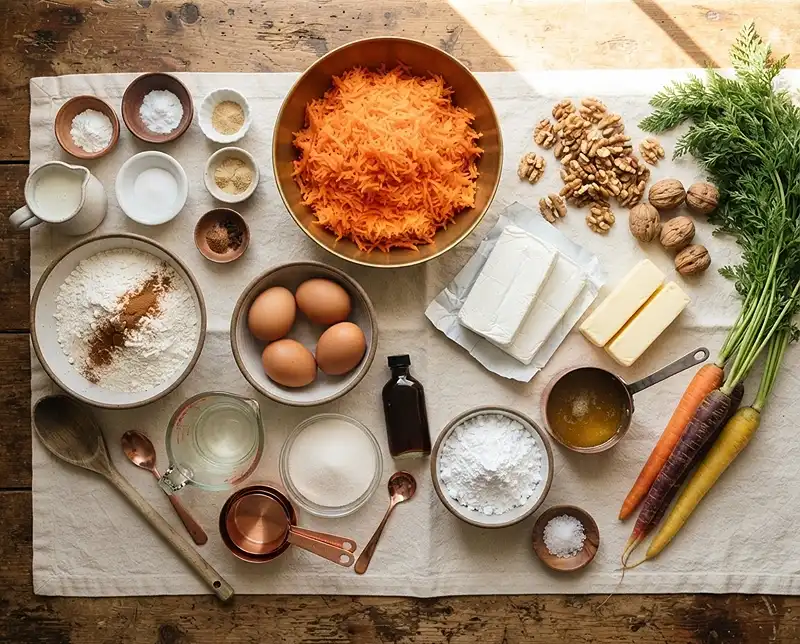
| Ingredient Group | Ingredient | Exact Amount | Purpose or Note |
|---|---|---|---|
| Cake – Wet | Neutral oil, melted coconut or canola | 1½ cups / 355 ml | Keeps the cake moist |
| Cake – Wet | Large eggs, room temperature | 4 | Structure and richness |
| Cake – Wet | Granulated sugar | 2 cups / 400 g | Sweetness and moisture |
| Cake – Wet | Vanilla | 2 teaspoons | Flavor base |
| Cake – Wet | Buttermilk, room temperature | ⅓ cup / 80 g | Tender crumb |
| Cake – Dry | All-purpose flour | 3¼ cups / 455 g | Structure |
| Cake – Dry | Baking powder | 2 teaspoons | Lift |
| Cake – Dry | Baking soda | 1½ teaspoons | Lift and browning |
| Cake – Dry | Salt | 1 teaspoon | Balance |
| Cake – Dry | Cinnamon | 2 teaspoons | Warm spice |
| Cake – Dry | Ginger | ½ teaspoon | Warmth |
| Cake – Dry | Nutmeg | ½ teaspoon | Warmth |
| Cake – Dry | Cloves | ⅛ teaspoon | Depth |
| Cake – Mix-in | Carrots, grated or finely shredded | 1 lb / 454 g | Moisture and flavor |
| Frosting | Cream cheese, room temperature | 16 oz / 454 g | Tangy, creamy base |
| Frosting | Butter, browned | 1 cup / 227 g | Nutty richness |
| Frosting | Vanilla | 1 teaspoon | Flavor |
| Frosting | Powdered sugar | 4 cups / 480 g | Sweetness and structure |
| Frosting | Salt | ⅛ teaspoon | Balance |
The brown butter is the most important element in the frosting. It needs to be fully solidified again before creaming — if it goes in too soft or liquid, the frosting won’t hold its shape. Plan for about an hour of fridge time after browning.
For the carrots, grating them yourself rather than buying pre-shredded gives you more moisture and better texture in the finished cake. Finely shredded carrots blend into the crumb; coarsely grated pieces stay more visible. Either works — go with your preference.
How to Make Brown Butter Cream Cheese Frosting Carrot Cake Step by Step

Make the Cake
- Preheat the oven to 325°F. Line the bottom of three 8-inch round cake pans with parchment paper and spray with cooking spray. Set aside.
- In a large bowl, whisk together the oil, eggs, sugar, buttermilk, and vanilla until combined.
- In a separate bowl, whisk together the flour, baking powder, baking soda, salt, cinnamon, ginger, nutmeg, and cloves. Slowly add the dry ingredients to the wet ingredients and stir until just combined. Pro Tip: Stop stirring as soon as you no longer see dry streaks — overmixing develops gluten and can make the layers dense.
- Fold in the grated carrots until evenly distributed.
- Pour the batter evenly into the three prepared pans — approximately 600 g per pan if you’re weighing.
- Bake for 25–30 minutes, or until a toothpick inserted in the center comes out clean. Transfer the pans to a wire rack and let the cakes cool completely to room temperature before frosting.
Make the Frosting
- Brown the butter over low heat in a large saucepan, stirring occasionally, until the milk solids turn golden and it smells nutty. Pour into a measuring cup or bowl and refrigerate until fully solidified, about 1 hour. Pro Tip: Don’t rush the chilling — soft or melted brown butter will make the frosting too loose to spread cleanly.
- Once chilled, cream the solidified brown butter and softened cream cheese together until smooth. Add the vanilla, powdered sugar, and salt and mix until creamy and smooth.
Assemble the Cake
- Place one cake layer on a cake plate or serving stand. Spread a thin layer of frosting over the top.
- Add the second cake layer and spread another thin layer of frosting over it.
- Place the final cake layer top side down. Frost the entire cake — top and sides — with a thin crumb coat of frosting. Refrigerate or freeze for 10–15 minutes to set. Pro Tip: The crumb coat traps any loose crumbs so your final layer stays clean and smooth.
- Pull the chilled cake out and apply the remaining frosting over the entire cake.
Tips, Troubleshooting, and Expert Advice for Carrot Cake
Pro Tips for Success
- Room temperature matters for the frosting. The cream cheese should be fully softened, but the browned butter must be solid and cold from the fridge. If either is at the wrong temperature, the frosting can turn grainy or too runny.
- Weigh your batter for even layers. Splitting batter evenly by eye usually results in uneven layers. Targeting about 600 g per pan helps all three layers bake in roughly the same time.
- Cool the cakes fully before frosting. Even slightly warm cakes will melt the frosting on contact and make assembly messy. If you’re short on time, cool the layers in the fridge once they’ve reached room temperature.
- Finely shred the carrots. Very coarse shreds can create wet pockets in the crumb. A box grater on the fine side or a food processor gives you the best texture.
Troubleshooting Common Problems
Problem: The frosting is too soft to spread or hold its shape.
Solution: The brown butter likely wasn’t cold enough before creaming. Return the frosting to the fridge for 15–20 minutes to firm up, then try again.
Problem: The cake layers are domed or cracked on top.
Solution: This is normal for a dense, moist batter at 325°F. Use a serrated knife to level the layers before assembling if you want flat, even tiers.
Problem: Crumbs are showing through the final frosting layer.
Solution: The crumb coat wasn’t chilled long enough. Make sure the cake is firm to the touch before applying the final layer of frosting.
If you enjoy layered bakes like this one, the oatmeal creme pie cake follows a similar build and is just as rewarding to put together.
How to Store and Reheat Brown Butter Cream Cheese Frosting Carrot Cake
| Storage Method | Duration | Best Practice |
|---|---|---|
| Refrigerator, covered | Up to 5 days | Store in an airtight container or cover tightly with plastic wrap to prevent the cake from drying out |
| Freezer, unfrosted layers | Up to 2 months | Wrap individual layers tightly in plastic wrap, then foil; thaw overnight in the fridge before frosting |
Because the frosting contains cream cheese, the assembled cake should be kept refrigerated. The USDA recommends refrigerating cream cheese-based foods and not leaving them at room temperature for more than two hours.
Pull individual slices out of the fridge about 20–30 minutes before serving to let them come closer to room temperature — the cake is more tender and the frosting creamier when it’s not straight from the fridge.
Leftover cake works well crumbled over vanilla ice cream, layered into a trifle with whipped cream, or served as-is with a cup of coffee or tea.
Brown Butter Cream Cheese Frosting Carrot Cake FAQs
Can I make this carrot cake ahead of time?
Yes. You can bake the cake layers up to two days in advance and store them wrapped tightly at room temperature, or refrigerate them for up to five days. The frosting can also be made ahead and kept refrigerated. Assemble the cake when you’re ready to serve.
Why does the brown butter need to solidify before making the frosting?
Liquid or softened brown butter won’t cream properly with the cream cheese. It needs to return to a solid, scoopable consistency — similar to cold butter — so the frosting whips up smooth and holds its structure. About an hour in the fridge is usually enough.
Can I bake this in two pans instead of three?
The recipe is written for three 8-inch pans. Using two pans will result in thicker layers that need longer bake times. Check doneness with a toothpick and adjust accordingly — underbaked centers are the most common issue when using fewer, deeper pans.
What type of oil works best in this carrot cake?
The recipe calls for a neutral oil such as melted coconut oil or canola oil. Both keep the cake moist without adding a strong flavor. Avoid strongly flavored oils like olive or sesame, which would compete with the spices.
Do I need to peel the carrots before grating?
Peeling is recommended for the cleanest flavor and texture. Carrot skins can be slightly bitter and add an uneven texture to the finished cake. Peel, then grate or finely shred.
Try This Cake and Let Us Know What You Think
If you make this brown butter cream cheese frosting carrot cake, we’d love to hear how it turned out. Leave a comment below with your rating — it really helps others find the recipe.
Save it to your Pinterest baking board so you can find it again, and share it with anyone who loves a cake that goes a little beyond the usual.
Looking for more showstopper layer cakes? The chocolate Nutella cake and the apple crisp cheesecake bars are both worth bookmarking for your next baking day.
Brown butter cream cheese frosting carrot cake — three tender, spiced layers with a nutty, silky frosting. Save this recipe for your next special occasion or weekend bake.