Hungarian Stuffed Cabbage Recipe
This Hungarian stuffed cabbage recipe wraps savory beef and rice in tender leaves, then bakes them in a paprika sauerkraut sauce. Pure comfort, start to finish.
My grandmother’s kitchen smelled like paprika and simmering sauerkraut every cold Sunday, and I swear the windows fogged up on purpose. This Hungarian stuffed cabbage recipe is her töltött káposzta, rolled by tired hands and eaten by happy ones. I’ve tweaked it over the years, but I still sneak a bite before anyone sits down.
Table of Contents
Why This Hungarian Stuffed Cabbage Recipe Is a Keeper
Some recipes impress you. This one hugs you. The cabbage turns silky, the beef-and-rice filling stays juicy, and the tangy sauerkraut sauce soaks into everything until the whole pot smells like a Hungarian grandmother’s kitchen.
It’s also forgiving, which is my favorite quality in a recipe. You can roll the leaves a little crooked, and nobody will ever know once they’re tucked in the pot under that rosy sauce.
Every family has its own version of káposzta, and this is the one I keep coming back to. It’s humble and hearty, and it tastes even better when the weather outside is gray and grumpy.

Hungarian Stuffed Cabbage (Töltött Káposzta)
Equipment
- Large pot
- Large bowl (for ice water)
- Paring knife
- Tongs
- Skillet
- Large mixing bowl
- Medium bowl
- Whisk
- Large Dutch oven with lid
- Instant-read thermometer
- Airtight container
Ingredients
For the Cabbage Leaves
- 1 large head green cabbage or two medium heads; for 12 leaves total
For the Filling
- 2 Tbsp. vegetable oil
- 1 cup yellow onion finely chopped
- 2 cloves garlic minced
- 2 lbs. ground beef or half ground beef
- 1 cup cooked long grain rice
- 1 tsp. Hungarian paprika for the filling
- 2 tsp. kosher salt
- 1 tsp. black pepper
- 2 large eggs lightly beaten
For the Sauce and the Pot
- 2 cups water
- ¼ cup tomato paste
- 3 tsp. Hungarian paprika for the sauce
- 1 lb. package refrigerated fresh sauerkraut divided; 1 cup for the bottom of the pot
Instructions
Soften the Cabbage Leaves
- Fill a large bowl with ice water. Cut out the cabbage core with a paring knife.
- Bring a large pot of water to a boil over high heat. Place the cabbage in the pot stem side up and simmer for 7 to 8 minutes. As the leaves loosen, lift them off with tongs and drop them into the ice water.
- You need 12 leaves. Pat them dry and trim away the tough rib at the bottom of each one.
Make the Filling and Sauce
- Heat the oil in a skillet over medium-high heat. Cook the onion for 5 to 6 minutes, until soft and translucent. Add the garlic and cook for 1 more minute. Remove from the heat and let cool slightly.
- Preheat the oven to 350°F. Spread 1 cup of sauerkraut over the bottom of a large Dutch oven.
- In a large bowl, combine the beef, rice, 1 teaspoon of paprika, salt, pepper, eggs, and the onion mixture. Mix well with your hands.
- In a medium bowl, whisk the water, tomato paste, and the remaining 3 teaspoons of paprika. Stir in the rest of the sauerkraut.
Roll, Tuck, and Bake
- Lay a leaf flat with the stem end toward you. Shape about 1/3 cup of filling into a log near the bottom. Fold the bottom up over the filling, tuck in the sides, and roll it away from you.
- Set the rolls seam side down in the Dutch oven, nestled snugly together. Pour the sauce over the top.
- Cover and bake for 1 hour, until the filling reaches 160°F. Let rest for 5 minutes, then serve.
Notes
Everything You’ll Need for Töltött Káposzta
Nothing fancy here. Most of this is pantry-and-fridge stuff, and the rest is one good head of cabbage.
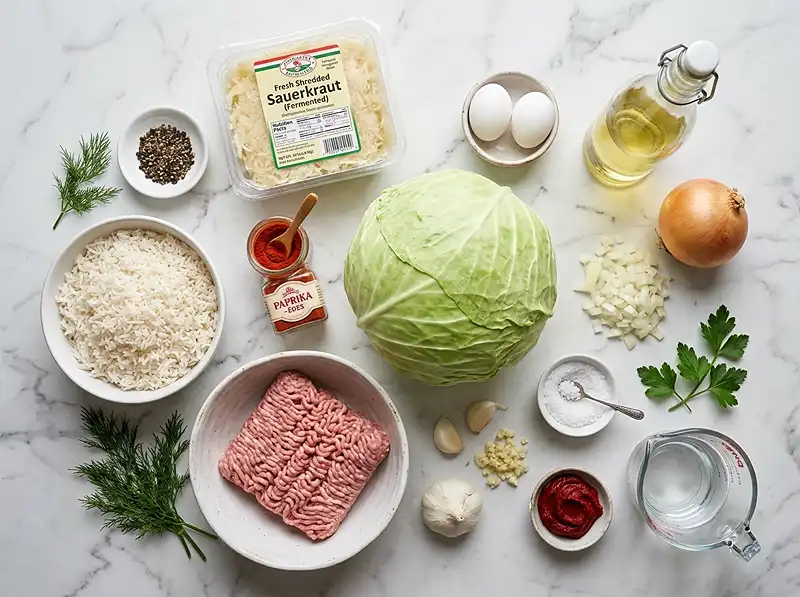
| Ingredient | Amount |
|---|---|
| For the cabbage leaves | |
| Large head of green cabbage (or two medium) | 1 head, for 12 leaves total |
| For the filling | |
| Vegetable oil | 2 Tbsp. |
| Yellow onion, finely chopped | 1 cup |
| Garlic, minced | 2 cloves |
| Ground beef | 2 lbs. |
| Cooked long grain rice | 1 cup |
| Hungarian paprika (for the filling) | 1 tsp. |
| Kosher salt | 2 tsp. |
| Black pepper | 1 tsp. |
| Large eggs, lightly beaten | 2 |
| For the sauce and the pot | |
| Water | 2 cups |
| Tomato paste | 1/4 cup |
| Hungarian paprika (for the sauce) | 3 tsp. |
| Refrigerated fresh sauerkraut, divided | 1 lb. package |
A Few Casual Notes on the Ingredients
Cabbage leaves: Pick a head that feels heavy for its size, with leaves that look bright and loose at the edges. Loose outer leaves peel off far more easily, and each cabbage leaf is basically a little blanket for your filling.
Hungarian paprika: This is the soul of the dish, so please don’t swap in the dusty jar that’s been in your cabinet since 2017. Fresh paprika smells sweet and a little fruity, and that’s exactly what you want.
Ground beef: beef gives the tenderest, richest rolls. If you’d rather use ground beef, I’ve got a swap further down.
Fresh sauerkraut: The refrigerated kind has a brighter tang and a better crunch than the canned stuff. It melts into the sauce while it bakes and makes the whole pot taste like something that simmered all day.
How to Make Hungarian Stuffed Cabbage, Step by Step
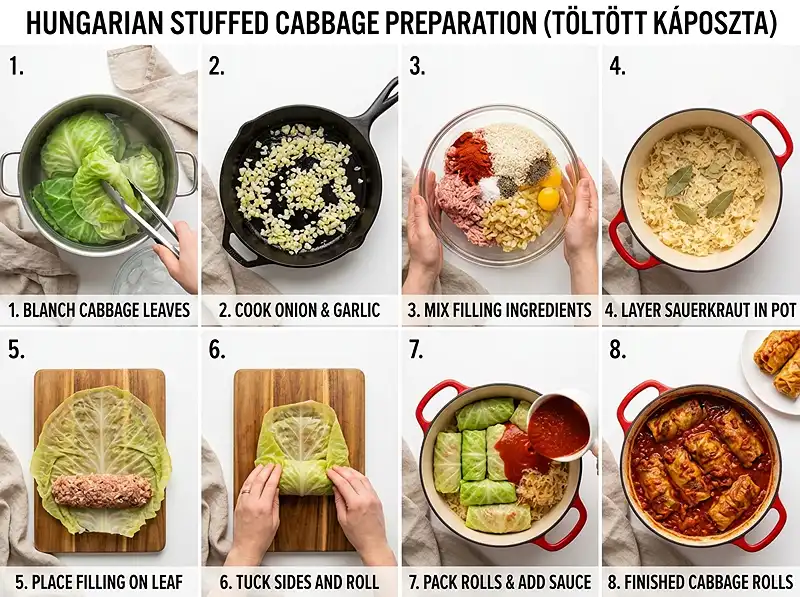
Soften the Cabbage Leaves
Fill a large bowl with ice water and park it near the stove. With a paring knife, cut out the core of the cabbage. It’s a little like carving a pumpkin, only quieter.
Bring a large pot of water to a boil over high heat. Set the cabbage in the pot stem side up and let it simmer for 7 to 8 minutes. The kitchen will smell sweet and a bit like earth, which is exactly right.
Use tongs to gently lift off the leaves as they loosen, and drop each one into the ice water. You need 12 good leaves. Pat them dry, then trim away any tough rib at the bottom of each one.
My grandmother always said, “A wet leaf slides, and a dry leaf listens.” She was right, so don’t skip the patting.
Cook the Onion and Garlic
Warm the vegetable oil in a skillet over medium-high heat. Add the chopped onion and cook for 5 to 6 minutes, until it’s soft and translucent and the whole kitchen smells like somebody’s cooking for you.
Stir in the garlic and cook for one more minute. Take the skillet off the heat and let it cool a bit while you get everything else ready.
Set Up the Dutch Oven
Preheat your oven to 350 degrees. Spread 1 cup of the sauerkraut across the bottom of a large Dutch oven and set it aside.
This little bed of sauerkraut keeps the rolls from sticking and sneaks tangy flavor up into the cabbage from below. I’ve scorched the bottom of a pot at least twice without it, so learn from me.
Mix the Filling
In a large bowl, combine the ground beef, cooked rice, 1 teaspoon of the paprika, the kosher salt, black pepper, eggs, and the onion mixture. Mix it well with your hands.
Yes, your hands. It’s cool and squishy and a little silly, but it’s the only way to get everything evenly blended without squashing the meat into a dense brick.
Whisk Together the Sauce
In a medium bowl, whisk the 2 cups of water with the tomato paste and the remaining 3 teaspoons of paprika until it turns a deep, rusty red. Stir in the rest of the sauerkraut and set it aside.
Roll, Tuck, and Bake
Lay a leaf flat with the stem end toward you. Shape about 1/3 cup of the filling into a little log near the bottom, fold the bottom up over it, tuck in the sides, and roll away from you.
Set each roll seam side down in the prepared Dutch oven, nestling them in snugly. Pour the sauce over the top so every roll gets a good coat of that sauerkraut.
Cover the pot and bake for one hour, until the meat is cooked through. Your kitchen will smell like paprika and warm cabbage, and that’s your cue to find a few bowls. Serve immediately.

Tips, Swaps, and Variations
Little Things That Make a Big Difference
Don’t overfill the leaves. A modest 1/3 cup is plenty, and the rice will puff up a bit as it cooks. Stuffing them like burritos is how rolls burst open in the oven.
Let the finished pot sit for five minutes before you serve. The sauce settles, the rolls firm up, and nobody burns their tongue, which is a gift in a house full of hungry people.
Swaps I’ve Tried
Ground beef: Use half ground beef for a slightly beefier flavor, or go all beef if that’s what you have. The rolls come out a touch leaner, so don’t skimp on the sauce.
Tomato sauce: If you’re out of tomato paste, plain tomato sauce works. Use about 1/2 cup and cut the water back to 1 1/2 cups so the sauce doesn’t get thin.
Prefer a milder tang? Rinse the sauerkraut briefly under cold water and squeeze it dry before using it.
Making It in a Slow Cooker
You can absolutely make this in a slow cooker. Layer the sauerkraut on the bottom, arrange the rolls, pour in the sauce, and cook on low for 6 to 8 hours.
The texture is a little softer than the oven version, and the cabbage goes extra silky. It’s perfect for those days when you want dinner to cook itself while you pretend to be productive.
When Things Go Sideways
The leaves tear while rolling. Overlap two small pieces to patch the hole, then roll as usual. The sauce hides every flaw.
The leaves are tough. Return them to the simmering water for another minute or two. A thick rib can also be shaved thinner with your paring knife.
The rolls fall apart. They were probably overstuffed or placed seam side up. Tuck the sides in firmly and keep the seams down.
The sauce tastes flat. A pinch more salt or a splash of the sauerkraut brine usually wakes it right up.
Storing and Reheating Your Cabbage Rolls
| Method | How Long | How to Do It |
|---|---|---|
| Refrigerator | 3 to 4 days | Cool completely, then store rolls in sauce in an airtight container |
| Freezer | Up to 3 months | Freeze rolls with a little sauce in a freezer-safe container, and thaw overnight in the fridge |
For more on keeping food safe, the USDA has a handy guide to leftovers and food safety.
Reheating Without Drying Them Out
Warm the rolls gently in a covered dish at 325 degrees until hot all the way through, adding a spoonful of water or sauce if they look thirsty. The microwave works in a pinch, but cover them so they stay moist.
Leftover Ideas Worth Trying
Chop a leftover roll and sauce it over buttered egg noodles for a quick lunch. Or crumble the filling into a skillet with extra sauerkraut for a chunky, rustic hash.
If you’ve got spare cabbage from the head, try my Jamaican steamed cabbage as a bright side dish. The leftover core and trimmings are great for a homemade cabbage juice.
These rolls also love company. Start with a bowl of creamy parmesan vegetable soup for a table that feels like a holiday.
Frequently Asked Questions
Is this a traditional Hungarian kaposzta recipe?
It follows the spirit of traditional töltött káposzta, with paprika, sauerkraut, beef, and rice. Every Hungarian family has its own version, so this one is simply mine, handed down and adjusted over the years.
Can I make Hungarian stuffed cabbage ahead of time?
Yes. Assemble the rolls in the Dutch oven, cover, and refrigerate up to a day before baking. They actually taste even better after the flavors have had time to get to know each other.
Can I use canned sauerkraut instead of fresh?
You can, though refrigerated fresh sauerkraut has a brighter tang and better texture. If you use canned, drain it well and give it a quick rinse so it isn’t too salty.
Can I freeze stuffed cabbage rolls?
They freeze beautifully. Pack the cooked rolls with a little sauce in a freezer-safe container, and thaw them overnight in the refrigerator before reheating.
What should I serve with stuffed cabbage?
Crusty rye bread, buttery egg noodles, or mashed potatoes are all wonderful. A dollop of sour cream on top is very traditional, and I never say no to it.
Final Thoughts
I hope this Hungarian stuffed cabbage recipe finds its way onto your table on a chilly evening, with something warm in the pot and good company around it. It’s the kind of dinner that makes a house feel lived in.
If you make it, I’d love to hear how it turned out. Leave a comment and a star rating below, and pin it on Pinterest so you can find it again when the first cold snap hits.